





















 Saudi Arabia
 UAE
 Qatar
 Bahrain
 Kuwait
 Oman
 Lebanon
 Egypt
 Jordan
 Iraq
 India
 UK
 Ireland
 Germany
 USA
 Australia
 Singapore
 South Africa
 France
 Hungary
 Georgia
 Turkey
 Canada
 LagosNigeria




ERPNext for Trading Companies in Saudi Arabia
Importers, wholesalers and distributors make their money in the gap between landed cost and selling price, and lose it in stock errors and slow collections. ERPNext gives Saudi trading companies one record of purchasing, stock, sales and receivables, and we set it up for the way goods actually flow through the Kingdom.
- Multi-currency purchasing
- Landed cost
- Warehouse network
- Price lists and rules
 ERPNext & FrappeImplementation · migration · AMC
Get a free quote
Reply within 24 hours with scope and a fixed quote.
ERPNext for Trading Companies in Saudi Arabia: the short answer
- Buying
- Purchase orders in USD, EUR, CNY or any supplier currency, with exchange differences posted automatically.
- Costing
- Landed cost vouchers add freight, duty, clearing and transport to item valuation.
- Selling
- Customer-specific price lists, pricing rules, credit limits and van or route sales.
- Compliance
- Cleared B2B invoices and reported counter sales through a ZATCA app, with 15% VAT and import treatments separated.
- Delivered by
- Shyphan AI Solutions, an ERPNext implementation partner and Zoho Premium Partner, with 24/7 support. Call +966 54 176 1946.
- Last reviewed
- 27 November 2026
One system from supplier to customer
Imagine a building materials wholesaler that buys tiles from Spain, sanitary ware from China and adhesives from a local factory, holds stock in a warehouse in Riyadh and a smaller one in Dammam, and sells to contractors on credit and to walk-in customers at a showroom counter. Each of those flows has its own paperwork, currency and VAT treatment, and the owner wants to know every morning which items are making money and which customers are slow to pay.
In ERPNext the supplier's purchase order, the shipment's landed costs, the goods receipt by warehouse, the contractor's sales order, the delivery and the cleared invoice are all linked. Stock valuation reflects real landed cost, gross margin is visible per item and customer, and receivables ageing comes from the same ledger. When a customer exceeds their credit limit, new orders stop until someone with authority releases them.
Trading businesses also tend to grow by adding branches, brands and product lines faster than their systems can keep up. ERPNext copes with that growth without extra licences, which is a large part of its appeal for family-owned distributors. The other recurring issue is control. Owners of trading businesses often approve discounts, credit releases and supplier payments personally because the old system gave them no other safe way. ERPNext workflows let them delegate within limits: a branch manager can approve a discount up to a set percentage, finance can release a credit hold for a known customer, and anything outside those limits still reaches the owner, with the full history attached.
From first record to the finished report
One open-source system, so each step feeds the next without re-keying.
ERPNext features trading companies rely on
Multi-currency purchasing
Supplier price lists and purchase orders in the supplier's currency, with exchange rates fetched or entered and gains or losses posted when invoices are paid.
Landed cost
Freight, insurance, customs duty, clearing and inland transport added to purchase receipts and spread by value, quantity or weight.
Warehouse network
Main, branch, transit and showroom warehouses with transfers, bin locations, reorder levels and stock ageing by location.
Price lists and rules
Separate price lists for contractors, retailers and walk-in customers, with quantity breaks, promotional rules and margin floors. Sales staff cannot sell below the floor without an approval.
Van and route sales
Stock held in vans as mobile warehouses, delivery trips by route and collections recorded against invoices on the same day.
Credit and collections
Credit limits, payment terms, overdue blocks, dunning letters and collection reports by salesperson and branch.
See it in ERPNext
Real ERPNext and Frappe screens for the work described on this page. We configure them for Saudi rules and your data.
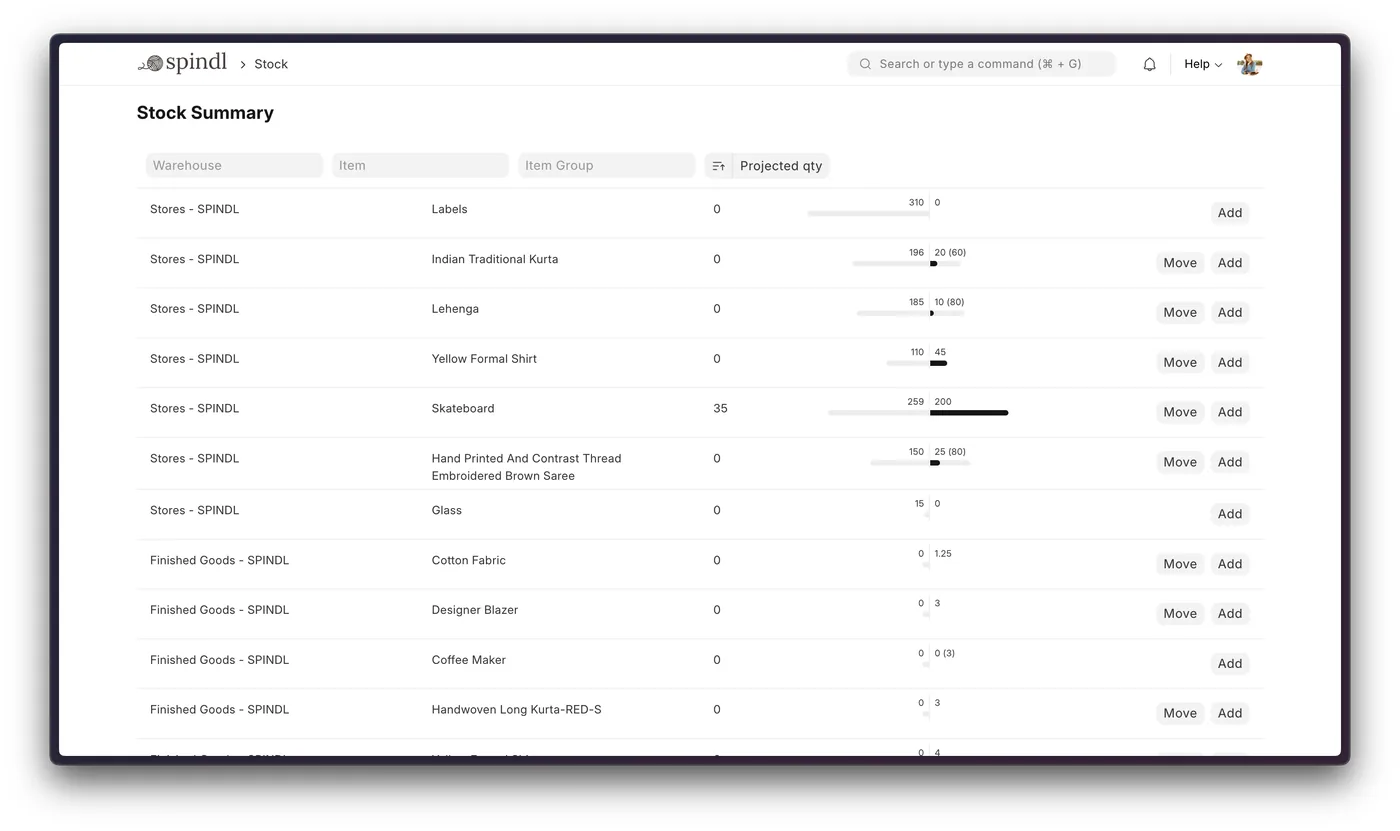
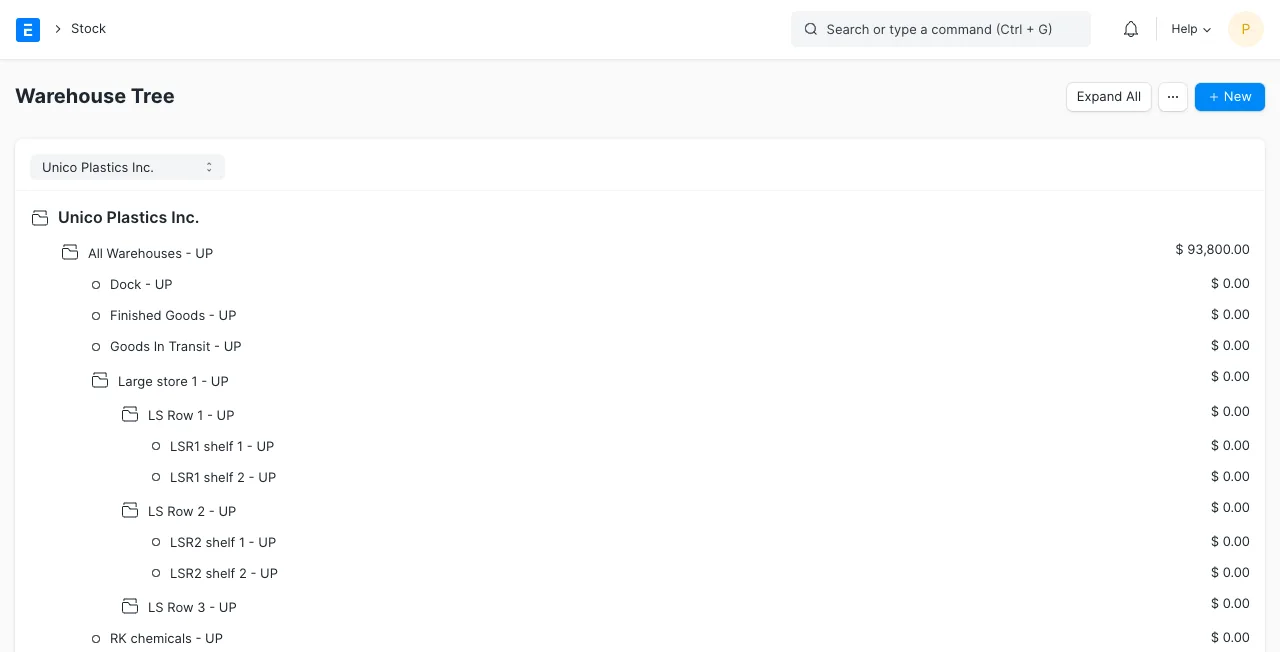
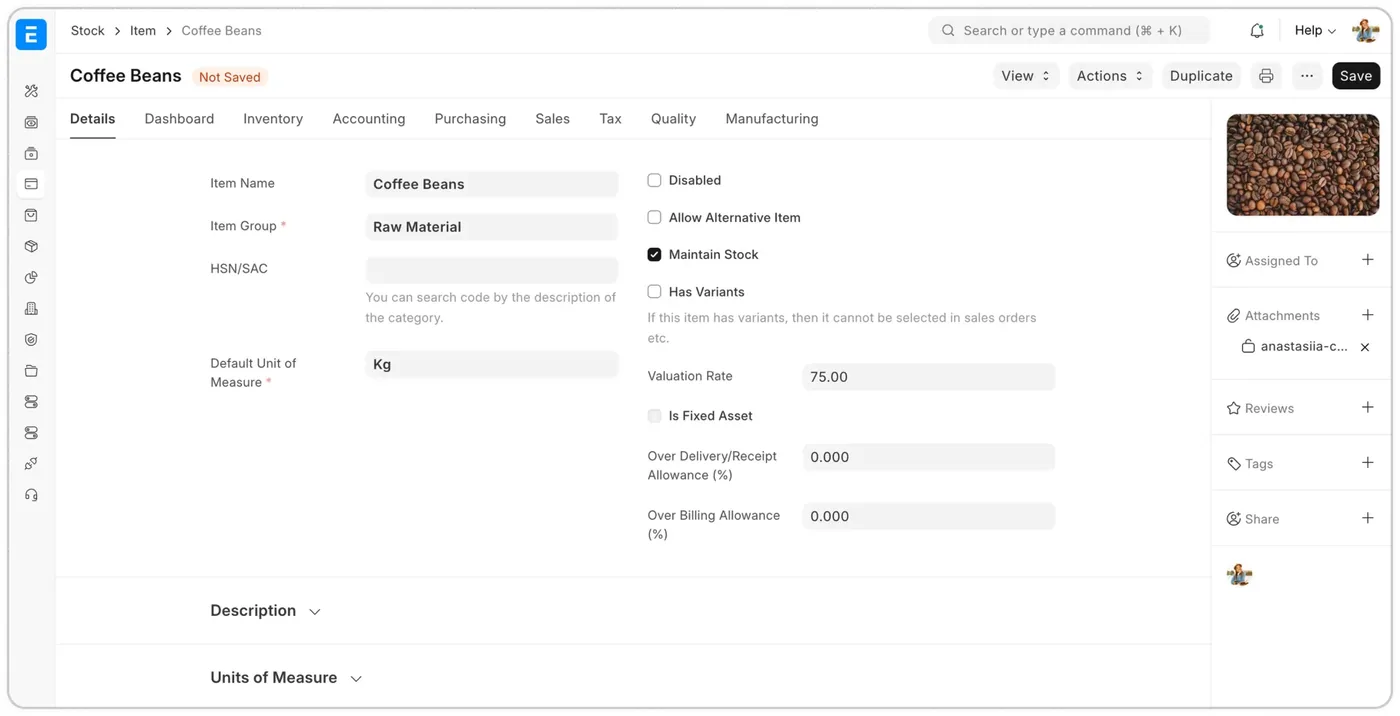
ERPNext and the Frappe apps we implement
One open-source platform, one database, no per-user licence fees.







Saudi rules that affect trading companies
| Topic | The Saudi rule | What we set up |
|---|---|---|
| Import VAT | Import VAT is either paid at customs or accounted for under the reverse charge, and each has its own line on the VAT return. | Purchase templates and accounts separate customs-paid and reverse-charge imports, and customs payments are recorded against the shipment. |
| B2B and B2C invoices | Standard tax invoices to VAT-registered buyers are cleared by Fatoora before sharing; simplified invoices are reported within 24 hours. | Contractor and retailer invoices clear on submit, while showroom sales issue simplified invoices through the ZATCA app. |
| Simplified invoices to businesses | ZATCA allows a simplified invoice for a B2B sale only where the taxable value is below SAR 1,000; B2C simplified invoices can be any value. | Counter sales to registered businesses above that value are routed to standard tax invoices with the buyer's VAT number. |
| Exports | Qualifying exports are zero-rated and reported on their own return line. | Export customers carry a zero-rated tax category, with shipping documents attached to the invoice for your accountant's review. |
| Returns | Issued e-invoices cannot be edited; returns and price adjustments use credit and debit notes linked to the original. | Sales returns create credit notes against the original invoice, restock goods and pass to the ZATCA app automatically. |
We configure the system and check it against your accountant’s figures; we are not tax advisers, and your accountant files the returns. Last reviewed 27 November 2026.
How we roll out ERPNext for a trading business
Map the flows
We trace a typical import from purchase order to payment and a typical sale from enquiry to collection, noting every document and approval.
Clean item data
Item codes, units, barcodes, Arabic names and item groups are cleaned before loading, because a trading system is only as good as its item master.
Configure costing and pricing
Landed cost rules, valuation method, price lists and pricing rules are set and checked against recent real shipments and sales.
Count and load stock
A full stock count by warehouse sets opening quantities and values, reconciled to your final balance sheet in the old system.
Train by role
Buyers, storekeepers, drivers, sales staff and finance each learn only the screens they need, in Arabic or English.
Every ERPNext page for Saudi businesses
Services
Compliance
Industries
- ERPNext for Manufacturing in Saudi Arabia
- ERPNext for Trading Companies in Saudi Arabia
- ERPNext for Construction Companies in Saudi Arabia
- ERPNext for Retail in Saudi Arabia
Other countries
Worldwide

Written and reviewed by Vikas Saroj, Co-Founder, COO & Growth at Shyphan AI Solutions, who owns ERPNext, Odoo and Zoho delivery across Saudi Arabia and the wider region. Reviewed against current Saudi rules on 27 November 2026. Meet the team · LinkedIn
ERPNext for Trading Companies in Saudi Arabia: questions answered
Which valuation method should a Saudi distributor use?
Can ERPNext handle consignment or goods in transit?
Can sales staff check stock and prices on a phone?
Is Shyphan an official Frappe partner?
Can product names print in Arabic?
Do we pay per user as we add salespeople?
Request your free quote
Tell us about your project and a senior ERPNext consultant - not a bot - replies within 24 hours with scope, timeline and a fixed quote. The first 30-minute discovery call is free, with no obligation.
- Free 30-minute discovery call
- Fixed-quote SOW - no surprises
- Arabic · English delivery
- VAT 15%, ZATCA, GOSI & mada ready