





















 Saudi Arabia
 UAE
 Qatar
 Bahrain
 Kuwait
 Oman
 Lebanon
 Egypt
 Jordan
 Iraq
 India
 UK
 Ireland
 Germany
 USA
 Australia
 Singapore
 South Africa
 France
 Hungary
 Georgia
 Turkey
 Canada
 LagosNigeria




ERPNext Implementation Partner for the Gulf, India and Ireland
Shyphan implements ERPNext and the Frappe apps for businesses that want one open-source system for accounts, stock, buying, selling, manufacturing, projects and HR. We set it up for the tax and payroll rules of the country you trade in, move your data across from Tally, QuickBooks, Zoho Books or spreadsheets, and support it 24/7 after go-live, with no per-user licence fees.
- Fit review before any build
- Tax set up for your country
- E-invoicing connections
- Frappe HR and payroll
 ERPNext & FrappeImplementation · migration · AMC
Get a free quote
Reply within 24 hours with scope and a fixed quote.
ERPNext Implementation Partner for the Gulf, India and Ireland: the short answer
- What it is
- Design, rollout, customisation, hosting and long-term support of ERPNext, Frappe HR and the wider Frappe apps, delivered by one team.
- Where we work
- Saudi Arabia, the UAE, India, Qatar, Kuwait, Bahrain, Oman, Egypt and Ireland, with offices in Noida, Ras Al Khaimah and Riyadh and remote delivery elsewhere.
- Local rules
- VAT and GST templates, e-invoicing connections such as ZATCA Phase 2, India's IRP and Egypt's ETA, and payroll rules set per country.
- Licence cost
- None per user. ERPNext is open source under GPLv3; you pay for implementation, hosting and support, quoted as a fixed price.
- Delivered by
- Shyphan AI Solutions, an ERPNext implementation partner and Zoho Premium Partner, with 24/7 support. Call +91 95651 53545.
- Last reviewed
- 27 November 2026
One open-source ERP, set up country by country
ERPNext is built by Frappe Technologies in India and released under the GPLv3 licence. The core covers Accounting, Selling, Buying, Stock, Manufacturing, Projects, Assets, Quality, Support and Point of Sale, and Frappe HR adds employees, leave, attendance, expenses and payroll on the same database. Because there is no per-user fee, a company can give access to every storekeeper, site engineer and branch cashier without the bill growing each time someone joins.
The software is the same everywhere; the work that makes it fit is local. A trading company in Jeddah needs invoices cleared by ZATCA, a manufacturer in Pune needs GST returns and e-way bills, a distributor in Dubai needs the VAT 201 figures and a plan for the UAE eInvoicing programme, and a retailer in Cairo needs every receipt signed and sent to the Egyptian Tax Authority. Some of this ships in ERPNext, some comes from open-source community apps, and some we build. We tell you which is which before the project starts.
Each country has its own cluster of pages on this site, written against that country's current rules and reviewed on a fixed date. Start with the country you operate in below, or read on for how we run a project wherever you are.
From first record to the finished report
One open-source system, so each step feeds the next without re-keying.
What an ERPNext project with Shyphan includes
Fit review before any build
We walk through your quote to cash, purchase to pay and month-end close, mark what standard ERPNext covers, and list in writing what needs configuration, a community app or custom code.
Tax set up for your country
Item and transaction tax templates, tax categories and return reports for VAT or GST, checked against your accountant's figures on real test transactions before go-live.
E-invoicing connections
ZATCA Phase 2 in Saudi Arabia, the IRP and e-way bill portal in India, the ETA in Egypt and an Accredited Service Provider route in the UAE, each tested in the authority's sandbox first.
Frappe HR and payroll
Employees, leave, attendance and expense claims in Frappe HR, with payroll components and bank salary files arranged for the local social insurance and wage protection rules.
Migration from your old system
Customers, suppliers, items, open invoices and opening balances moved from Tally, QuickBooks, Zoho Books, Odoo or spreadsheets, then reconciled to your trial balance.
Hosting and 24/7 support
Frappe Cloud or your own cloud account in the region you choose, with backups, a staging site, planned version upgrades and a support desk that answers around the clock.
See it in ERPNext
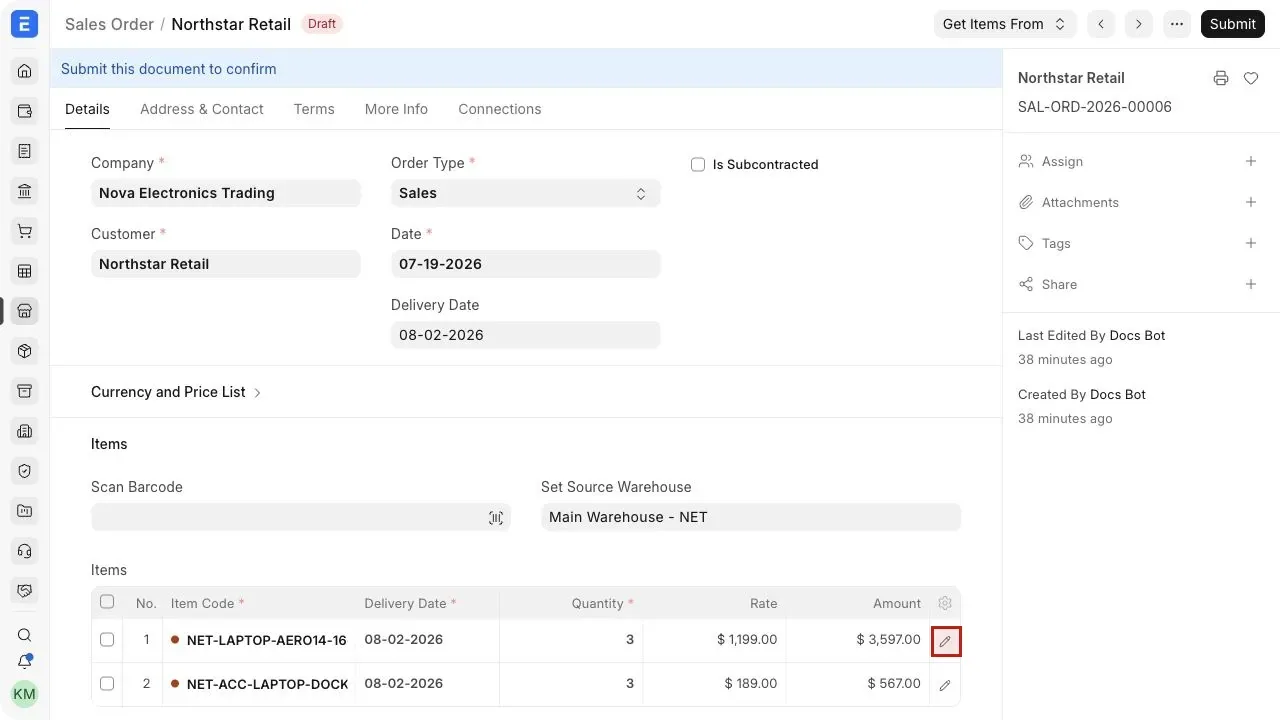
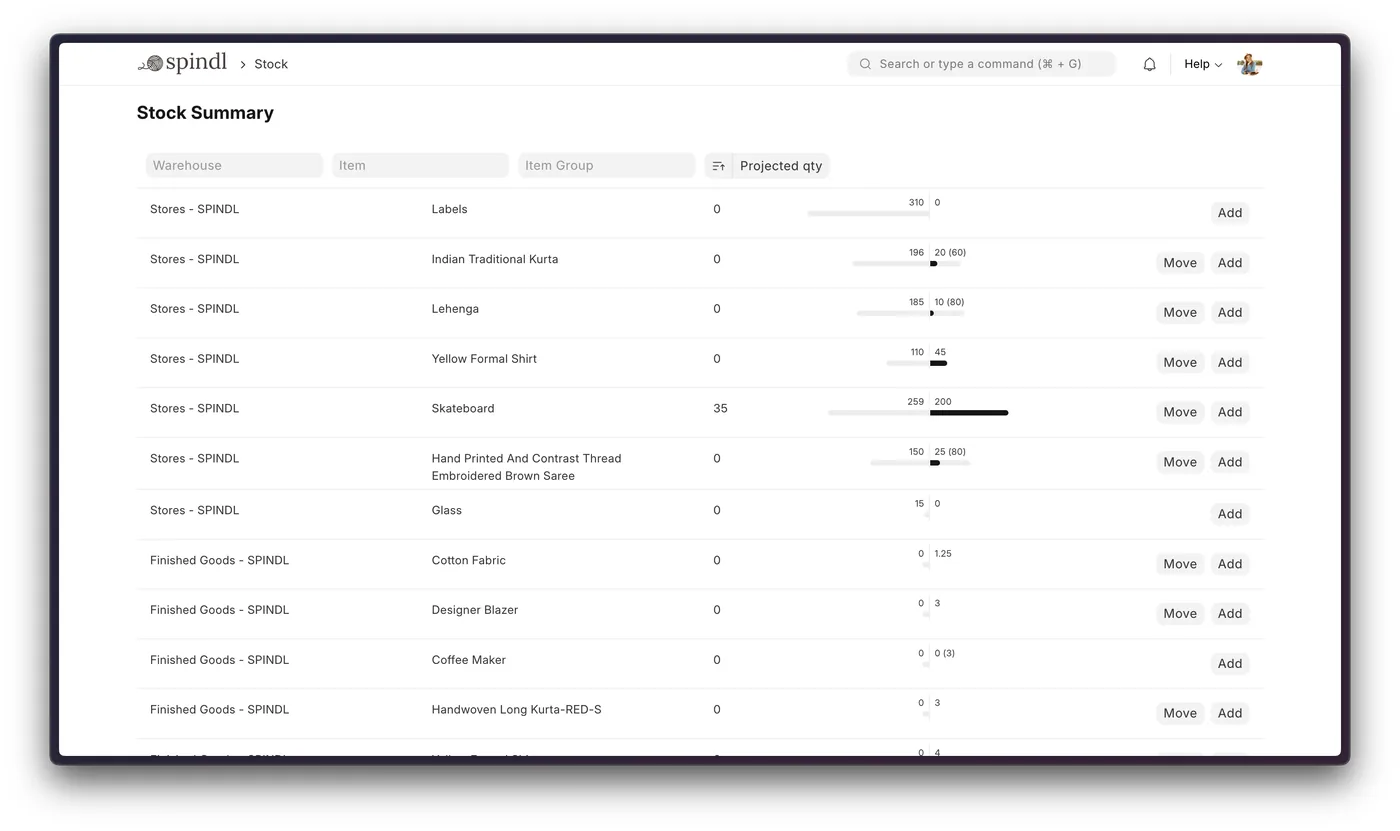
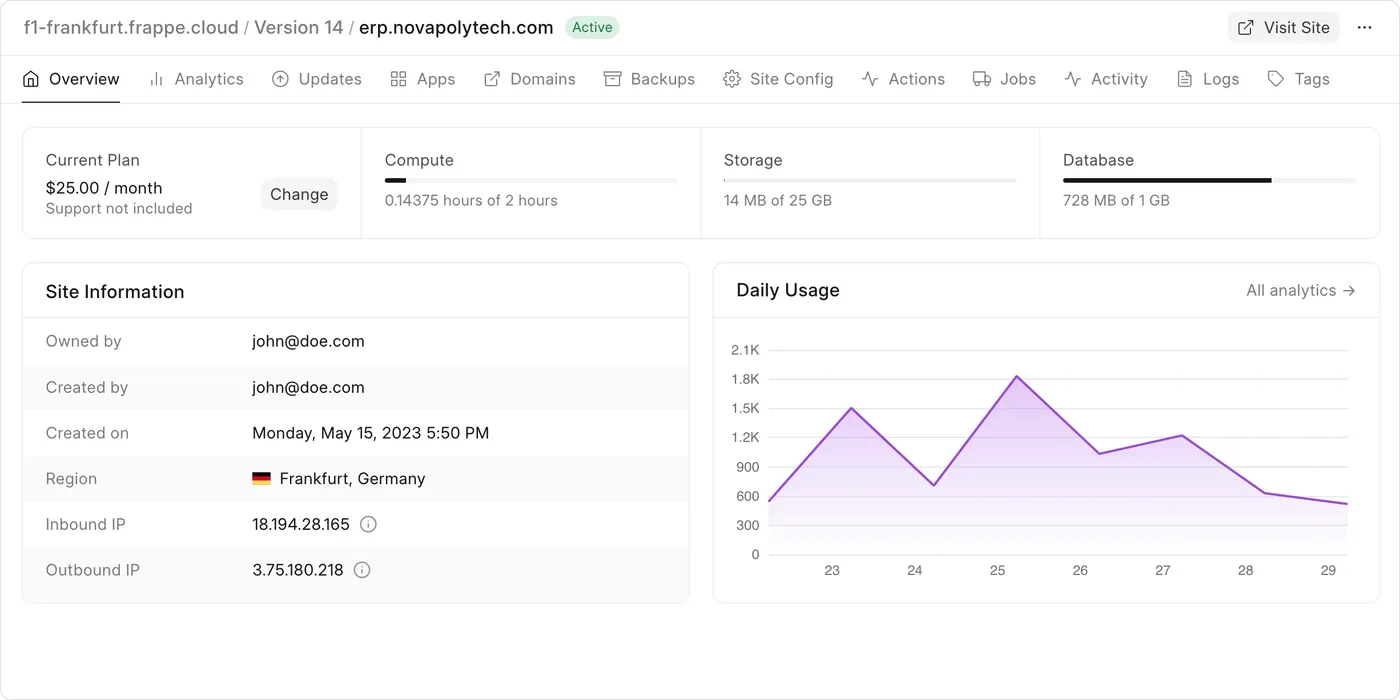
Real ERPNext and Frappe screens for the work described on this page. We configure them for local rules and your data.
ERPNext and the Frappe apps we implement
One open-source platform, one database, no per-user licence fees.







How ERPNext is localised in each country we serve
| Topic | The local rule | What we set up |
|---|---|---|
| Saudi Arabia | VAT at 15% and ZATCA e-invoicing, with Phase 2 integration rolled out to taxpayers in waves. | VAT templates, bilingual tax invoices and a ZATCA Phase 2 integration app, tested in the ZATCA simulation environment. |
| United Arab Emirates | VAT at 5% filed on the VAT 201 return; the eInvoicing programme goes live for businesses with revenue of AED 50 million or more on 1 January 2027 and for the rest on 1 July 2027. | ERPNext's built-in UAE VAT 201 report, TRN fields and a connection to your chosen Accredited Service Provider. |
| India | GST returns, e-invoicing through the IRP for businesses above the turnover threshold, and e-way bills for goods movements above Rs 50,000. | The open-source India Compliance app by Resilient Tech for GSTR-1, 2A/2B reconciliation, IRN and e-way bills. |
| Egypt | VAT at 14%, with B2B and B2G invoices submitted to the Egyptian Tax Authority and e-receipts for consumer sales. | The open-source Egypt Compliance app, a signing device connection and ETA item codes mapped per item. |
| Oman and Bahrain | VAT at 5% in Oman, with the Fawtara e-invoicing programme starting in 2027, and VAT at 10% in Bahrain. | Tax templates and return reports shaped to each authority's form, with Fawtara readiness planned for Omani taxpayers. |
| Qatar and Kuwait | No VAT in force; corporate income tax, zakat or national labour support tax and wage protection rules apply depending on the entity. | Ledgers, cost centres and payroll set up so the figures your tax adviser needs come straight from posted entries. |
We configure the system and check it against your accountant’s figures; we are not tax advisers, and your accountant files the returns. Last reviewed 27 November 2026.
How a typical ERPNext project runs
Discovery and fixed quote
Workshops with finance, operations and HR produce a written scope, a module list, a data plan and a fixed price, so you know what is included before configuration starts.
Configure and build
We set up companies, the chart of accounts, tax rules, warehouses, price lists, roles and approval workflows, and build any custom apps in the Frappe Framework outside core code.
Migrate and reconcile
Masters and open transactions are cleaned, loaded into a test site and checked against your old system until the trial balance and stock values agree.
Test and train
Your team runs real scenarios in the test site, including e-invoice submissions to the authority's sandbox, and each role is trained on the screens it will use daily.
Go live and support
We go live at the start of a tax period, stay close through the first close, and then move to an annual support plan with planned upgrades and 24/7 help.
ERPNext set up for your country’s rules
Each country has its own pages on tax, e-invoicing, payroll, cities and industries.
 ERPNext in Saudi Arabia
 ERPNext in the UAE
 ERPNext in India
 ERPNext in Ireland

Written and reviewed by Vikas Saroj, Co-Founder, COO & Growth at Shyphan AI Solutions, who owns ERPNext, Odoo and Zoho delivery across the UAE and the wider region. Reviewed against current UAE rules on 27 November 2026. Meet the team · LinkedIn
ERPNext Implementation Partner for the Gulf, India and Ireland: questions answered
Is Shyphan an official Frappe partner?
Is ERPNext really free?
Which countries do you implement ERPNext in?
Does ERPNext handle e-invoicing?
Can ERPNext run in Arabic?
How does ERPNext compare with Odoo or Zoho?
Request your free quote
Tell us about your project and a senior ERPNext consultant - not a bot - replies within 24 hours with scope, timeline and a fixed quote. The first 30-minute discovery call is free, with no obligation.
- Free 30-minute discovery call
- Fixed-quote SOW - no surprises
- Arabic · English delivery
- VAT, GST and e-invoicing set up per country