





















 Saudi Arabia
 UAE
 Qatar
 Bahrain
 Kuwait
 Oman
 Lebanon
 Egypt
 Jordan
 Iraq
 India
 UK
 Ireland
 Germany
 USA
 Australia
 Singapore
 South Africa
 France
 Hungary
 Georgia
 Turkey
 Canada
 LagosNigeria




ERPNext VAT and Corporate Tax Setup in the UAE
ERPNext includes a UAE regional module with a VAT 201 report, but the report is only as good as the tax templates, items and parties behind it. We configure ERPNext so 5% VAT, zero rated and exempt supplies, reverse charge and emirate splits are captured correctly on every document, and so your ledgers support corporate tax work. Your accountant files; we make sure the numbers are right.
- Tax templates
- Tax categories and rules
- VAT emirate defaults
- Reverse charge on imports
 ERPNext & FrappeImplementation · migration · AMC
Get a free quote
Reply within 24 hours with scope and a fixed quote.
ERPNext VAT and Corporate Tax Setup in the UAE: the short answer
- Built into ERPNext
- UAE VAT 201 report, UAE VAT Settings, TRN and VAT emirate fields, Arabic party names and Tax Invoice print formats.
- VAT basics
- 5% standard rate, registration above AED 375,000 of taxable supplies and imports, returns due by the 28th day after the period.
- Corporate tax
- 9% on taxable income above AED 375,000 under Federal Decree-Law 47 of 2022, for financial years starting on or after 1 June 2023.
- Our role
- Configuration, testing and support. We do not give tax advice or file returns.
- Delivered by
- Shyphan AI Solutions, an ERPNext implementation partner and Zoho Premium Partner, with 24/7 support. Call +971 55 145 3265.
- Last reviewed
- 27 November 2026
What ERPNext already does for UAE VAT
When a company's country is the United Arab Emirates, ERPNext's regional setup adds fields and reports aimed at the UAE return. Sales invoices get a VAT Emirate field and the company TRN; purchase invoices get Reverse Charge Applicable, a recoverable percentage and a field for recoverable standard rated expenses. Items can be flagged as zero rated or exempt. There are Tax Invoice, Detailed Tax Invoice and Simplified Tax Invoice print formats, and a UAE VAT Settings doctype where you map the accounts that hold VAT.
The UAE VAT 201 report then builds the return layout: standard rated supplies by emirate, tourist refunds, reverse charge supplies, zero rated and exempt totals on the output side, and standard rated expenses plus reverse charge on the input side. It is a genuine head start that many other systems do not offer.
What the report cannot do is fix poor inputs. If a Dubai customer has no address emirate, or a supplier of imported services is missing the reverse charge flag, the return will be wrong. Most of our VAT work is making sure those inputs are right by default.
From first record to the finished report
One open-source system, so each step feeds the next without re-keying.
How we configure tax in ERPNext
Tax templates
Sales and purchase taxes and charges templates for standard rated, zero rated and exempt supplies, plus item tax templates so mixed invoices calculate correctly line by line.
Tax categories and rules
Categories for UAE, GCC and non-GCC customers and suppliers, with tax rules that pick the right template from the party and address automatically.
VAT emirate defaults
Customer addresses carry the emirate, which fills the VAT Emirate field on sales invoices so the report splits supplies correctly.
Reverse charge on imports
Supplier groups and purchase templates for imported services and goods under reverse charge, with recoverable percentages set where input tax is partly blocked.
Chart of accounts for corporate tax
Accounts that separate entertainment, penalties, donations and other items your adviser may adjust, and cost centres per entity or branch.
Period review routine
Saved reports that list sales without an emirate, purchases with unusual tax and credit notes crossing periods, run before each return.
See it in ERPNext
Real ERPNext and Frappe screens for the work described on this page. We configure them for UAE rules and your data.
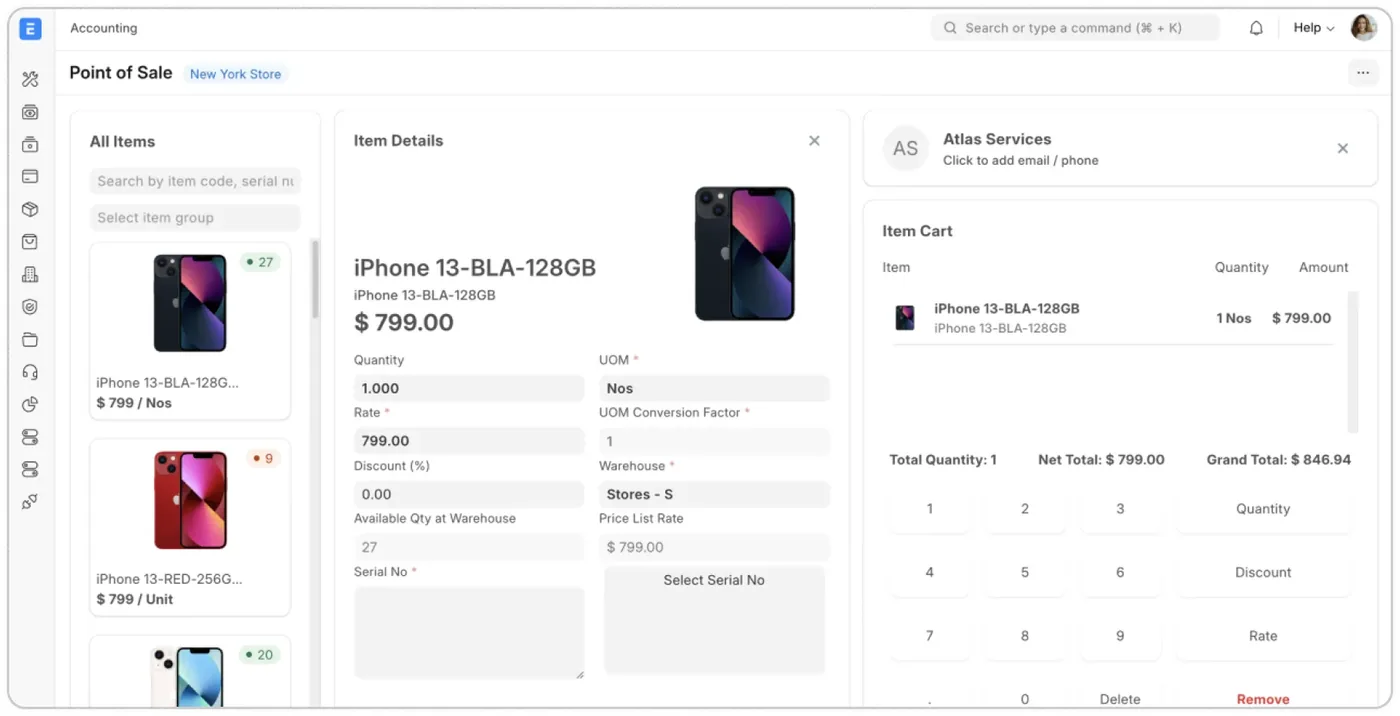
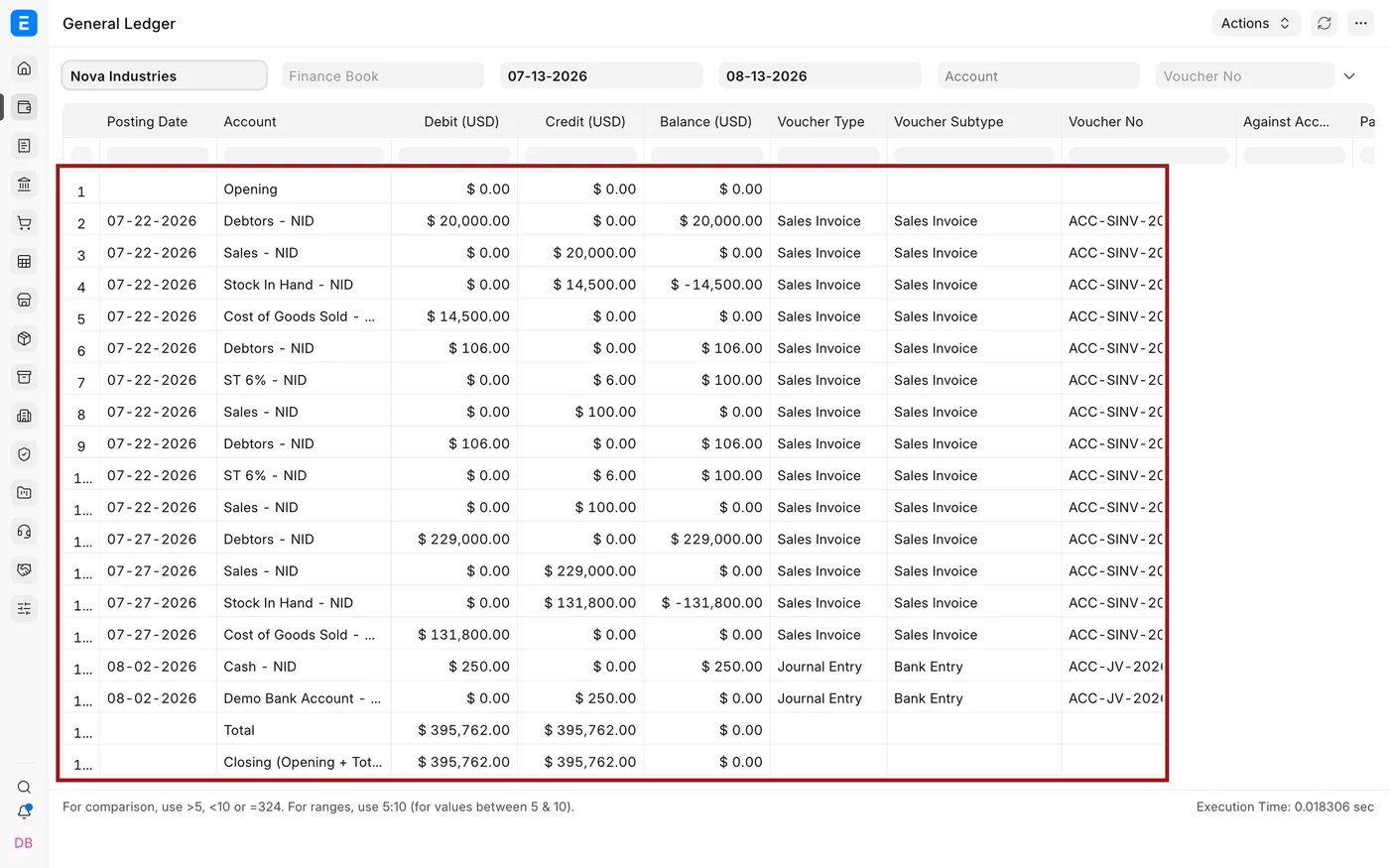
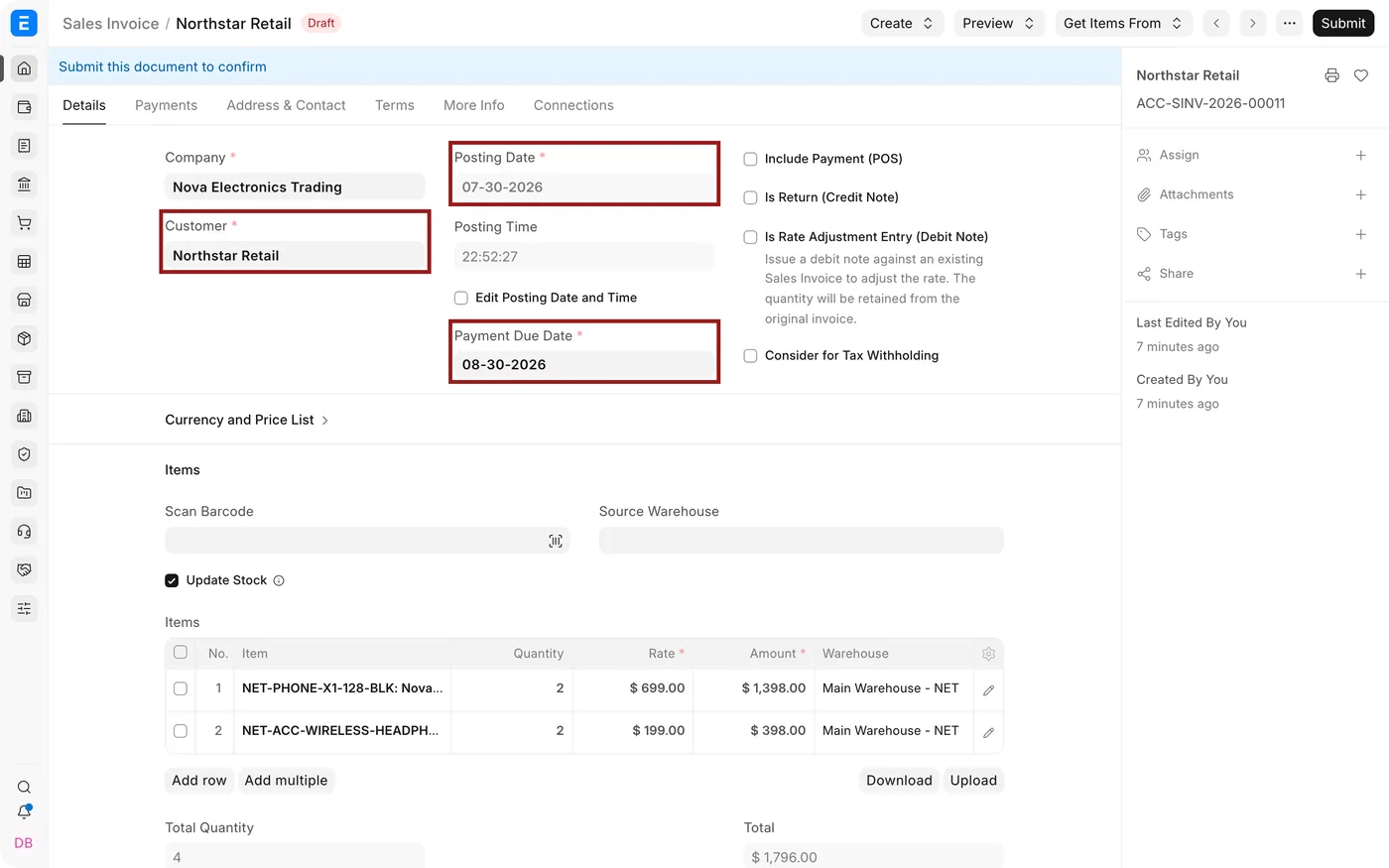
ERPNext and the Frappe apps we implement
One open-source platform, one database, no per-user licence fees.







UAE tax rules and the matching ERPNext setup
| Topic | The UAE rule | What we set up |
|---|---|---|
| VAT rate and registration | VAT is charged at 5%. Registration is mandatory when taxable supplies and imports exceed AED 375,000 in twelve months, and voluntary from AED 187,500. | Company TRN in the tax ID, 5% templates as defaults and a report that tracks rolling twelve-month taxable supplies for businesses near the threshold. |
| Return deadline | The VAT return must reach the FTA no later than the 28th day after the end of the tax period. Returns are filed on EmaraTax. | Period closing dates, a pre-close checklist and the UAE VAT 201 report ready for your accountant within days of period end. |
| Designated zones | Goods supplied in a designated zone can fall outside UAE VAT under FTA conditions; services in the zone are taxed normally. | Separate tax categories and warehouses for zone activity, with services always mapped to standard rated templates. |
| Corporate tax rate | Federal Decree-Law 47 of 2022 sets 0% on taxable income up to AED 375,000 and 9% above, for financial years starting on or after 1 June 2023. | Clean profit and loss by entity, with accounts structured for the adjustments your tax adviser makes outside ERPNext. |
| Corporate tax filing and records | Returns and payment are due within nine months of the end of the tax period; FTA guidance refers to keeping records for seven years in the cases it describes. | Locked closed periods, document attachments on journal entries and long-term archive backups. |
| Free zone persons | A Qualifying Free Zone Person can apply 0% to qualifying income under FTA conditions. | Income accounts and dimensions that let your adviser separate qualifying and other income. The classification itself is theirs. |
We configure the system and check it against your accountant’s figures; we are not tax advisers, and your accountant files the returns. Last reviewed 27 November 2026.
Getting your tax setup right
Review your VAT position
With your accountant we confirm registration details, tax periods, VAT group membership, designated zone activity and any partial exemption.
Configure templates and categories
Tax templates, item tax templates, tax rules and UAE VAT Settings are set up, and customer and supplier records are updated with emirate and TRN.
Test a period
We post a full set of test transactions and compare the UAE VAT 201 output with figures your accountant calculates independently.
Prepare for corporate tax
The chart of accounts and cost centres are checked against your adviser's needs so year-end figures come out in a usable shape.
Support each return
After go-live we help investigate any line that looks wrong before filing and adjust configuration if your business model changes.
Every ERPNext page for UAE businesses
Services
Compliance
- ERPNext VAT and Corporate Tax Setup in the UAE
- ERPNext eInvoicing in the UAE
- Frappe HR and Payroll in the UAE
Industries
Other countries
Worldwide

Written and reviewed by Vikas Saroj, Co-Founder, COO & Growth at Shyphan AI Solutions, who owns ERPNext, Odoo and Zoho delivery across the UAE and the wider region. Reviewed against current UAE rules on 27 November 2026. Meet the team · LinkedIn
ERPNext VAT and Corporate Tax Setup in the UAE: questions answered
Does ERPNext have a UAE VAT return report?
Can ERPNext file the return on EmaraTax?
Do you give VAT or corporate tax advice?
Is there a licence cost for the UAE module?
Are Arabic names supported on tax invoices?
Is Shyphan a Frappe-certified partner?
Request your free quote
Tell us about your project and a senior ERPNext consultant - not a bot - replies within 24 hours with scope, timeline and a fixed quote. The first 30-minute discovery call is free, with no obligation.
- Free 30-minute discovery call
- Fixed-quote SOW - no surprises
- Arabic · English delivery
- VAT 5%, corporate tax & WPS ready