





















 Saudi Arabia
 UAE
 Qatar
 Bahrain
 Kuwait
 Oman
 Lebanon
 Egypt
 Jordan
 Iraq
 India
 UK
 Ireland
 Germany
 USA
 Australia
 Singapore
 South Africa
 France
 Hungary
 Georgia
 Turkey
 Canada
 LagosNigeria




ERPNext Implementation in the UAE
An ERPNext implementation succeeds or fails on the decisions made before anyone clicks Save. We run UAE implementations in clear phases, each with its own sign-off, so finance and operations know exactly what goes live, when, and who owns it afterwards.
- Company and accounts structure
- Items, warehouses and valuation
- Tax configuration
- Roles and approvals
 ERPNext & FrappeImplementation · migration · AMC
Get a free quote
Reply within 24 hours with scope and a fixed quote.
ERPNext Implementation in the UAE: the short answer
- Approach
- Phased delivery: core finance and stock first, then manufacturing, projects, HR or point of sale as separate releases.
- Typical length
- A single-entity company with standard processes goes live faster than a group with free zone companies, several warehouses and payroll. We give a dated plan after discovery.
- Your team's time
- A project owner, a finance lead and one key user per department, available for workshops and testing.
- Outcome
- A configured ERPNext site, migrated data, trained users, written procedures and a support contract in place.
- Delivered by
- Shyphan AI Solutions, an ERPNext implementation partner and Zoho Premium Partner, with 24/7 support. Call +971 55 145 3265.
- Last reviewed
- 27 November 2026
What implementation actually involves
Installing ERPNext takes minutes. Implementing it means deciding how your chart of accounts is structured, which warehouses exist, how items are coded, who approves purchase orders above a limit and how VAT falls on each type of sale. In the UAE there are extra questions: does the business supply goods from a designated zone, does it import services that trigger reverse charge, and which emirate is each sale reported against on the VAT 201 return.
We answer those questions with your finance and operations people, write the answers down and only then configure. That order matters. A system built on guesses about stock valuation or tax categories produces month-end reports nobody trusts, and fixing master data after six months of transactions costs far more than getting it right in week two.
Our implementations use standard ERPNext wherever possible. When a requirement truly needs development, we build it in a separate Frappe app so the core stays upgradeable.
From first record to the finished report
One open-source system, so each step feeds the next without re-keying.
Workstreams in a UAE implementation
Company and accounts structure
Legal entities, TRNs, cost centres by branch or emirate, a chart of accounts that suits both management reporting and corporate tax records, and fiscal year settings.
Items, warehouses and valuation
Item groups, units of measure, batch or serial tracking where needed, warehouse tree, reorder levels and a valuation method agreed with your auditors.
Tax configuration
Sales and purchase tax templates for 5%, zero rated and exempt supplies, tax categories for GCC and non-GCC parties, and the VAT emirate defaulted from the customer address.
Roles and approvals
Role profiles for sales, stores, buyers and accountants, plus approval rules on purchase orders, discounts and credit limits so authority matches your delegation matrix.
Documents and print formats
Tax invoices with TRN, Arabic party names and amounts in AED, delivery notes, quotations and purchase orders on your letterhead, in English and Arabic where you need it.
Training and handover
Role-based sessions, short written procedures for each process and a named internal owner who can manage users and basic settings after go-live.
See it in ERPNext
Real ERPNext and Frappe screens for the work described on this page. We configure them for UAE rules and your data.
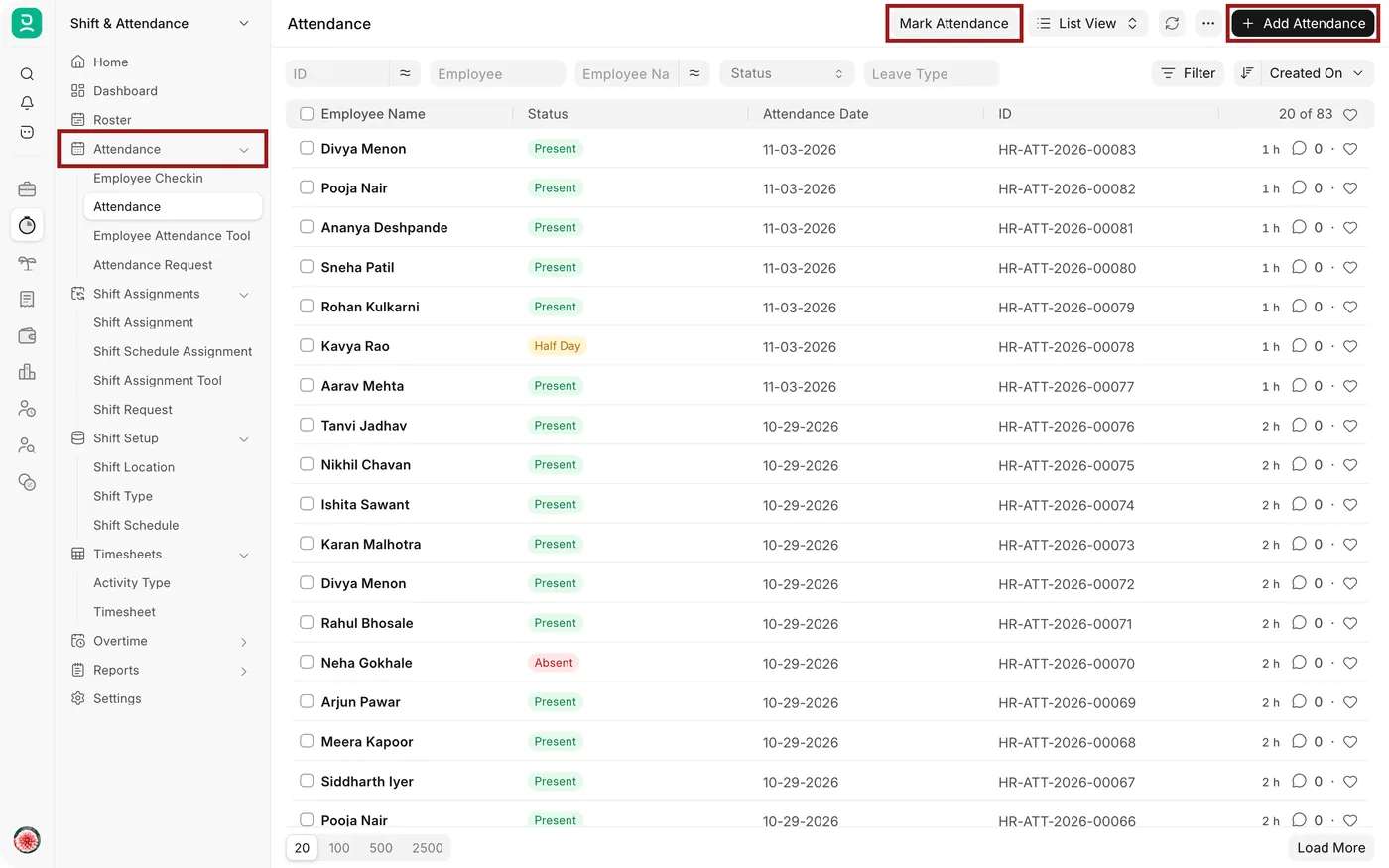
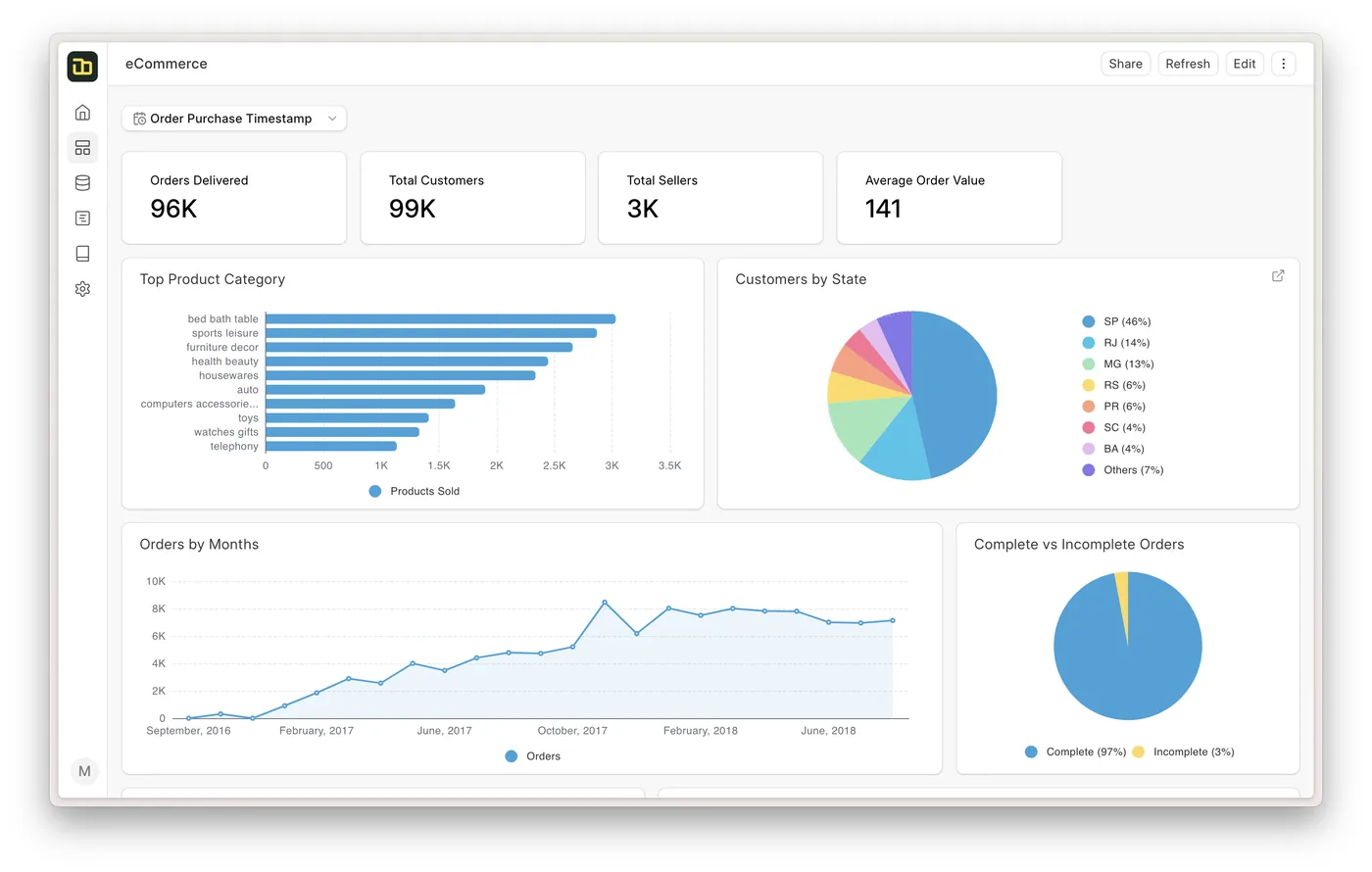
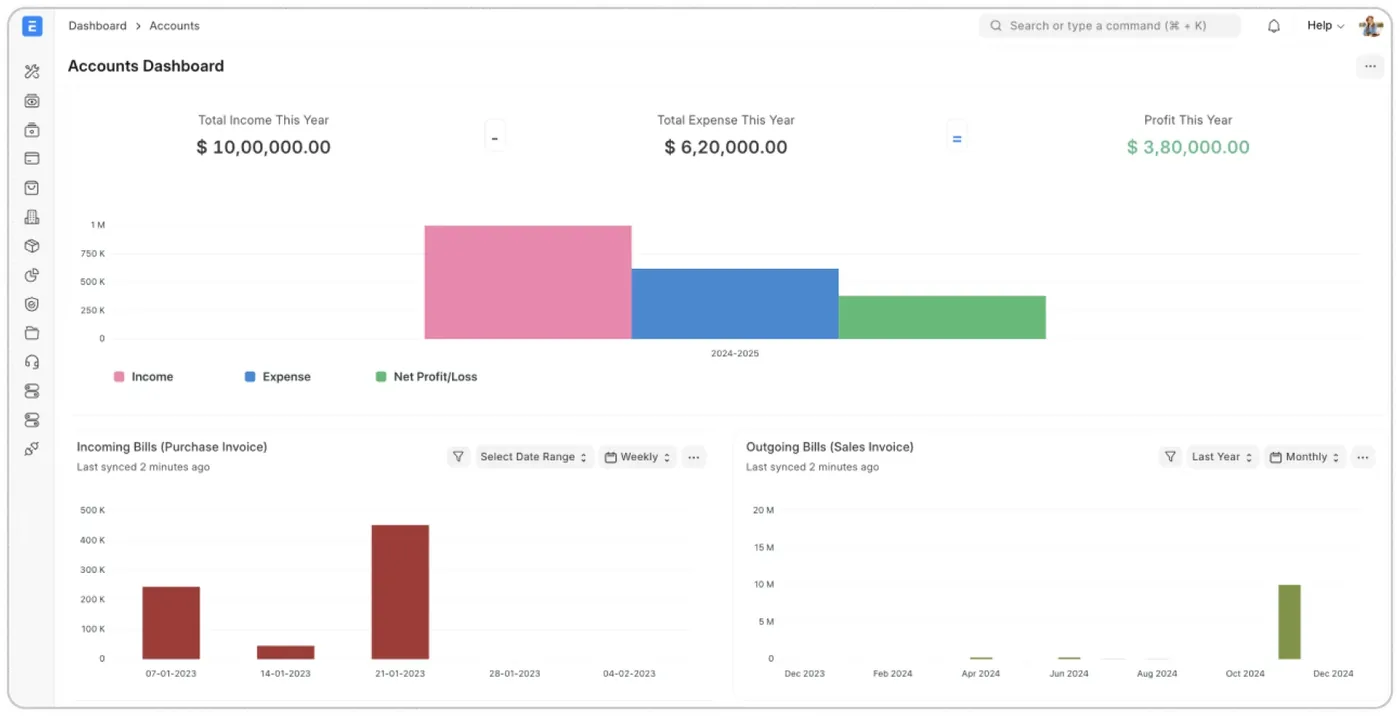
ERPNext and the Frappe apps we implement
One open-source platform, one database, no per-user licence fees.







UAE decisions made during implementation
| Topic | The UAE rule | What we set up |
|---|---|---|
| VAT emirate | The VAT 201 return reports standard rated supplies split by emirate. | The VAT Emirate field on sales invoices is filled from the customer address, and the UAE VAT 201 report groups sales by it. |
| Reverse charge | A registered business that imports services or certain goods accounts for VAT itself under the reverse charge mechanism. | Purchase invoices carry the Reverse Charge Applicable flag and the recoverable percentage, which flow into the input lines of VAT 201. |
| Tax invoice content | UAE tax invoices must identify the supplier and recipient, including TRN, and show the VAT charged. | We use and adapt ERPNext's Tax Invoice and Simplified Tax Invoice print formats with your branding and Arabic names. |
| Corporate tax records | Corporate tax under Federal Decree-Law 47 of 2022 needs reliable financial statements and supporting records. | Accounts are mapped so trial balance, profit and loss and balance sheet come straight from ERPNext for your auditor and tax adviser. |
| eInvoicing phase | Your mandatory eInvoicing date depends on revenue: 1 January 2027 at AED 50 million or more, 1 July 2027 below that. | If your date falls inside the project, the ASP connection is planned as its own workstream rather than squeezed in after go-live. |
We configure the system and check it against your accountant’s figures; we are not tax advisers, and your accountant files the returns. Last reviewed 27 November 2026.
The phases and what you sign at each
Phase 1: discovery and design
Department workshops, a review of current reports and a solution design document. You sign the design, the scope and the fixed price before configuration begins.
Phase 2: build
We configure companies, accounts, taxes, items, workflows and print formats on a staging site and show progress in short weekly demos so nothing arrives as a surprise.
Phase 3: data migration
Customers, suppliers, items, open orders and opening balances are cleaned and imported. Finance reconciles trial balances against the old system before sign-off.
Phase 4: testing and training
Key users run scripted scenarios, including a VAT 201 check for a test period. Training happens by role, close to go-live so it sticks.
Phase 5: go-live and stabilisation
We switch over at a period boundary where possible, sit with users during the first weeks and close the project with a handover to the support team.
Every ERPNext page for UAE businesses
Services
Compliance
Industries
Other countries
Worldwide

Written and reviewed by Vikas Saroj, Co-Founder, COO & Growth at Shyphan AI Solutions, who owns ERPNext, Odoo and Zoho delivery across the UAE and the wider region. Reviewed against current UAE rules on 27 November 2026. Meet the team · LinkedIn
ERPNext Implementation in the UAE: questions answered
How long does an ERPNext implementation take in the UAE?
Can we start with accounting and add modules later?
Who does the data cleansing?
Is there a licence cost on top of implementation?
Is Shyphan a Frappe-certified partner?
Can workshops happen at our office?
Request your free quote
Tell us about your project and a senior ERPNext consultant - not a bot - replies within 24 hours with scope, timeline and a fixed quote. The first 30-minute discovery call is free, with no obligation.
- Free 30-minute discovery call
- Fixed-quote SOW - no surprises
- Arabic · English delivery
- VAT 5%, corporate tax & WPS ready