





















 Saudi Arabia
 UAE
 Qatar
 Bahrain
 Kuwait
 Oman
 Lebanon
 Egypt
 Jordan
 Iraq
 India
 UK
 Ireland
 Germany
 USA
 Australia
 Singapore
 South Africa
 France
 Hungary
 Georgia
 Turkey
 Canada
 LagosNigeria




ERPNext for Trading Companies in the UAE
General trading and re-export are the backbone of UAE commerce, and they punish weak systems: thin margins, many currencies, goods in transit and customers on credit across three continents. We configure ERPNext so a UAE trader always knows true landed cost, margin per shipment, stock by location and who owes what.
- Multi-currency throughout
- Landed cost
- Batch and serial tracking
- Price lists by market
 ERPNext & FrappeImplementation · migration · AMC
Get a free quote
Reply within 24 hours with scope and a fixed quote.
ERPNext for Trading Companies in the UAE: the short answer
- Built for
- Importers, re-exporters, distributors and general trading companies on the mainland or in free zones such as JAFZA, DMCC and SAIF Zone.
- Core features
- Multi-currency purchase and sales, landed cost allocation, batch and serial tracking, price lists by market and customer credit limits.
- Tax handling
- Zero rated exports, designated zone movements, reverse charge on imported services and the UAE VAT 201 report.
- Visibility
- Margin by shipment, customer, salesperson and product line, and stock ageing to show what is not moving.
- Delivered by
- Shyphan AI Solutions, an ERPNext implementation partner and Zoho Premium Partner, with 24/7 support. Call +971 55 145 3265.
- Last reviewed
- 27 November 2026
The trading cycle in ERPNext
Consider a typical re-exporter in Jebel Ali. It buys tyres or mobile accessories from suppliers in China in USD, pays freight and insurance, clears goods into a JAFZA warehouse and sells them on to buyers in East Africa, Iraq and Central Asia, some paying in advance and some on thirty or sixty days. A sister mainland company buys part of the stock for local wholesale customers in AED.
In ERPNext the purchase order is raised in USD at the agreed rate. When the container arrives, a purchase receipt brings goods into the zone warehouse, and a landed cost voucher spreads freight, insurance, duty where it applies and agent fees across the items, raising their valuation to true cost. Sales orders are raised in the buyer's currency, invoiced with the correct zero rated or standard template, and payments settle with exchange gains or losses posted automatically.
The owner sees the whole cycle: what is on the water, what is in each warehouse, which customers are overdue and what each shipment really earned. Because ERPNext keeps one item master across companies, the mainland sister company sees the same product codes, descriptions and barcodes as the zone entity, and inter-company sales between them are created from one side in a single step.
From first record to the finished report
One open-source system, so each step feeds the next without re-keying.
ERPNext features traders rely on
Multi-currency throughout
Suppliers and customers in their own currencies, exchange rates by date, foreign currency bank accounts and realised and unrealised exchange gain or loss.
Landed cost
Freight, insurance, customs duty and clearing charges allocated to items by value, quantity or weight, so valuation and margin reflect true cost.
Batch and serial tracking
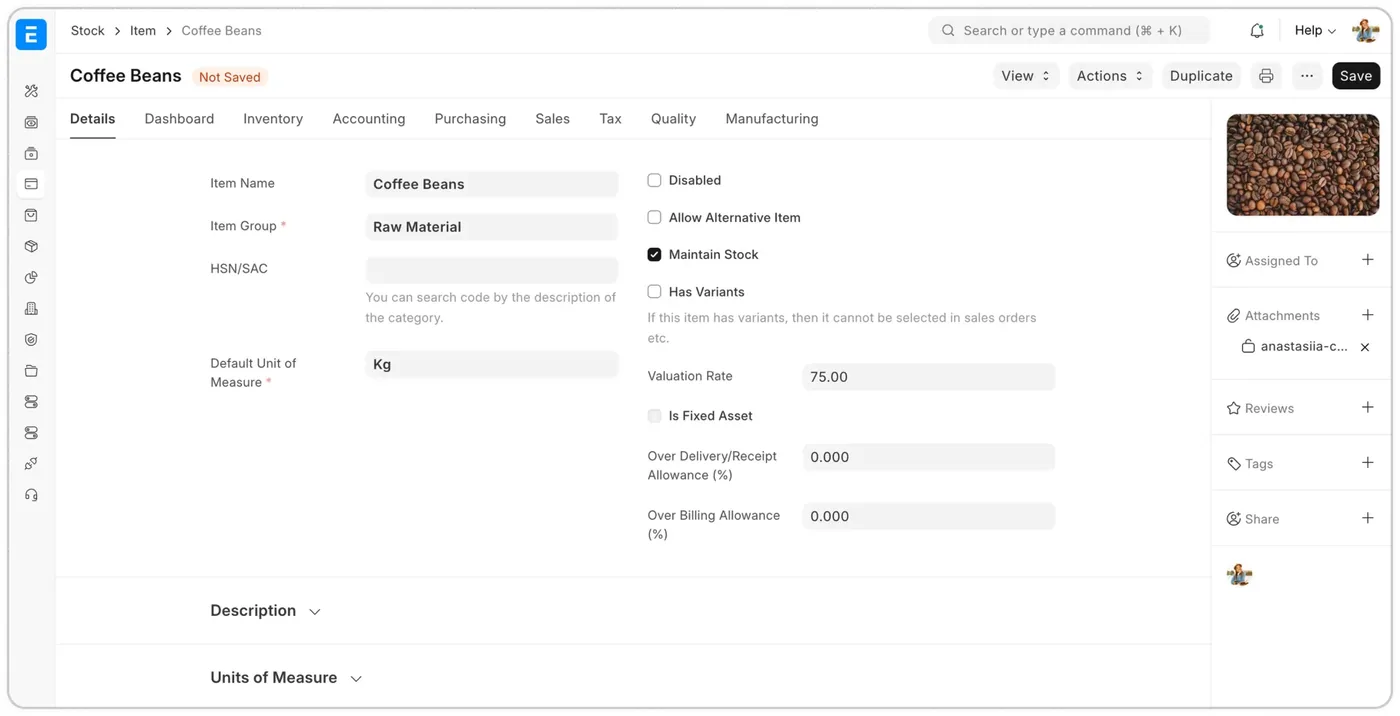
Serial numbers for electronics, batches with expiry for food and cosmetics, and full traceability from supplier to end customer.
Price lists by market
Separate selling price lists for GCC, African and local wholesale customers, with pricing rules for volume discounts and promotional periods.
Credit control
Credit limits and payment terms per customer, overdue blocking at order entry, ageing by currency and dunning letters by email. Advance payments from new buyers are held as customer advances and allocated against invoices when goods ship.
Goods in transit
Purchase orders tracked from confirmation to receipt, expected arrival dates and stock projections that include incoming shipments.
See it in ERPNext
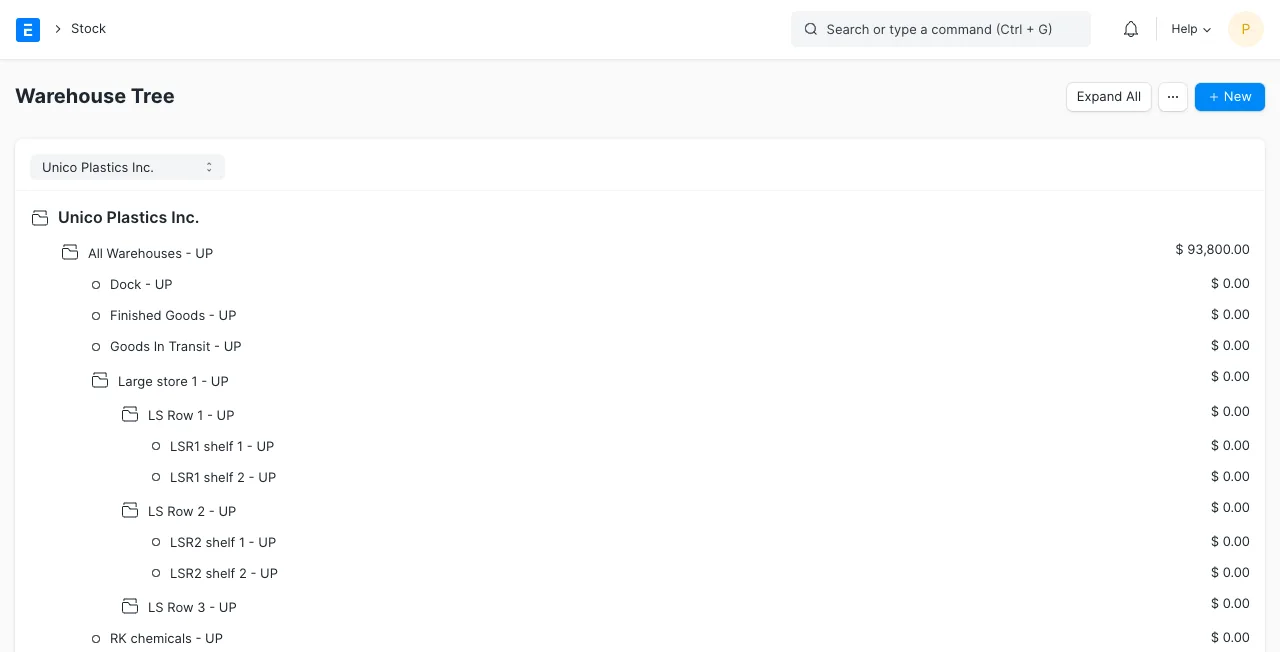
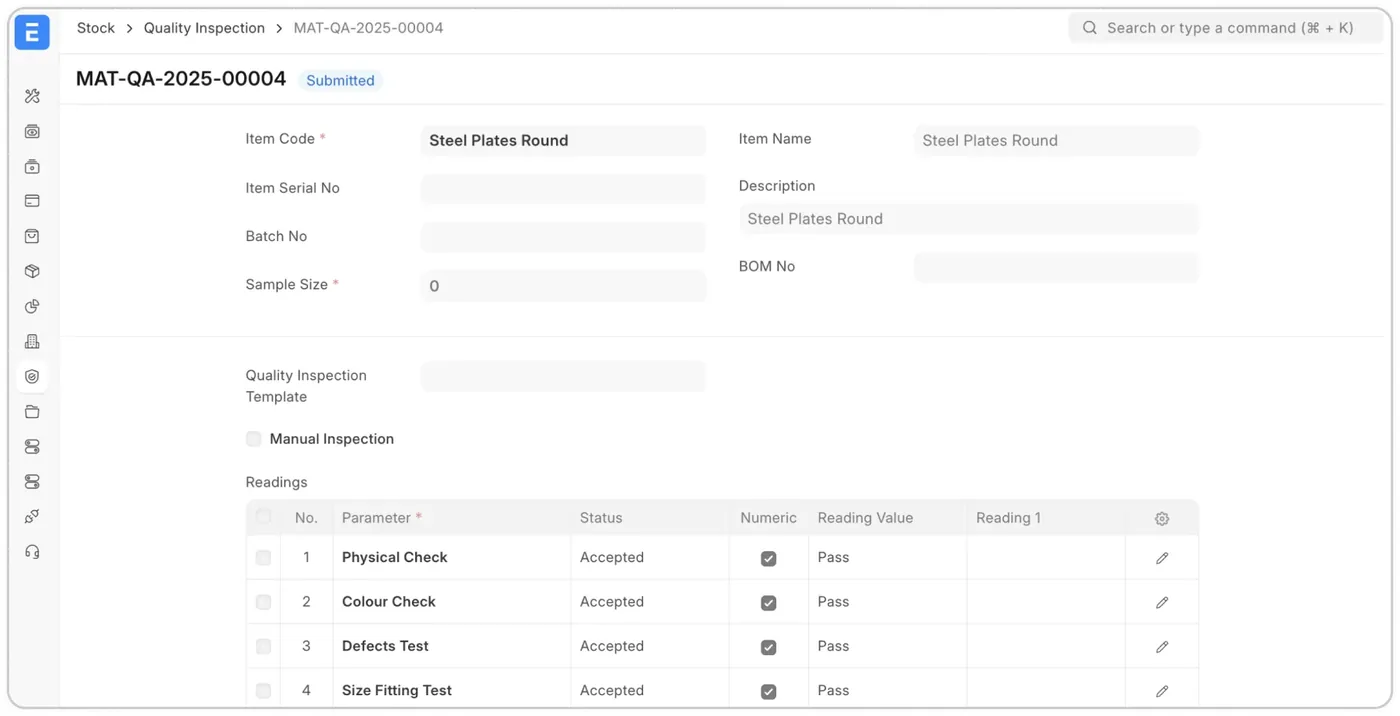
Real ERPNext and Frappe screens for the work described on this page. We configure them for UAE rules and your data.
ERPNext and the Frappe apps we implement
One open-source platform, one database, no per-user licence fees.







UAE trading rules and the matching setup
| Topic | The UAE rule | What we set up |
|---|---|---|
| Exports | Exports of goods outside the UAE can be zero rated for VAT where the FTA's evidence conditions are met. | Export tax templates, mandatory attachments for shipping evidence on export invoices and the zero rated line on VAT 201. |
| Designated zone supplies | Goods supplied in a designated zone can be outside UAE VAT if not consumed in the UAE and FTA conditions are met; moving goods from the mainland into a zone is not an export. | Distinct tax categories for zone-to-zone, zone-to-mainland and mainland-to-zone movements, with zone and mainland stock in separate warehouses. |
| Imported services | Registered businesses account for VAT on imported services under reverse charge. | Supplier groups for foreign service providers, such as freight forwarders and software vendors, with reverse charge templates and the flag set on purchase invoices. |
| eInvoicing | Large traders at or above AED 50 million revenue implement eInvoicing by 1 January 2027; others by 1 July 2027. B2C sales are outside the system for now. | PINT AE mapping for B2B invoices and credit notes, with cash and retail sales kept separate. |
| Corporate tax | Taxable income above AED 375,000 is taxed at 9% under Federal Decree-Law 47 of 2022; Qualifying Free Zone Persons may apply 0% to qualifying income. | Income accounts split by entity and type so your adviser can assess free zone qualifying income. |
We configure the system and check it against your accountant’s figures; we are not tax advisers, and your accountant files the returns. Last reviewed 27 November 2026.
How we implement ERPNext for a trader
Map the trade flows
We list suppliers, buying currencies, routes, warehouses, customer markets and payment terms, and follow one recent shipment end to end. Unusual cases, such as part shipments, returns from overseas buyers or goods held for a customer, are written down early so they are not discovered at go-live.
Set up entities and stock
Companies, warehouses by zone and location, item groups and tracking rules are configured, with valuation agreed with your auditor.
Configure tax and currency
Tax categories for exports, zone movements and local sales, exchange rate sources and foreign currency bank accounts are put in place.
Migrate and reconcile
Open purchase orders, stock by batch or serial, open receivables in each currency and opening balances are loaded and checked.
Run a live shipment
The first real container goes through ERPNext from order to collection with us alongside, and margin is checked against your own working.
Every ERPNext page for UAE businesses
Services
Compliance
Industries
- ERPNext for Trading Companies in the UAE
- ERPNext for Manufacturers in the UAE
- ERPNext for Retailers in the UAE
- ERPNext for Construction Companies in the UAE
Other countries
Worldwide

Written and reviewed by Vikas Saroj, Co-Founder, COO & Growth at Shyphan AI Solutions, who owns ERPNext, Odoo and Zoho delivery across the UAE and the wider region. Reviewed against current UAE rules on 27 November 2026. Meet the team · LinkedIn
ERPNext for Trading Companies in the UAE: questions answered
Can ERPNext track margin per shipment?
Does ERPNext handle many currencies at once?
Is there a licence cost per trading entity?
Can our sales team work in Arabic?
Are you an official Frappe partner?
Can ERPNext handle consignment or drop shipping?
Request your free quote
Tell us about your project and a senior ERPNext consultant - not a bot - replies within 24 hours with scope, timeline and a fixed quote. The first 30-minute discovery call is free, with no obligation.
- Free 30-minute discovery call
- Fixed-quote SOW - no surprises
- Arabic · English delivery
- VAT 5%, corporate tax & WPS ready