





















 Saudi Arabia
 UAE
 Qatar
 Bahrain
 Kuwait
 Oman
 Lebanon
 Egypt
 Jordan
 Iraq
 India
 UK
 Ireland
 Germany
 USA
 Australia
 Singapore
 South Africa
 France
 Hungary
 Georgia
 Turkey
 Canada
 LagosNigeria




ERPNext for Free Zone and Multi-Company Groups in the UAE
Many UAE groups run a mainland company for local trade, a free zone company for import and re-export and sometimes a holding entity elsewhere. ERPNext can hold all of them in one database with separate books, while giving owners a consolidated picture. We design that structure so VAT, stock and inter-company balances stay clean.
- Company tree
- Warehouses by entity and zone
- Inter-company transactions
- Consolidated reporting
 ERPNext & FrappeImplementation · migration · AMC
Get a free quote
Reply within 24 hours with scope and a fixed quote.
ERPNext for Free Zone and Multi-Company Groups in the UAE: the short answer
- Structure
- One ERPNext site, several companies, each with its own chart of accounts, currency, TRN, letterhead and permissions.
- Free zone stock
- Separate warehouses per entity and location, so goods in a designated zone never mix with mainland stock.
- Inter-company
- Sales in one entity can create the matching purchase in the other, with inter-company accounts that reconcile.
- Group reporting
- Consolidated financial statements across companies, with currency translation where entities use different reporting currencies.
- Delivered by
- Shyphan AI Solutions, an ERPNext implementation partner and Zoho Premium Partner, with 24/7 support. Call +971 55 145 3265.
- Last reviewed
- 27 November 2026
Why group structure matters in ERPNext
A typical arrangement looks like this. A free zone company in Jebel Ali or KEZAD imports goods, holds them in a bonded warehouse and sells some abroad. A mainland LLC in Dubai or Sharjah buys from the free zone company and sells to local customers. Head office staff work for both. On paper these are separate taxable persons, or members of one VAT group, and the books have to show that clearly.
ERPNext handles multiple companies natively. Each company has its own ledgers, cost centres, fiscal settings and default accounts, and users can be limited to the companies they work for. The hard part is not the software but the design: which entity owns which stock, how transfers between a designated zone and the mainland are documented, and how inter-company balances are kept in step.
We work through these questions with your finance team and tax adviser, then build a structure that keeps each company's VAT 201 report and corporate tax records separate while giving the owners one dashboard.
From first record to the finished report
One open-source system, so each step feeds the next without re-keying.
What we configure for UAE groups
Company tree
Parent and child companies in ERPNext, each with its own chart of accounts, TRN, default currency and abbreviation, so every document shows which entity issued it.
Warehouses by entity and zone
Warehouse trees per company and per location, for example a Jebel Ali bonded store and a mainland showroom, with stock ledgers that never cross entities by accident.
Inter-company transactions
Inter-company customers and suppliers, matching sales and purchase invoices and reconciliation of inter-company balances at month end.
Consolidated reporting
Consolidated trial balance, profit and loss and balance sheet, with currency translation for entities that report in USD or another currency.
Shared users, separated data
One login per person, with user permissions limiting each person to the companies, warehouses and cost centres they handle.
Separate tax outputs
Each VAT-registered entity, or the VAT group, gets its own UAE VAT 201 report run and its own document numbering.
See it in ERPNext
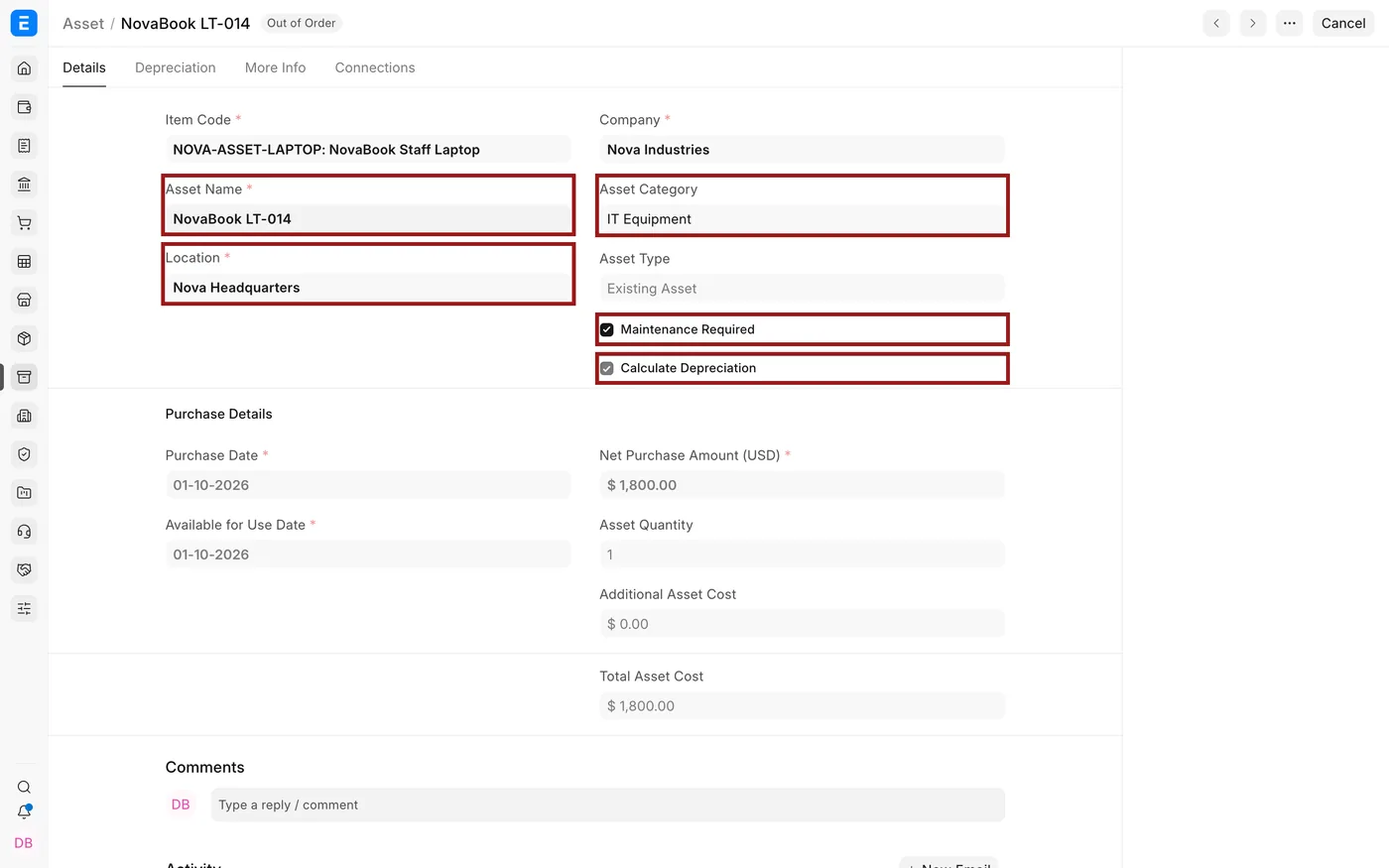
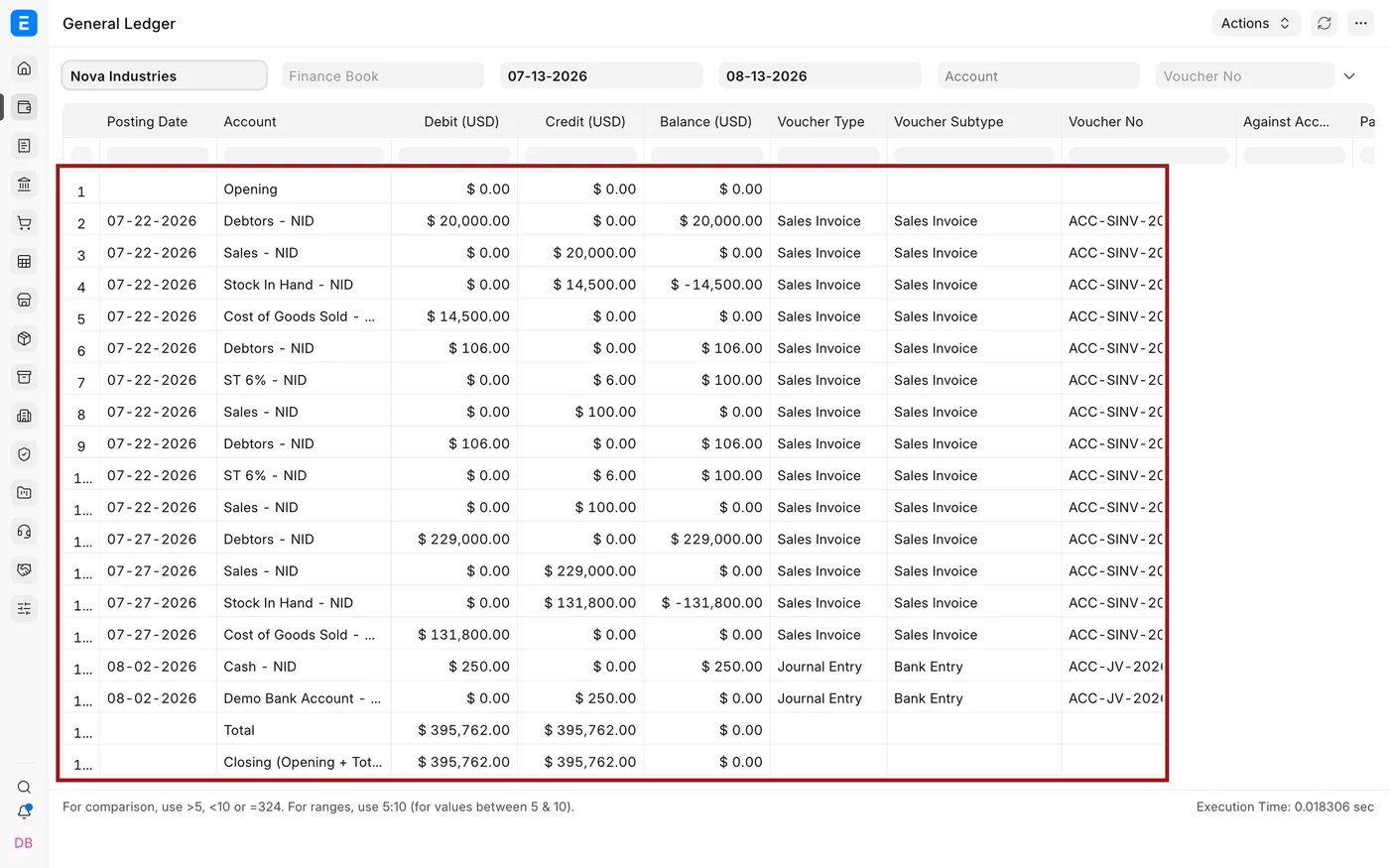
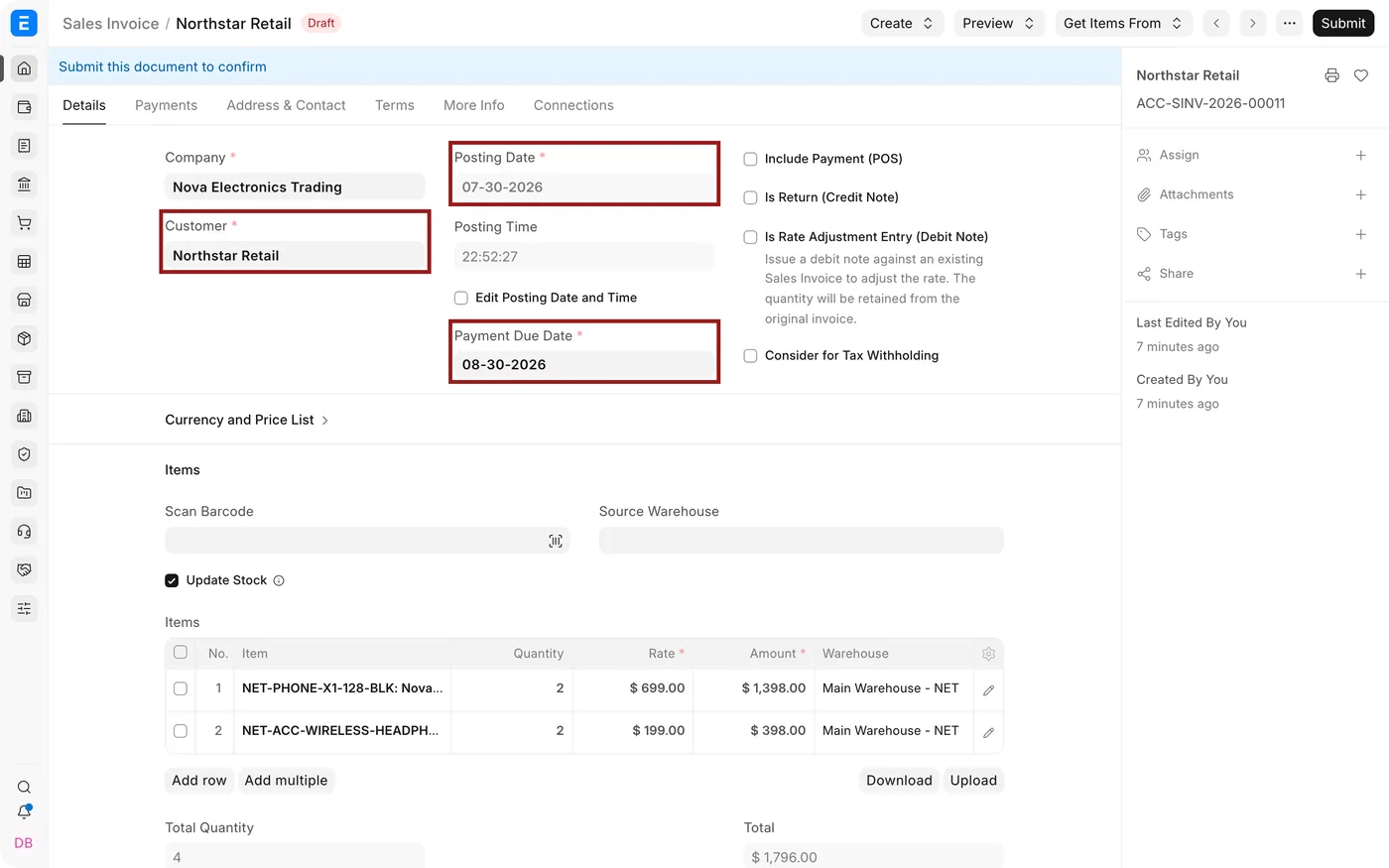
Real ERPNext and Frappe screens for the work described on this page. We configure them for UAE rules and your data.
ERPNext and the Frappe apps we implement
One open-source platform, one database, no per-user licence fees.







UAE rules a group structure must respect
| Topic | The UAE rule | What we set up |
|---|---|---|
| Designated zones for VAT | Cabinet Decision 59 of 2017 lists designated zones. Goods supplied inside one are outside UAE VAT only where FTA conditions are met and the goods are not consumed in the UAE. Services in a designated zone are taxed as on the mainland. | Separate tax categories for zone-to-zone, zone-to-mainland and export sales, with service items always taking standard VAT templates. |
| Mainland to zone movements | Moving goods from the mainland into a designated zone is not treated as an export for VAT. | Transfers between entities are invoiced with the correct tax template rather than posted as zero rated exports. |
| VAT groups | Two or more persons can register as a single taxable person, a Tax Group. Under Ministerial Decision 197 of 2026, transactions within a Tax Group are excluded from eInvoicing for 24 months from 1 January 2027. | Group members are flagged so inter-company invoices inside the VAT group can be handled differently from third-party sales. |
| Corporate tax for free zone persons | A Qualifying Free Zone Person may apply 0% corporate tax to qualifying income under conditions set by the FTA; other income is taxed at the standard rates. | Income accounts and cost centres that let your adviser separate qualifying and non-qualifying income. We do not decide the classification. |
| Data protection by entity | A company registered in the DIFC or ADGM follows that free zone's data protection law rather than the federal PDPL. | User permissions and records of processing are kept per entity so each company can meet its own regime. |
We configure the system and check it against your accountant’s figures; we are not tax advisers, and your accountant files the returns. Last reviewed 27 November 2026.
How we design a multi-company setup
Map the legal structure
We list every entity, its licence authority, TRN or VAT group membership, currency and the activities it carries out.
Decide who owns what
Stock, customers, staff and bank accounts are assigned to entities. Shared costs get an allocation rule agreed with finance.
Design inter-company flows
We document how goods and services move between entities, the tax template for each movement and how balances are settled.
Build and test per entity
Each company is configured and tested alone, then inter-company scenarios are tested end to end, including a VAT 201 run per registration.
Consolidate
Group reports are checked against a manual consolidation for one period before owners start relying on them.
Every ERPNext page for UAE businesses
Services
- ERPNext Partner in the UAE
- ERPNext Implementation in the UAE
- ERPNext Customization in the UAE
- ERPNext Migration in the UAE
- ERPNext Hosting in the UAE
- ERPNext Support in the UAE
- ERPNext Pricing in the UAE
- ERPNext for Free Zone and Multi-Company Groups in the UAE
Compliance
Industries
Other countries
Worldwide

Written and reviewed by Vikas Saroj, Co-Founder, COO & Growth at Shyphan AI Solutions, who owns ERPNext, Odoo and Zoho delivery across the UAE and the wider region. Reviewed against current UAE rules on 27 November 2026. Meet the team · LinkedIn
ERPNext for Free Zone and Multi-Company Groups in the UAE: questions answered
Can one ERPNext site hold mainland and free zone companies?
How does ERPNext treat designated zone sales for VAT?
Does each company need its own licence?
Can we consolidate in different currencies?
Are you an official Frappe partner?
Can documents for each entity be in Arabic?
Request your free quote
Tell us about your project and a senior ERPNext consultant - not a bot - replies within 24 hours with scope, timeline and a fixed quote. The first 30-minute discovery call is free, with no obligation.
- Free 30-minute discovery call
- Fixed-quote SOW - no surprises
- Arabic · English delivery
- VAT 5%, corporate tax & WPS ready