





















 Saudi Arabia
 UAE
 Qatar
 Bahrain
 Kuwait
 Oman
 Lebanon
 Egypt
 Jordan
 Iraq
 India
 UK
 Ireland
 Germany
 USA
 Australia
 Singapore
 South Africa
 France
 Hungary
 Georgia
 Turkey
 Canada
 LagosNigeria




ERPNext Customization in the UAE
Most UAE businesses need ERPNext to bend a little: a bilingual quotation for a government buyer, an approval chain that mirrors the owner's delegation, a link to a courier or a bank. We customise through settings first, scripts second and a separate Frappe app last, so your changes survive every upgrade.
- Bilingual print formats
- Workflows and approvals
- Post-dated cheque handling
- Document expiry tracking
 ERPNext & FrappeImplementation · migration · AMC
Get a free quote
Reply within 24 hours with scope and a fixed quote.
ERPNext Customization in the UAE: the short answer
- First choice
- Configuration: custom fields, property setters, workflows and print formats that need no code at all.
- When code is needed
- A dedicated Frappe app in its own Git repository, with your doctypes, server scripts and API endpoints.
- Common UAE requests
- Arabic and English print formats, trade licence and Emirates ID expiry tracking, PDC cheque handling and portal access for distributors.
- Ownership
- You own the custom code. It sits under your account and is documented so another developer could pick it up.
- Delivered by
- Shyphan AI Solutions, an ERPNext implementation partner and Zoho Premium Partner, with 24/7 support. Call +971 55 145 3265.
- Last reviewed
- 27 November 2026
Customise without trapping yourself
The fastest way to ruin an ERPNext installation is to edit core files. It works for a week, then the next upgrade overwrites the change or breaks it in a way nobody can trace. We never do this. Every change we make is either stored as configuration in the database or lives in a custom app that installs alongside ERPNext.
UAE companies tend to ask for the same handful of things. Contractors want retention and progress billing that matches their client contracts. Distributors in Deira want post-dated cheques tracked from receipt to clearing. Free zone companies want a document checklist that warns when a trade licence or establishment card is close to expiry. Many of these can be built with custom fields, a workflow and a report. Some need real development.
Before writing code we always ask whether a standard feature, a small process change or an existing Frappe app would do the job. Less custom code means cheaper support and easier upgrades. When development is the right answer, we estimate it separately, agree acceptance criteria in writing and keep the change small enough that one person can review it in an afternoon. A customisation that only its author understands is a liability, so every app we deliver comes with readable code, short notes and a test checklist your next upgrade can reuse.
From first record to the finished report
One open-source system, so each step feeds the next without re-keying.
Types of customisation we deliver
Bilingual print formats
Jinja print formats with English and Arabic side by side, amounts in words in both languages, your TRN and QR or stamp areas laid out for tax invoices, quotations and delivery notes.
Workflows and approvals
Multi-step approvals on purchase orders, credit notes, price changes and payment entries, with conditions on amount, department or company and email or system notifications.
Post-dated cheque handling
A register for PDCs received and issued, reminders before maturity, bank deposit batches and automatic journal entries on clearing or bounce.
Document expiry tracking
Fields and alerts for trade licences, Emirates IDs, visas, vehicle registrations and insurance policies, with a dashboard of what expires in the next thirty days.
Integrations
REST API links to e-commerce stores, courier services, payment gateways and bank statement feeds, built with retries and logs so failures are visible.
Reports and dashboards
Script and query reports for margin by salesperson, ageing by emirate or stock cover by warehouse, plus number cards and charts on role-based workspaces.
See it in ERPNext
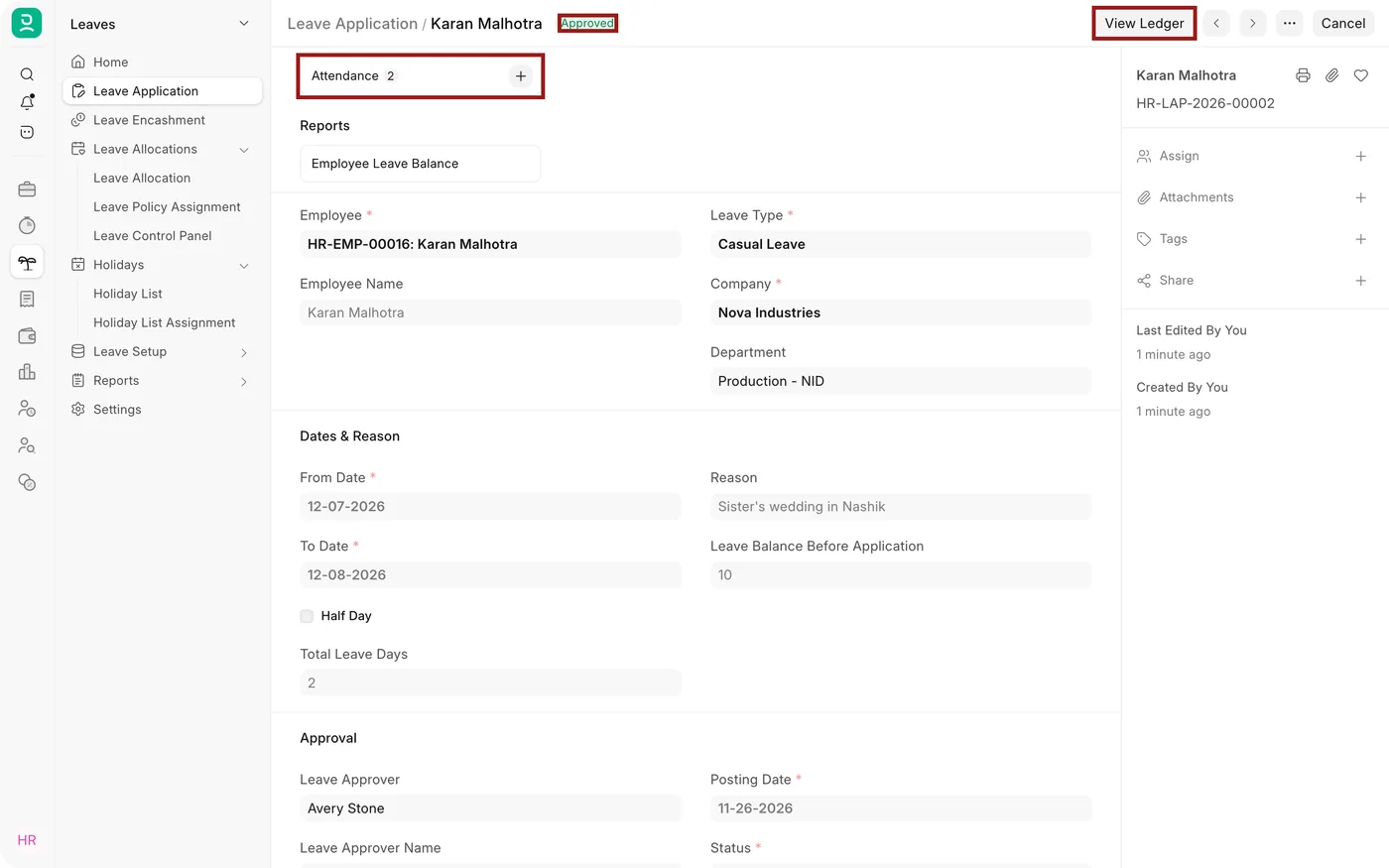
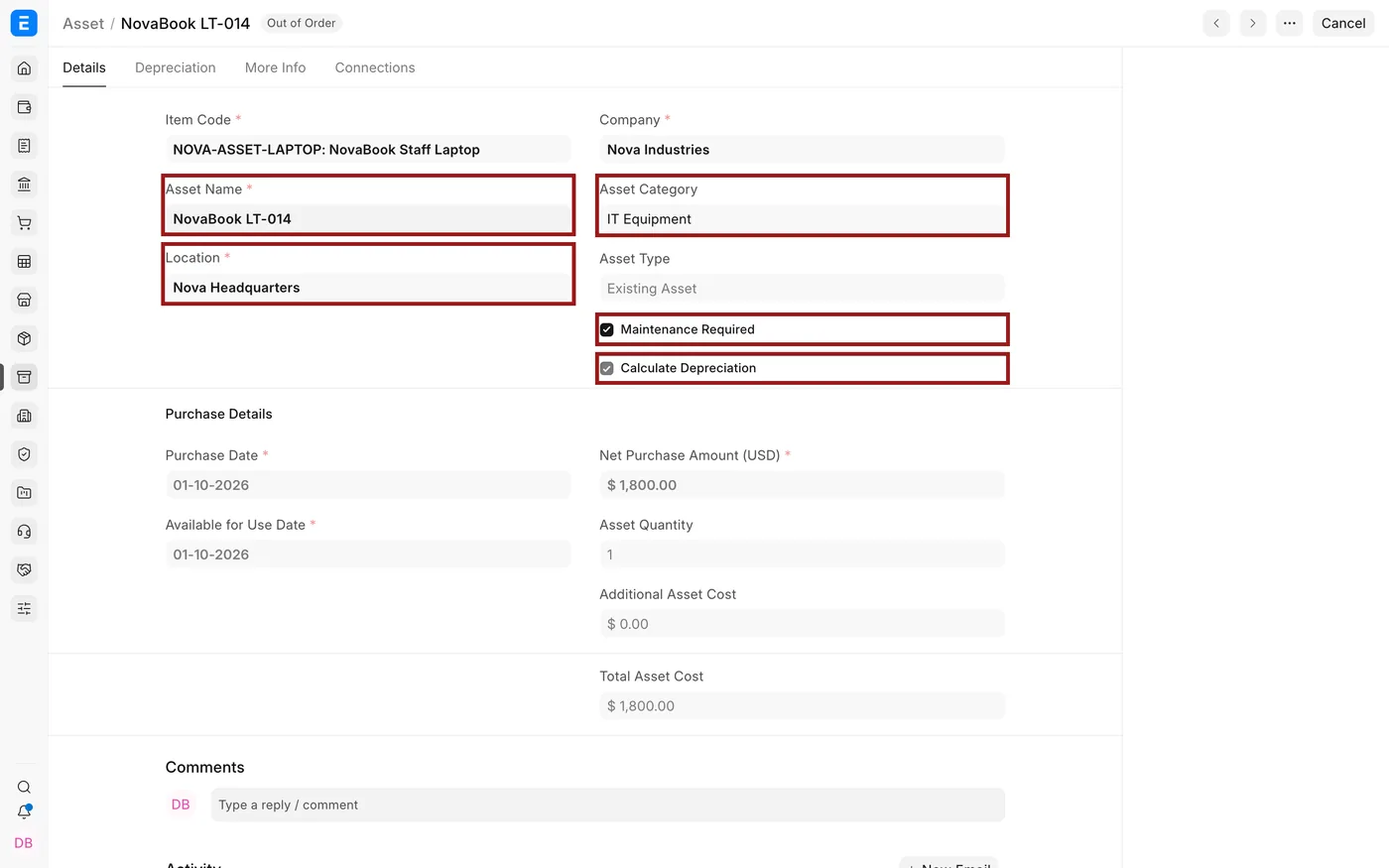
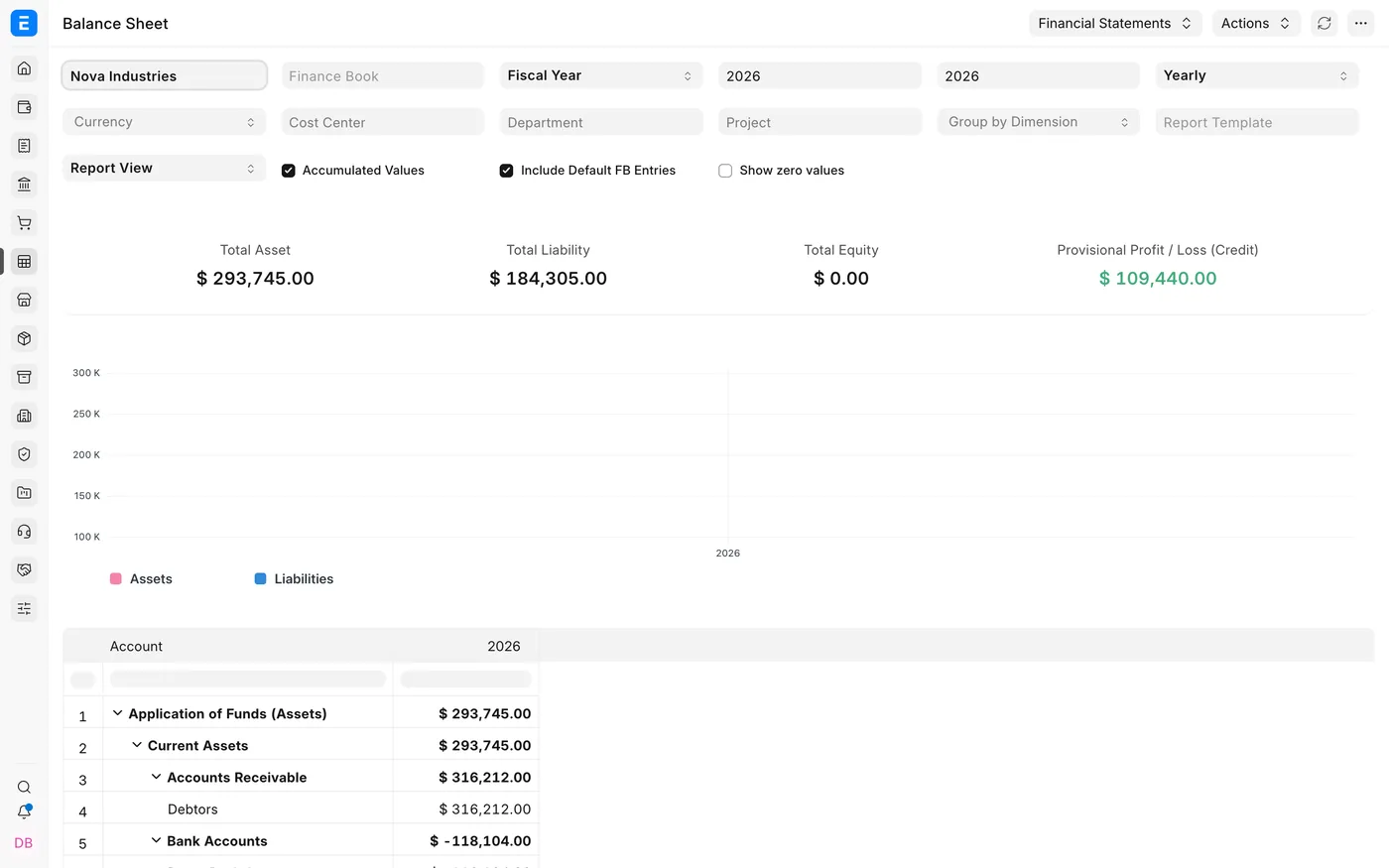
Real ERPNext and Frappe screens for the work described on this page. We configure them for UAE rules and your data.
ERPNext and the Frappe apps we implement
One open-source platform, one database, no per-user licence fees.







UAE-specific customisations and the rules behind them
| Topic | The UAE rule | What we set up |
|---|---|---|
| Arabic on tax documents | ERPNext's UAE regional module adds Arabic customer and supplier name fields to invoices. | We extend the print format so Arabic names, addresses and item descriptions appear alongside English, and test right-to-left rendering in PDF output. |
| VAT on custom documents | Any document that becomes a tax invoice must carry the VAT detail the FTA expects, including TRN. | Custom doctypes that post sales reuse ERPNext's tax templates rather than inventing their own tax logic, so VAT 201 still reads correctly. |
| eInvoicing fields | From each business's phase date, invoices travel in PINT AE format through an Accredited Service Provider. | Custom fields we add are designed to map cleanly into the eInvoice payload, so a later ASP connector does not need rework. |
| Personal data | Federal Decree-Law 45 of 2021 governs personal data such as Emirates ID numbers held by mainland companies. | Sensitive fields get restricted permission levels, masked list views and audit logs of who viewed or changed them. |
We configure the system and check it against your accountant’s figures; we are not tax advisers, and your accountant files the returns. Last reviewed 27 November 2026.
How a customisation request is handled
Describe the need
A user explains the problem in business terms: what happens today, what goes wrong and what a good result looks like. We avoid jumping straight to a solution.
Choose the lightest option
We check standard features, configuration and the Frappe app ecosystem first. The estimate states which route we chose and why.
Build and document
Development happens on staging in your custom app's repository, with short notes on what each change does and which doctypes it touches.
Test with real cases
The requesting user tests with actual documents, including edge cases such as partial deliveries, credit notes or foreign currency invoices.
Release and monitor
Changes go to production in a planned release with a backup taken first. We watch error logs in the days after and fix anything that surfaces.
Every ERPNext page for UAE businesses
Services
Compliance
Industries
Other countries
Worldwide

Written and reviewed by Vikas Saroj, Co-Founder, COO & Growth at Shyphan AI Solutions, who owns ERPNext, Odoo and Zoho delivery across the UAE and the wider region. Reviewed against current UAE rules on 27 November 2026. Meet the team · LinkedIn
ERPNext Customization in the UAE: questions answered
Will customisations break when ERPNext is upgraded?
Who owns the custom code?
Can you build Arabic print formats?
Do you charge a licence for custom apps?
Are you an official Frappe partner?
Can you take over customisations another firm built?
Request your free quote
Tell us about your project and a senior ERPNext consultant - not a bot - replies within 24 hours with scope, timeline and a fixed quote. The first 30-minute discovery call is free, with no obligation.
- Free 30-minute discovery call
- Fixed-quote SOW - no surprises
- Arabic · English delivery
- VAT 5%, corporate tax & WPS ready