





















 Saudi Arabia
 UAE
 Qatar
 Bahrain
 Kuwait
 Oman
 Lebanon
 Egypt
 Jordan
 Iraq
 India
 UK
 Ireland
 Germany
 USA
 Australia
 Singapore
 South Africa
 France
 Hungary
 Georgia
 Turkey
 Canada
 LagosNigeria




ERPNext Implementation in India
An ERPNext rollout succeeds or fails on preparation: clean masters, agreed processes and users who have practised before day one. Shyphan plans and runs implementations for Indian companies in clear phases, with GST, inventory and finance tried on your own transactions before cut-over.
- Process blueprint
- Chart of accounts and cost centres
- Inventory setup
- Roles and approvals
 ERPNext & FrappeImplementation · migration · AMC
Get a free quote
Reply within 24 hours with scope and a fixed quote.
ERPNext Implementation in India: the short answer
- Approach
- Phased delivery with a sign-off at the end of each phase, starting with finance and stock and adding modules once those are stable.
- Good cut-over dates
- The first day of a quarter, or 1 April, so GST periods and opening balances line up cleanly.
- Team on your side
- A project owner, one key user per department and your accountant for tax and closing checks.
- Delivery model
- Workshops in person around Noida and Delhi NCR; remote sessions for other cities, with site visits when warehouses or plants need them.
- Delivered by
- Shyphan AI Solutions, an ERPNext implementation partner and Zoho Premium Partner, with 24/7 support. Call +91 95651 53545.
- Last reviewed
- 27 November 2026
What an ERPNext implementation actually involves
Installing ERPNext takes an afternoon. Implementing it takes weeks of decisions: how item codes are structured, which warehouse a sales return goes to, who approves a purchase order above a limit, how branch transfers between two GSTINs are invoiced. Those choices shape every report you will read for years, so we make them with you, in writing, before configuration starts.
Take a typical electrical goods distributor in Ludhiana with its main warehouse in Punjab and a depot in Haryana. Two state registrations mean stock sent to the depot is a taxable supply, an e-way bill must travel with the goods, and the depot needs its own invoice series. A proper implementation plan names each of these points and decides how ERPNext will treat it.
We keep scope honest. If a requirement sits outside standard ERPNext, the plan says whether we configure it, build a small custom app for it, or recommend leaving it in another tool. Each decision is recorded with its reason, so new staff can later see why the system works the way it does.
From first record to the finished report
One open-source system, so each step feeds the next without re-keying.
What each phase delivers
Process blueprint
A document describing your sales, purchase, inventory, production and accounting flows as they will run in ERPNext, with screenshots of the actual forms your staff will use.
Chart of accounts and cost centres
We adapt the Indian chart template to your reporting, add cost centres for branches or product lines, and set GST input and output accounts per registration.
Inventory setup
Warehouses, batch and serial tracking, valuation method, reorder levels and units of measure are agreed by stores and finance together, because stock valuation drives the balance sheet.
Roles and approvals
Permission rules decide who can see costs, change prices or cancel a submitted invoice. Approval workflows cover purchase orders, credit limits and discounts above a set value.
Department training
Each team trains on a copy of its own data. Sales practise quotes and orders, stores practise receipts and transfers, accounts practise payments and bank reconciliation.
Parallel run and sign-off
For one period ERPNext and the old system run side by side. We compare sales registers, GST liability, stock balances and the trial balance, and clear every difference before cut-over.
See it in ERPNext
Real ERPNext and Frappe screens for the work described on this page. We configure them for Indian rules and your data.
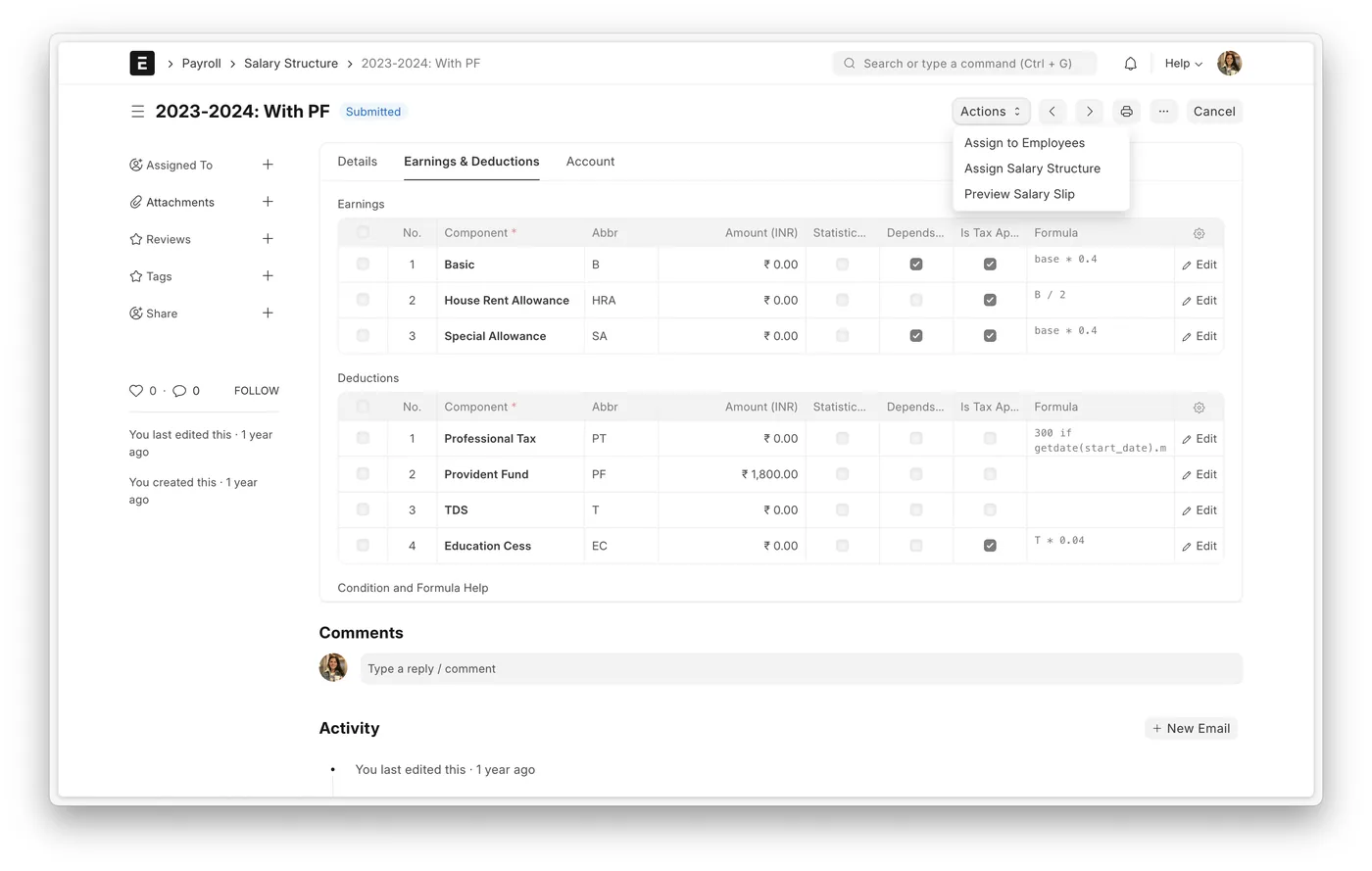
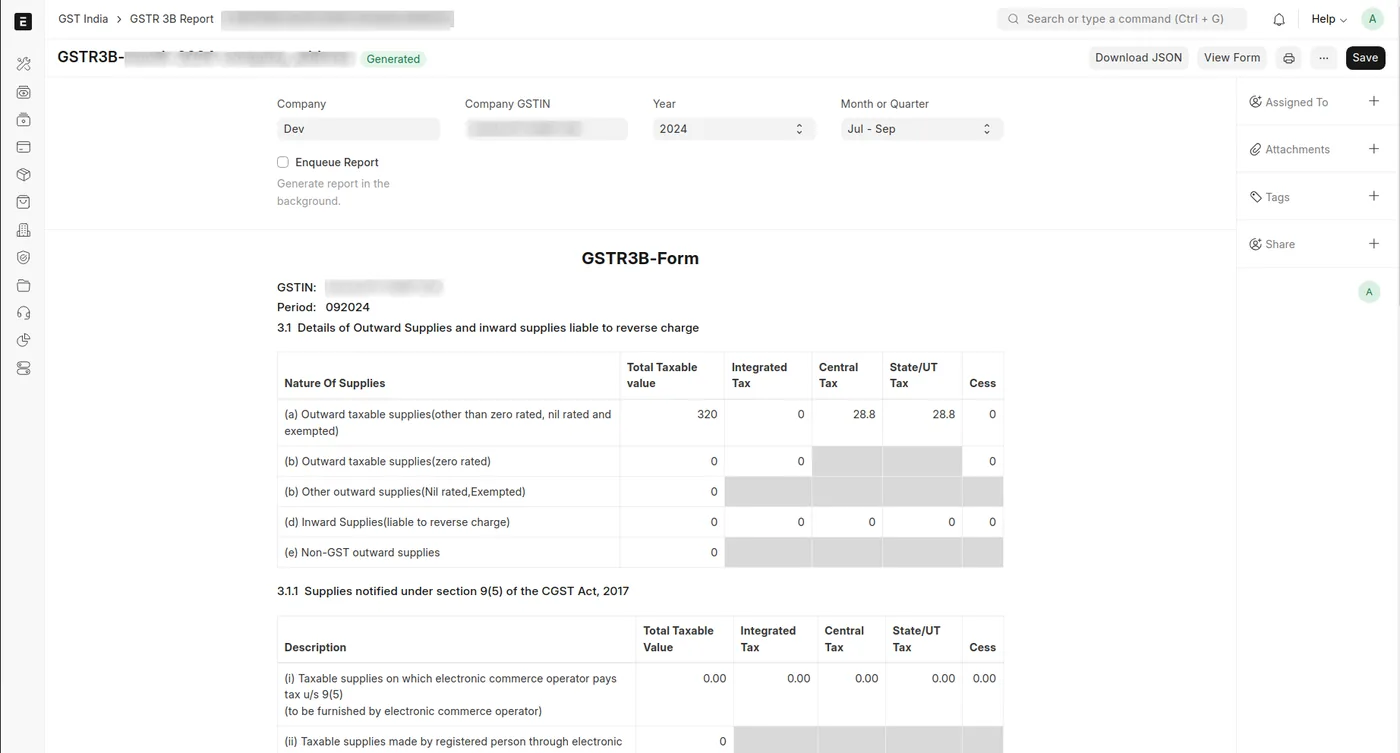
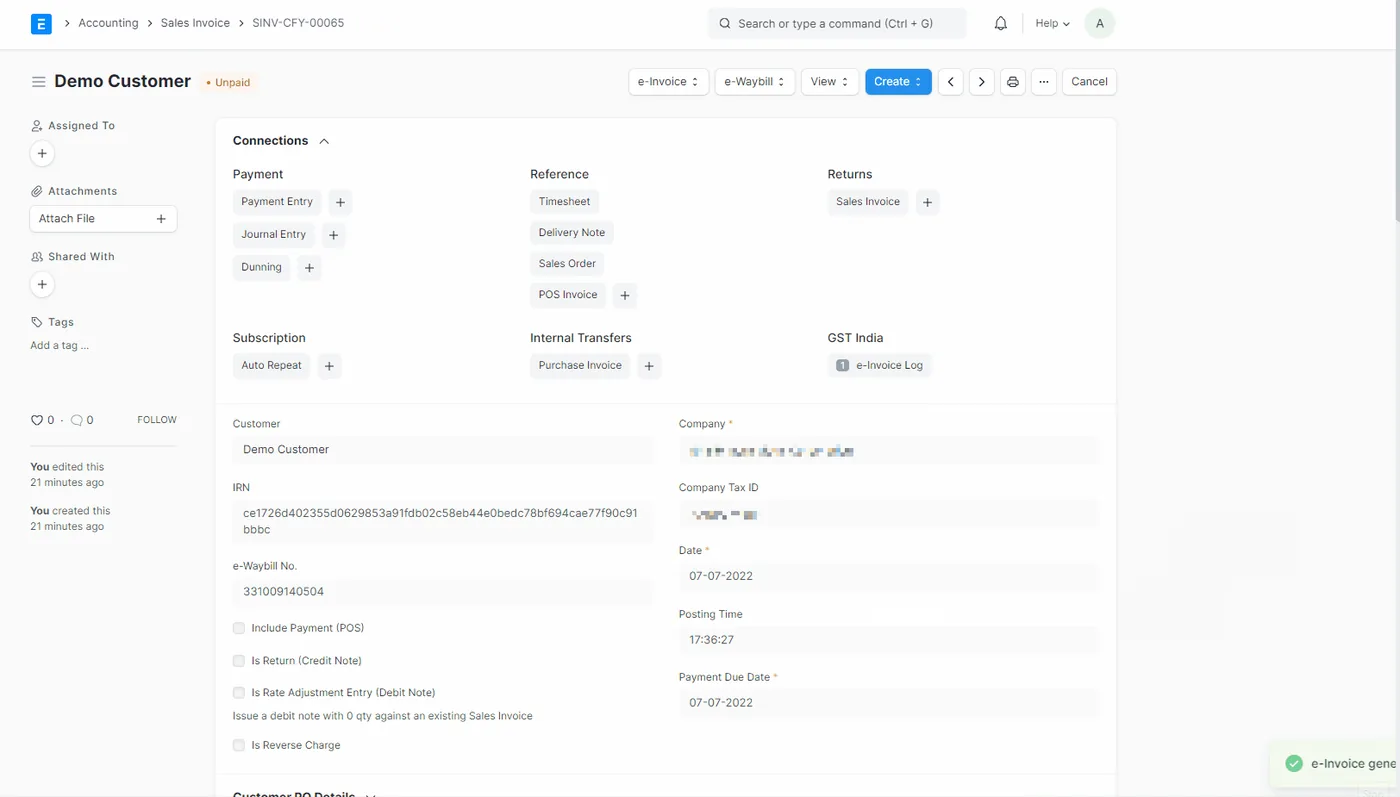
ERPNext and the Frappe apps we implement
One open-source platform, one database, no per-user licence fees.







Indian details an implementation must settle
| Topic | The Indian rule | What we set up |
|---|---|---|
| Multiple GSTINs | Each state registration counts as a distinct person under GST, so stock moved between your own branches in different states is a taxable supply. | We create one company address per GSTIN, branch transfer flows that raise a tax invoice, and a separate numbering series for each registration. |
| Financial year | Indian companies close their books on 31 March, and from 1 April 2026 income tax works on a single tax year under the Income-tax Act, 2025. | Fiscal years, payroll periods and period closing vouchers follow the April to March cycle, and opening entries are posted on the cut-over date. |
| E-invoice applicability | B2B e-invoicing applies once aggregate turnover has exceeded Rs 5 crore in any year since 2017-18. | We switch on e-invoicing in India Compliance for the relevant GSTINs, set an applicable-from date and check e-invoice data on trial documents before the first live submission. |
| TDS on purchases | Payments to contractors, professionals and landlords above set limits attract tax deducted at source, reported in quarterly TDS returns. | ERPNext's Tax Withholding Category records the section, rate and threshold for each supplier type, so TDS is worked out on the purchase invoice or payment. |
| Stock transfer paperwork | Goods moved between your own premises need an e-way bill when the consignment value exceeds Rs 50,000, even though no sale takes place. | Material transfers carry transporter details, and inter-state transfers raise a tax invoice, so the e-way bill and, where it applies, the IRN come from one document. |
We configure the system and check it against your accountant’s figures; we are not tax advisers, and your accountant files the returns. Last reviewed 27 November 2026.
A typical implementation timeline in five phases
Phase one, discovery
We spend time with each department and with your auditor, collect sample documents such as invoices, delivery challans and purchase orders, and list every report the owners read today.
Phase two, design
The blueprint, data templates and test scripts are written and reviewed. Nothing gets configured until key users agree on how their day will look.
Phase three, build
Configuration, print formats with your logo and GSTIN, custom fields and any small scripts are completed on staging, then shown to users in weekly demos.
Phase four, test and train
Users run scripted tests using real past transactions, log issues in a shared tracker and attend role-based training ahead of the parallel run.
Phase five, cut-over
Final balances are loaded, entry in the old system stops, and our team stays on call through the first GST period and month-end close.
Every ERPNext page for Indian businesses
Services
Compliance
Locations
Industries
Other countries
Worldwide

Written and reviewed by Vikas Saroj, Co-Founder, COO & Growth at Shyphan AI Solutions, who owns ERPNext, Odoo and Zoho delivery across India and the wider region. Reviewed against current Indian rules on 27 November 2026. Meet the team · LinkedIn
ERPNext Implementation in India: questions answered
Can we start with accounts only and add stock later?
Who should own the project internally?
What happens to our historic data?
Do you charge per user for ERPNext?
Are you an official Frappe partner?
What if a module does not fit?
Request your free quote
Tell us about your project and a senior ERPNext consultant - not a bot - replies within 24 hours with scope, timeline and a fixed quote. The first 30-minute discovery call is free, with no obligation.
- Free 30-minute discovery call
- Fixed-quote SOW - no surprises
- English · Hindi delivery
- GST, e-invoicing & EPF/ESI ready