





















 Saudi Arabia
 UAE
 Qatar
 Bahrain
 Kuwait
 Oman
 Lebanon
 Egypt
 Jordan
 Iraq
 India
 UK
 Ireland
 Germany
 USA
 Australia
 Singapore
 South Africa
 France
 Hungary
 Georgia
 Turkey
 Canada
 LagosNigeria




ERPNext for Manufacturing in India
Indian manufacturing is mostly small and mid-sized firms: pump makers in Coimbatore, cycle and hand tool units in Ludhiana, castings and engine parts in Rajkot, packaging converters near every big city. They share three needs, a cost per product they can defend, stock they can trust and GST paperwork that does not slow dispatch. We implement ERPNext Manufacturing to meet all three.
- Multi-level BOMs and routings
- Production planning
- Job work and subcontracting
- Quality inspection
 ERPNext & FrappeImplementation · migration · AMC
Get a free quote
Reply within 24 hours with scope and a fixed quote.
ERPNext for Manufacturing in India: the short answer
- Modules involved
- Manufacturing, Stock, Buying, Selling, Quality and Accounting, with Frappe HR for shop-floor payroll and attendance.
- Indian compliance
- GST, e-invoicing and e-way bills through the India Compliance app, including e-way bills for job work challans.
- Production styles
- Make to stock, make to order, assembly with serial numbers, process production with batches, and subcontracted operations.
- Typical first phase
- Stores and purchasing, so stock becomes reliable before BOM costing and work orders go live.
- Delivered by
- Shyphan AI Solutions, an ERPNext implementation partner and Zoho Premium Partner, with 24/7 support. Call +91 95651 53545.
- Last reviewed
- 27 November 2026
What changes when production moves into ERPNext
In many Indian factories, production planning lives in the owner's head and a whiteboard, the job work register is a ledger book, and costing is a percentage added to material. That works until a big order arrives, a key supervisor leaves or a customer asks for a price reduction backed by numbers. ERPNext replaces those habits with a few disciplined records: an item master that everyone uses, BOMs with routings, work orders that consume real stock, and job cards that log time on each machine.
The payoff is practical. A planner can see which sales orders are short of material and raise purchase requests in one step. The stores team knows what is with each job worker. Finance gets an actual cost per finished item, built from the material lots consumed, machine hours and outside processing charges. And because GST is handled by the India Compliance app, invoices and e-way bills come from the same records rather than a separate billing tool.
ERPNext suits discrete and process manufacturing within reason. Very complex scheduling or recipe control may need an add-on, and we say so early.
From first record to the finished report
One open-source system, so each step feeds the next without re-keying.
Manufacturing capabilities we configure
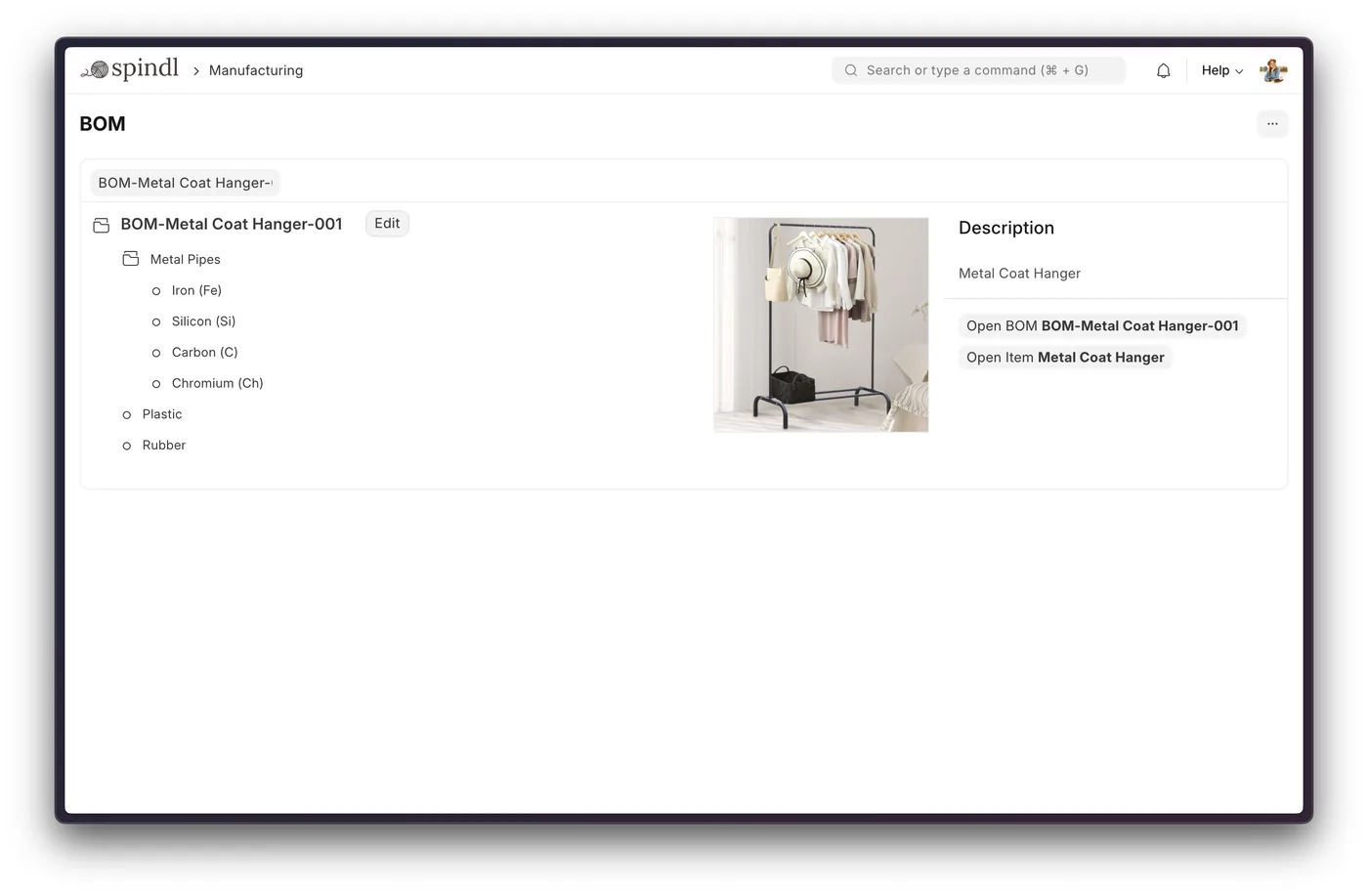
Multi-level BOMs and routings
Sub-assemblies, scrap, process loss and alternative materials sit in versioned BOMs, with routings that list each operation, workstation and standard time.
Production planning
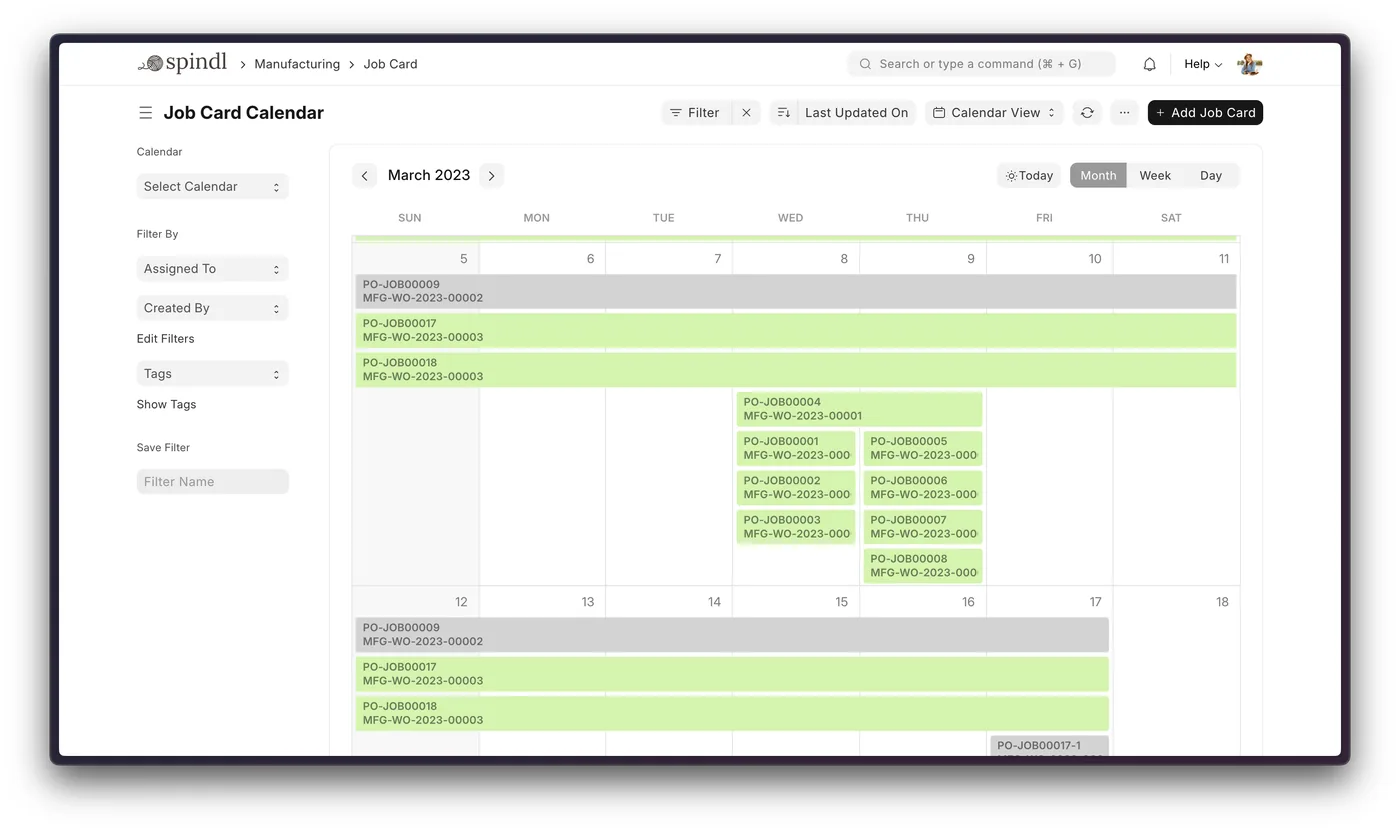
Production plans pull open sales orders, explode BOMs, net off stock and raise material requests and work orders, so purchase and production follow the same demand.
Job work and subcontracting
Subcontracting orders send material to outside processors for plating, machining, painting or heat treatment, track what each one holds and receive finished items at the right cost.
Quality inspection
Inspection templates with parameters and limits run at goods receipt, between operations and before dispatch, and failed material is held in a separate warehouse.
Batch and serial tracing
Raw material batches, finished goods batches and serial numbers link supplier lots to customers, so a complaint can be traced in both directions from one report.
Actual product costing
Material cost from consumed lots, labour and machine cost from job cards, and outside processing from subcontracting add up to a cost you can compare with the BOM standard.
See it in ERPNext
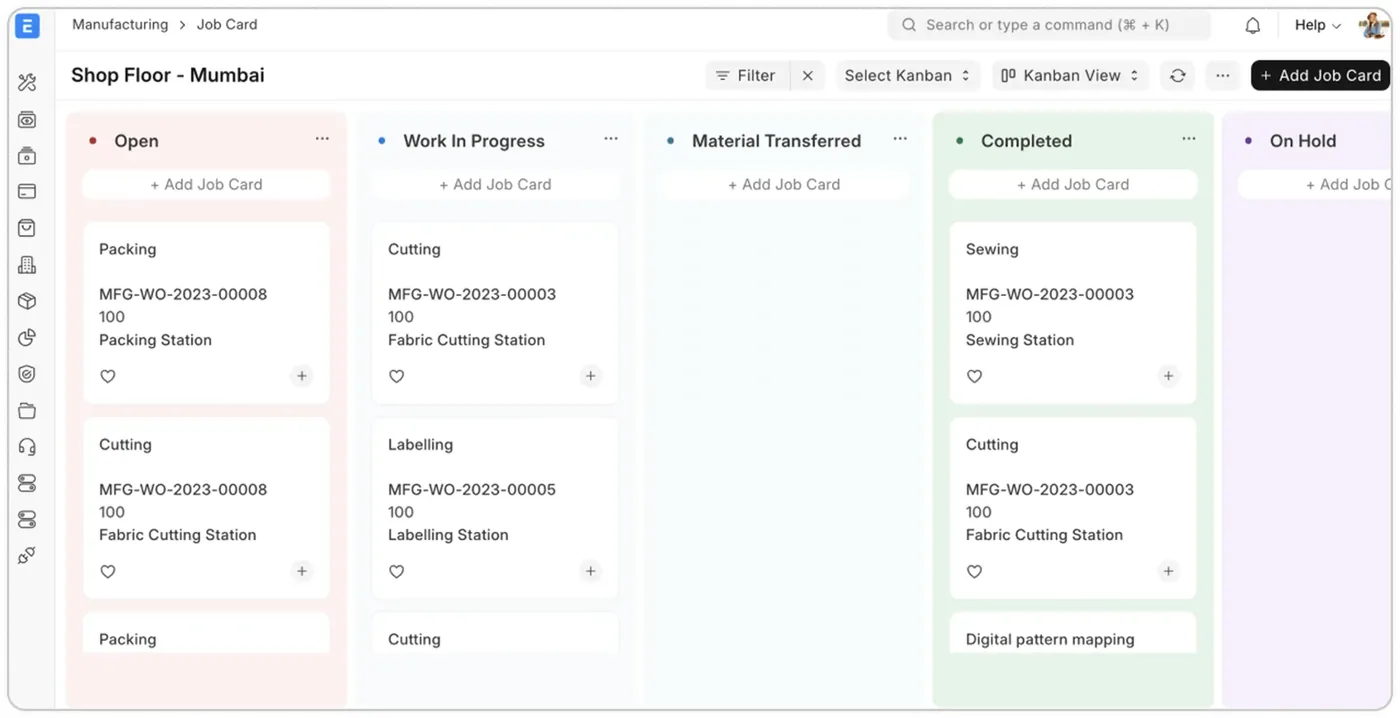
Real ERPNext and Frappe screens for the work described on this page. We configure them for Indian rules and your data.
ERPNext and the Frappe apps we implement
One open-source platform, one database, no per-user licence fees.







Indian rules that touch manufacturing systems
| Topic | The Indian rule | What we set up |
|---|---|---|
| Job work e-way bills | Material sent to a job worker moves for reasons other than supply, so an e-way bill is required once consignment value exceeds Rs 50,000. | India Compliance is set to generate e-way bills from stock entries and subcontracting documents, so challans and e-way bills come from one record. |
| E-invoicing | Manufacturers whose aggregate turnover passed Rs 5 crore in any year since 2017-18 must get an IRN for B2B invoices, and those at Rs 10 crore or more must report within 30 days. | Invoices obtain the IRN on submission, with the signed QR code on the print format, and exceptions are listed for the accounts team daily. |
| GST rate structure | From 22 September 2025, GST rates were reorganised around 5% and 18%, with a 40% rate for specified goods. | Item tax templates are assigned by HSN code or item group, so finished goods and raw materials pick correct rates on sales and purchases. |
| Professional tax by state | Professional tax is a state levy, charged monthly in Maharashtra, Karnataka, Gujarat and Telangana, half-yearly in Tamil Nadu, and not at all in Delhi, Haryana or Uttar Pradesh. | The India Payroll extension for Frappe HR applies each state's slab from the employee's work state, which suits manufacturers with plants in more than one state. |
| Labour Codes | Four Labour Codes, in force since 21 November 2025, now govern wages, social security, industrial relations and working conditions, with some provisions phased in. | Shift rules, overtime and wage components are configurable in Frappe HR, so updates can be applied as state rules are notified. |
We configure the system and check it against your accountant’s figures; we are not tax advisers, and your accountant files the returns. Last reviewed 27 November 2026.
Rolling ERPNext out across a plant
Value stream walk
We follow two or three products from receipt to dispatch and record every handover, register and spreadsheet. That walk shows where data must be captured and by whom.
Item master discipline
Duplicate items are merged, naming rules agreed and HSN codes checked. A clean item master prevents most of the stock errors firms blame on software.
Stores and job work live
Purchasing, stores and subcontracting go live first, and physical stock is matched to the system, including material lying with job workers.
BOMs, routings and pilot
BOMs and routings are built for high-volume products and a pilot line runs on work orders and job cards for a month.
Costing and variance review
Finance and production compare actual and standard costs, adjust workstation rates and agree a monthly variance review that keeps prices honest.
Every ERPNext page for Indian businesses
Services
Compliance
Locations
Industries
- ERPNext for Manufacturing in India
- ERPNext for Pharma in India
- ERPNext for Distribution in India
Other countries
Worldwide

Written and reviewed by Vikas Saroj, Co-Founder, COO & Growth at Shyphan AI Solutions, who owns ERPNext, Odoo and Zoho delivery across India and the wider region. Reviewed against current Indian rules on 27 November 2026. Meet the team · LinkedIn
ERPNext for Manufacturing in India: questions answered
Does ERPNext suit a small factory?
Can ERPNext schedule machines?
How does ERPNext handle job work under GST?
Is Shyphan an official Frappe partner?
What does implementation cost compared with licensed ERPs?
Can shop-floor staff use it on tablets?
Request your free quote
Tell us about your project and a senior ERPNext consultant - not a bot - replies within 24 hours with scope, timeline and a fixed quote. The first 30-minute discovery call is free, with no obligation.
- Free 30-minute discovery call
- Fixed-quote SOW - no surprises
- English · Hindi delivery
- GST, e-invoicing & EPF/ESI ready