





















 Saudi Arabia
 UAE
 Qatar
 Bahrain
 Kuwait
 Oman
 Lebanon
 Egypt
 Jordan
 Iraq
 India
 UK
 Ireland
 Germany
 USA
 Australia
 Singapore
 South Africa
 France
 Hungary
 Georgia
 Turkey
 Canada
 LagosNigeria




ERPNext for Distribution in India
Distributors are the connective tissue of Indian commerce: FMCG super stockists in Lucknow, paint and hardware dealers in Indore, electrical wholesalers in Kolkata, agri input dealers in Nagpur. Margins are thin, schemes change monthly and credit decides who stays in business. We implement ERPNext so stock, schemes, collections and GST paperwork run from one set of records.
- Schemes and pricing rules
- Beat and route sales
- Multi-warehouse stock
- Credit and collections
 ERPNext & FrappeImplementation · migration · AMC
Get a free quote
Reply within 24 hours with scope and a fixed quote.
ERPNext for Distribution in India: the short answer
- Who it suits
- Super stockists, wholesalers, dealers and C and F agents handling many SKUs, many retailers and frequent price or scheme changes.
- Core modules
- Selling, Buying, Stock and Accounting, with Point of Sale for counters and the ERPNext mobile-friendly web app for field staff.
- GST handling
- E-invoices, e-way bills, GSTR-1 data and purchase reconciliation against GSTR-2B through the India Compliance app.
- Commercial terms
- No per-user licence fee, so salespeople, delivery staff and counter users can all have access.
- Delivered by
- Shyphan AI Solutions, an ERPNext implementation partner and Zoho Premium Partner, with 24/7 support. Call +91 95651 53545.
- Last reviewed
- 27 November 2026
Where distributors lose money, and how ERPNext helps
A typical consumer goods distributor in a tier two city carries a long catalogue of SKUs from several principals, sells to retailers across the district on credit, and runs vans on fixed beats. Money leaks in familiar places: schemes passed on to retailers but never claimed back from the principal, damaged or expired stock that nobody wrote off, credit extended to outlets already overdue, and purchase bills whose GST credit does not match what suppliers filed.
ERPNext tackles each leak with a specific tool. Pricing rules apply principal schemes automatically on sales invoices and record what is claimable. Batch and expiry tracking flags ageing stock. Credit limits block new orders for overdue customers unless a manager approves. Purchase reconciliation in the India Compliance app matches supplier invoices against GSTR-2B so finance can chase gaps before claiming credit.
None of this needs a large IT team. ERPNext runs in a browser, and we configure it so a salesperson on a phone sees only the screens needed to book an order and collect a payment. Owners, meanwhile, get one dashboard for stock value, receivables and scheme claims across every godown.
From first record to the finished report
One open-source system, so each step feeds the next without re-keying.
Distribution features we set up
Schemes and pricing rules
Quantity slabs, free goods, cash discounts and principal-funded schemes run as pricing rules, applied on the invoice and reported so claims can be raised with each principal.
Beat and route sales
Customers are grouped by territory and beat, salespeople book orders on their phones, and delivery trips plan van loading and drops for each route.
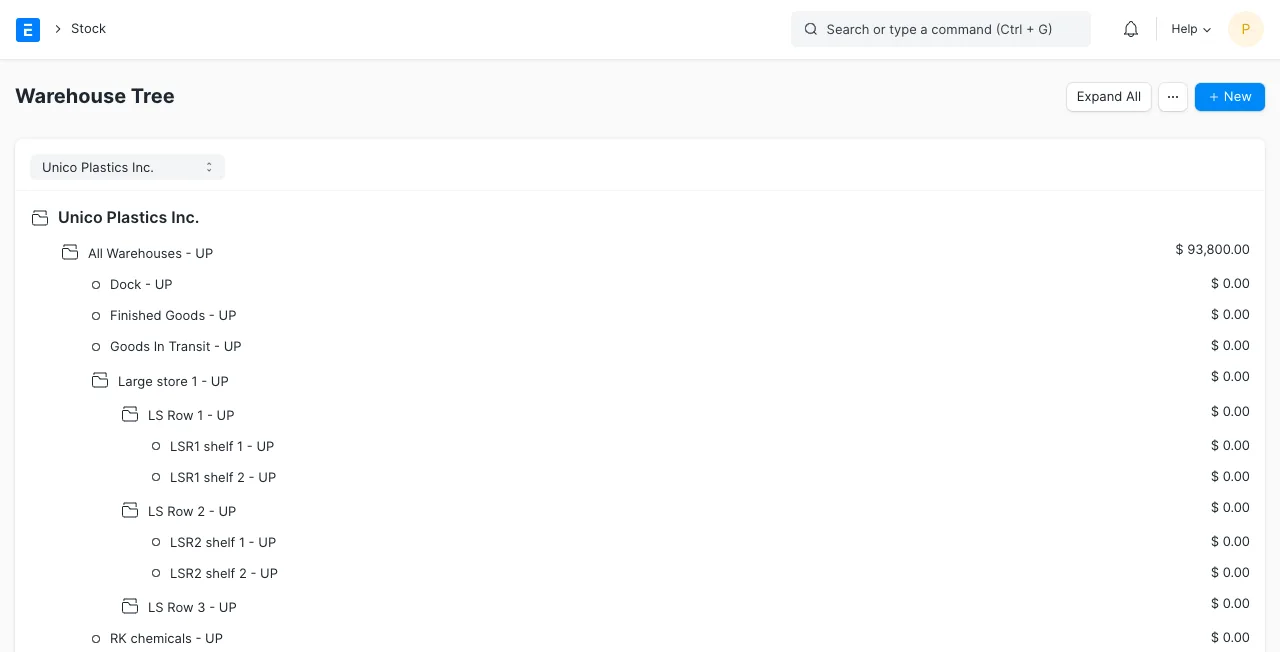
Multi-warehouse stock
Main godown, branch depots, van stock and damaged stock are separate warehouses, with transfers recorded and e-way bills raised when the value requires.
Credit and collections
Credit limits and terms per retailer, overdue blocks, payment entries from the field and ageing by salesperson keep collections visible every day.
Returns and damages
Sales returns, expired goods and damaged stock are recorded with reasons, credit notes issued correctly and claims raised against principals where the policy allows.
Principal claims and reconciliation
Scheme claims, rate difference claims and purchase reconciliation are tracked per principal, so money owed back to you is followed up instead of forgotten.
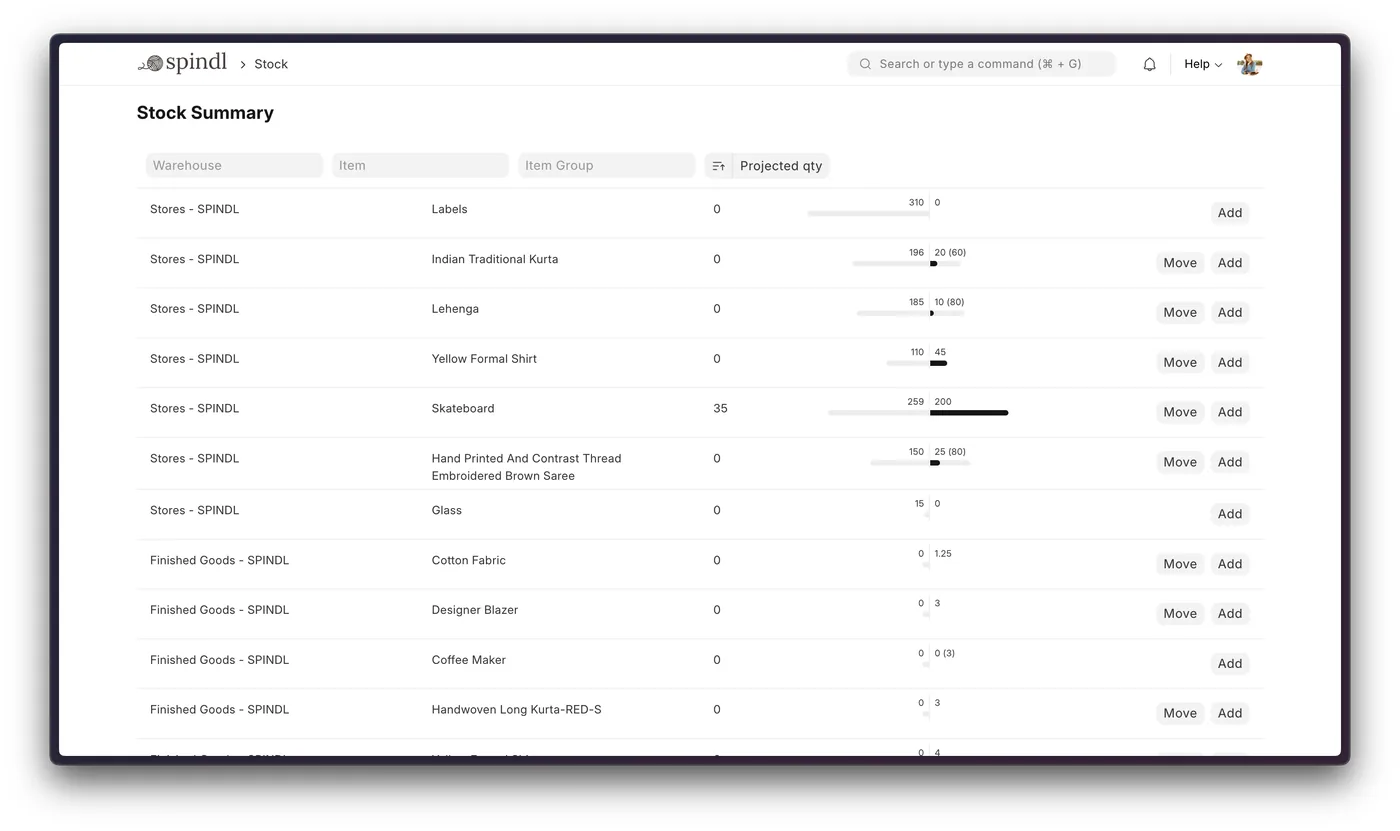
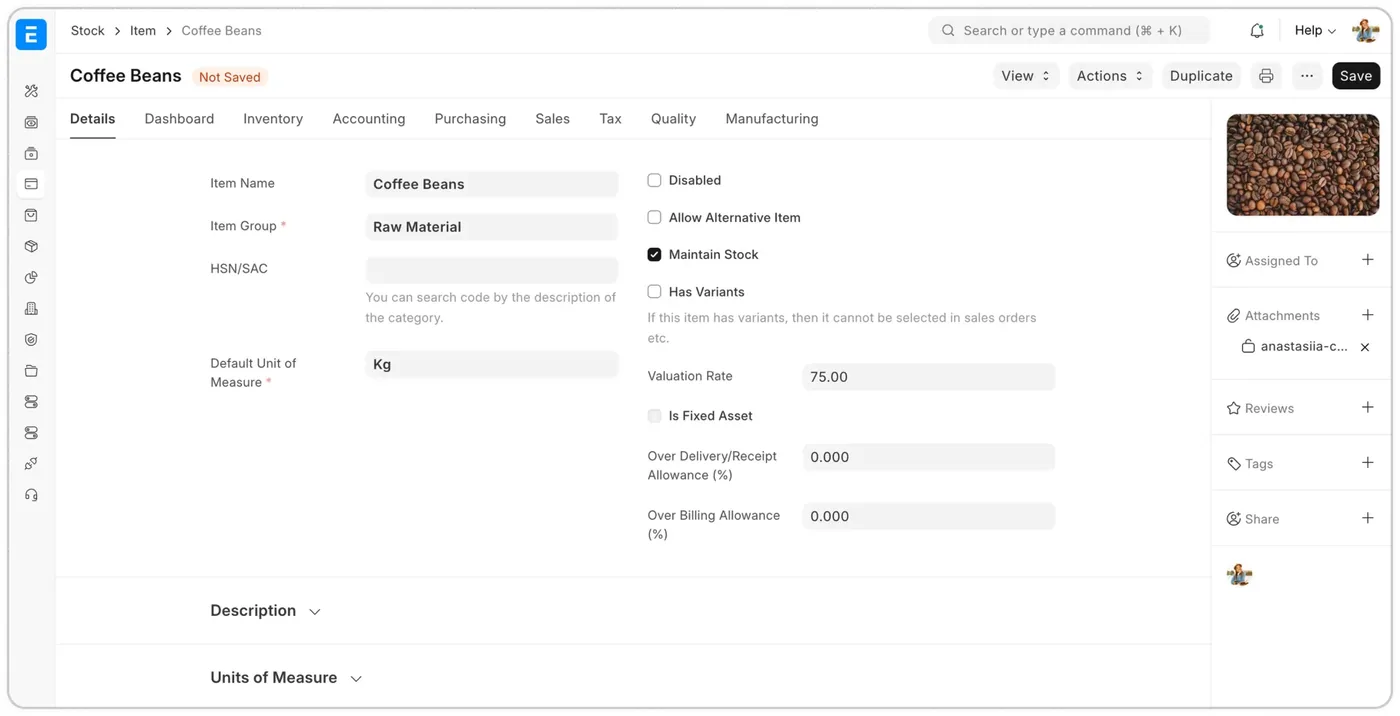
See it in ERPNext
Real ERPNext and Frappe screens for the work described on this page. We configure them for Indian rules and your data.
ERPNext and the Frappe apps we implement
One open-source platform, one database, no per-user licence fees.







Indian tax rules distributors deal with
| Topic | The Indian rule | What we set up |
|---|---|---|
| E-invoices for B2B sales | Once aggregate turnover across all GSTINs on a PAN has exceeded Rs 5 crore in any year since 2017-18, B2B invoices need an IRN, and at Rs 10 crore or more they must be reported within 30 days. | India Compliance requests IRNs on submission, so even a busy month-end billing run reports every B2B invoice in time. |
| E-way bills | Goods with a consignment value above Rs 50,000 need an e-way bill to move, including stock transfers to branch depots. | Delivery notes, invoices and stock entries generate e-way bills, and e-way bills still missing Part B vehicle details are listed for the dispatch team. |
| TDS and TCS | Income tax law requires tax deduction or collection at source on certain purchase and sale transactions once thresholds are crossed. | Tax withholding categories in ERPNext and the TDS and TCS features of India Compliance apply the configured rates and thresholds, which your accountant confirms. |
| MSME supplier payments | Dues to micro and small suppliers are deductible only when paid within 15 days, or within 45 days under a written agreement. | Suppliers are tagged by MSME category with payment terms, and payment runs prioritise bills approaching the limit. |
| GST rate updates | GST was restructured from 22 September 2025 around rates of 5% and 18%, plus 40% for specified goods. | Item tax templates are mapped to HSN codes, so price lists and invoices move to new rates in one controlled change. |
We configure the system and check it against your accountant’s figures; we are not tax advisers, and your accountant files the returns. Last reviewed 27 November 2026.
How we roll ERPNext out for a distributor
Map principals and schemes
We list every principal, the schemes they run and how claims are settled. Schemes drive most of the configuration, so this comes first.
Clean SKU and customer data
SKUs, HSN codes, batch rules, retailer GSTINs, beats and credit limits are cleaned and loaded, usually from Tally or Busy exports.
Godown and van setup
Warehouses, van stock, delivery trips and e-way bill settings are configured and tested with a day of real orders.
Field team training
Salespeople and delivery staff learn the mobile order and collection screens in short sessions, with a printed one-page guide in their language.
Claims and reconciliation review
After the first month we review scheme claims, GSTR-2B reconciliation and overdue reports with the owner and accountant, and tune the setup.
Every ERPNext page for Indian businesses
Services
Compliance
Locations
Industries
- ERPNext for Manufacturing in India
- ERPNext for Pharma in India
- ERPNext for Distribution in India
Other countries
Worldwide

Written and reviewed by Vikas Saroj, Co-Founder, COO & Growth at Shyphan AI Solutions, who owns ERPNext, Odoo and Zoho delivery across India and the wider region. Reviewed against current Indian rules on 27 November 2026. Meet the team · LinkedIn
ERPNext for Distribution in India: questions answered
Can salespeople take orders on their phones?
Can ERPNext handle principal schemes and claims?
Is Shyphan an official Frappe partner?
What does ERPNext cost for a distributor?
Does ERPNext reconcile our purchase GST credit?
Can invoices print in Hindi or a regional language?
Request your free quote
Tell us about your project and a senior ERPNext consultant - not a bot - replies within 24 hours with scope, timeline and a fixed quote. The first 30-minute discovery call is free, with no obligation.
- Free 30-minute discovery call
- Fixed-quote SOW - no surprises
- English · Hindi delivery
- GST, e-invoicing & EPF/ESI ready