





















 Saudi Arabia
 UAE
 Qatar
 Bahrain
 Kuwait
 Oman
 Lebanon
 Egypt
 Jordan
 Iraq
 India
 UK
 Ireland
 Germany
 USA
 Australia
 Singapore
 South Africa
 France
 Hungary
 Georgia
 Turkey
 Canada
 LagosNigeria




Frappe HR and Payroll in Egypt
Egyptian payroll now runs under the Labour Law that took effect on 1 September 2025, alongside the social insurance law of 2019 and salary tax brackets that are revised from time to time. We configure Frappe HR so each of those rules sits in the payroll engine rather than in someone's spreadsheet.
- Employee records
- Salary components
- Social insurance calculation
- Income tax slabs
 ERPNext & FrappeImplementation · migration · AMC
Get a free quote
Reply within 24 hours with scope and a fixed quote.
Frappe HR and Payroll in Egypt: the short answer
- Social insurance
- Employer 18.75% and employee 11% of the insurable wage under Law No. 148 of 2019.
- Salary tax
- Progressive brackets and the annual personal exemption, set up as Frappe HR income tax slabs.
- Labour Law 2025
- Annual increment, leave entitlements, Arabic contracts and a January statement of staff and salaries.
- Outputs
- Arabic or English payslips, bank transfer files, contribution reports and payroll journals.
- Delivered by
- Shyphan AI Solutions, an ERPNext implementation partner and Zoho Premium Partner, with 24/7 support. Call +91 95651 53545.
- Last reviewed
- 27 November 2026
Egyptian payroll inside Frappe HR
Frappe HR is the open-source HR and payroll app built on the same framework as ERPNext. It provides salary components, salary structures, income tax slabs, leave policies, attendance and payroll entries. What it does not provide is Egyptian law, so the components and rules have to be configured carefully.
Consider a typical contact centre in Smart Village with several hundred agents on shifts. Each agent's insurable wage must stay within the published floor and ceiling, social insurance shares must be calculated on that figure, salary tax must apply after the exemption, and night shift allowances, attendance deductions and annual increments must all land in the right month. Getting any of these wrong affects take-home pay for everyone.
We build that logic once, test it against your existing payroll until the results match, and keep it updated when NOSI or the Tax Authority publishes new figures.
From first record to the finished report
One open-source system, so each step feeds the next without re-keying.
What we configure
Employee records
National ID, social insurance number, contract type, hiring date and insurable wage sit on each record, with documents attached and access limited to HR.
Salary components
Basic pay, allowances, overtime, bonuses and deductions are separate components with formulas, so payslips explain every line to the employee. Components can be marked as taxable or exempt and as part of the insurable wage or not.
Social insurance calculation
Employer and employee shares are calculated on the insurable wage, held between the published minimum and maximum, and posted to separate accounts.
Income tax slabs
Salary tax brackets and the standard exemption are entered as an Income Tax Slab with an effective date, then linked through each salary structure assignment.
Leave and attendance
Annual, sick, maternity and paternity leave follow the 2025 Labour Law, with attendance from biometric devices or check-ins feeding payroll. Paternity leave and study leave are available as separate leave types.
Reports for authorities
Contribution schedules, salary tax summaries and the staff and salary statement the Labour Law requires each January are produced from payroll data.
See it in ERPNext
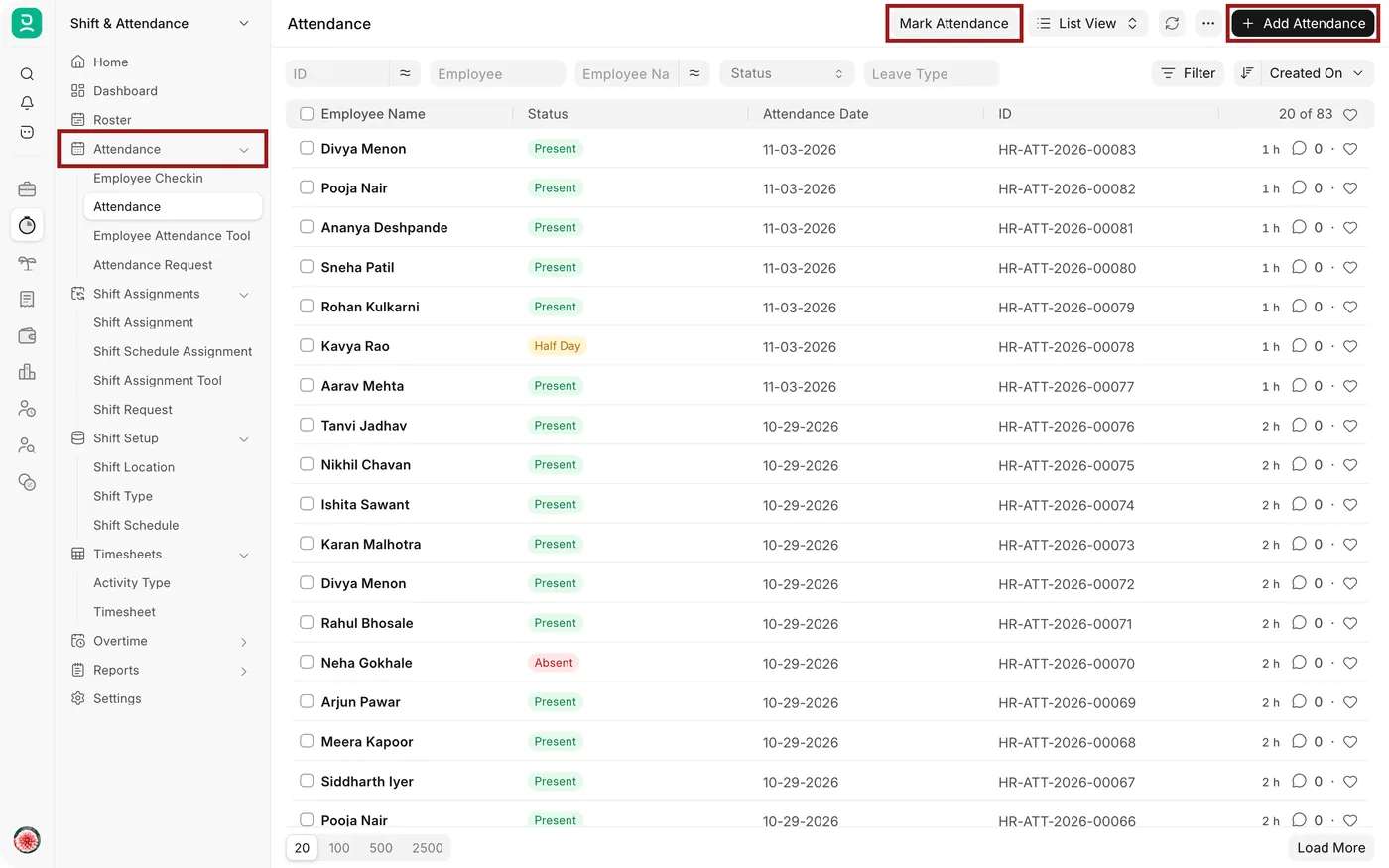
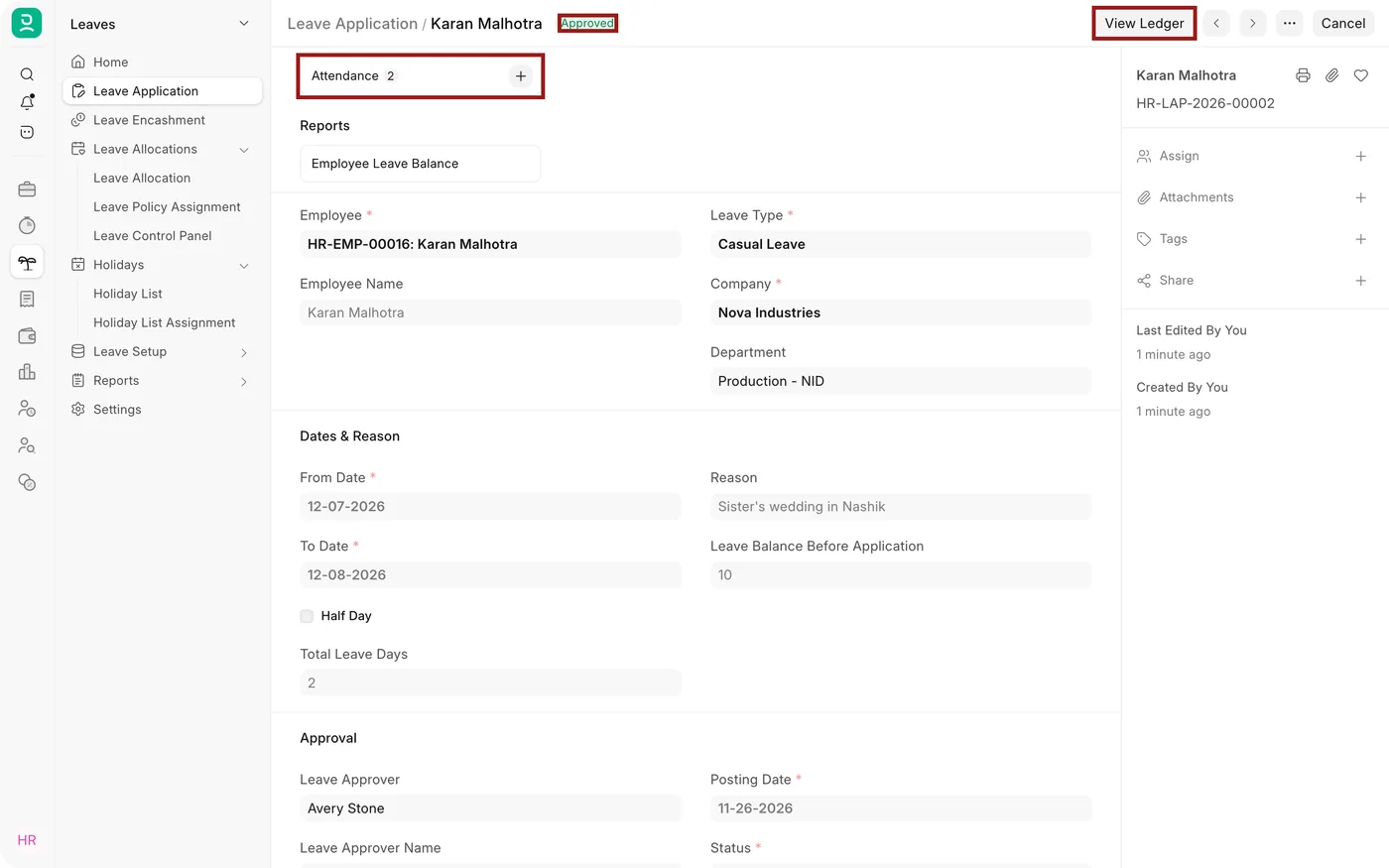
Real ERPNext and Frappe screens for the work described on this page. We configure them for Egyptian rules and your data.
ERPNext and the Frappe apps we implement
One open-source platform, one database, no per-user licence fees.







Egyptian employment rules and our setup
| Topic | The Egyptian rule | What we set up |
|---|---|---|
| Social insurance rates | Law No. 148 of 2019 sets contributions of 18.75% for the employer and 11% for the employee, administered by the National Organization for Social Insurance. | Two components calculated on the insurable wage, with employer cost posted to departments and employee share deducted on the payslip. |
| Insurable wage limits | From 1 January 2026 the insurable wage runs from a minimum of EGP 2,700 to a maximum of EGP 16,700, as announced by NOSI. | Limits held in one settings record with an effective date, so January updates change one value rather than every employee. |
| Salary tax | Salary income is taxed in progressive brackets under Income Tax Law No. 91 of 2005 as amended, with an annual personal exemption of EGP 20,000. | An Income Tax Slab holding the brackets as published and the exemption, applied automatically on every salary slip. |
| Annual increment | Labour Law No. 14 of 2025 requires an annual increment of at least 3% of the social insured salary, with temporary exemptions possible for some employers. | A yearly increment tool that proposes new salary structure assignments for HR to approve. |
| Leave | The 2025 Labour Law grants 15 working days of annual leave in the first year, rising to 21, then 30 days after ten full years, and four months of paid maternity leave. | Leave policies by service band with automatic allocation, and maternity leave counted so its usage limit can be tracked. |
| Contracts and records | Employment contracts must be written in Arabic, a statement of employee data and salaries must be updated every January, and employee files are kept for five years after termination. | Arabic contract print formats, a January statement report and retention rules on employee documents. |
We configure the system and check it against your accountant’s figures; we are not tax advisers, and your accountant files the returns. Last reviewed 27 November 2026.
How the payroll rollout runs
Gather inputs
We collect contracts, salary sheets, allowance rules and recent payslips, and confirm current figures with your payroll adviser.
Configure
Components, structures, tax slabs, leave policies and holiday lists are built in a test site, with approval workflows for leave and overtime. Training fund contributions under the 2025 Labour Law can be set as an employer component.
Run in parallel
For at least one month Frappe HR runs beside your current payroll, and we explain every difference until net pay matches.
Connect banks and reports
Salary transfer files are tested with your bank, and contribution and tax reports are checked by your accountant.
Live and maintained
Your HR team runs payroll. We update limits, brackets and rules when new figures are published, and support you every day of the year.
Every ERPNext page for Egyptian businesses
Compliance
- ERPNext ETA E-Invoicing in Egypt
- Frappe HR and Payroll in Egypt
Locations
Other countries
Worldwide

Written and reviewed by Vikas Saroj, Co-Founder, COO & Growth at Shyphan AI Solutions, who owns ERPNext, Odoo and Zoho delivery across Egypt and the wider region. Reviewed against current Egyptian rules on 27 November 2026. Meet the team · LinkedIn
Frappe HR and Payroll in Egypt: questions answered
Does Frappe HR know Egyptian payroll rules by default?
What happens when the insurable wage limits change in January?
Can payslips and contracts be in Arabic?
Is there a per-employee charge?
Is Shyphan an official Frappe partner?
Do you submit social insurance or tax for us?
Request your free quote
Tell us about your project and a senior ERPNext consultant - not a bot - replies within 24 hours with scope, timeline and a fixed quote. The first 30-minute discovery call is free, with no obligation.
- Free 30-minute discovery call
- Fixed-quote SOW - no surprises
- Arabic · English delivery
- VAT 14%, ETA e-invoicing & NOSI ready