





















 Saudi Arabia
 UAE
 Qatar
 Bahrain
 Kuwait
 Oman
 Lebanon
 Egypt
 Jordan
 Iraq
 India
 UK
 Ireland
 Germany
 USA
 Australia
 Singapore
 South Africa
 France
 Hungary
 Georgia
 Turkey
 Canada
 LagosNigeria




ERPNext Implementation in Egypt
Implementing ERPNext in an Egyptian factory means dealing with imported inputs priced in dollars, local sales priced in pounds and an ETA submission behind every invoice. We plan the rollout around those facts, site by site, so production and finance keep working while the new system comes in.
- Blueprint with sign-off
- Import costing
- Production that matches the floor
- ETA item code mapping
 ERPNext & FrappeImplementation · migration · AMC
Get a free quote
Reply within 24 hours with scope and a fixed quote.
ERPNext Implementation in Egypt: the short answer
- Typical scope
- Accounting, Buying, Stock, Manufacturing and Quality first, then Projects, Assets or Frappe HR.
- Who it suits
- Plants in 10th of Ramadan, 6th of October, Obour and Badr, and the head offices that run them from Cairo.
- Timeline basis
- Agreed after a blueprint phase, once sites, modules and data condition are known.
- Working style
- Remote build and testing, with consultants on site in Egypt for mapping, training and cut-over.
- Delivered by
- Shyphan AI Solutions, an ERPNext implementation partner and Zoho Premium Partner, with 24/7 support. Call +91 95651 53545.
- Last reviewed
- 27 November 2026
An implementation shaped around Egyptian operations
Picture a typical ready-made garments producer in 10th of Ramadan City. Fabric and trims arrive from abroad, cutting and sewing run in shifts, finished goods go to local retailers and export buyers, and every domestic invoice must clear the ETA. Payroll covers hundreds of operators with overtime and attendance bonuses.
In ERPNext that business becomes import purchase orders in US dollars, landed cost vouchers that spread freight and customs over each fabric roll, work orders with operation costing, quality inspections before packing, and sales invoices that pick up ETA item codes automatically. Frappe HR then handles the shift rosters and the monthly pay run.
A building materials plant or a food processor looks different on the surface, yet the method holds. We define the item structure and costing rules before anything is configured, prove them on a pilot line or warehouse, and only then extend to the rest of the operation.
From first record to the finished report
One open-source system, so each step feeds the next without re-keying.
Components of our implementation
Blueprint with sign-off
Each process from purchase request to customer payment is written down with its owner, its approval rule and the report that measures it, and signed off before build. Anything deferred to a later phase is listed too, so expectations stay clear.
Import costing
Purchase invoices in foreign currency, customs and clearing bills and inland freight are allocated to items through landed cost vouchers, so stock values reflect what goods really cost.
Production that matches the floor
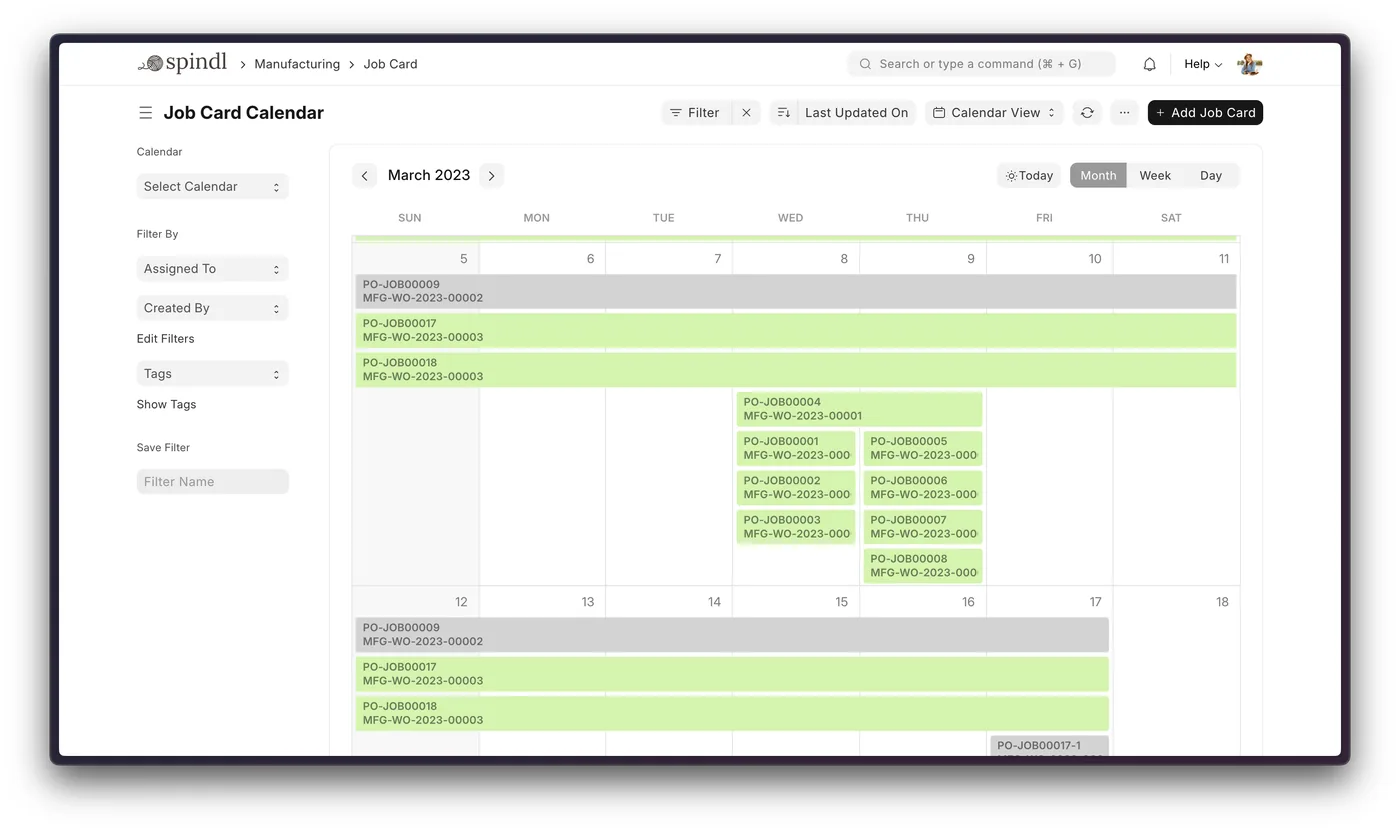
Bills of materials with variants for size and colour, routings with workstations, and job cards for each operation give supervisors an accurate picture of work in progress.
ETA item code mapping
Every saleable item receives its GS1 or EGS code and ETA unit of measure during setup, so invoice submission does not stall later on missing codes. New items cannot be saved for sale until their code is filled in.
Permissions and approvals
Purchase limits, price change approvals and credit holds are configured as workflows, with roles separated between stores, purchasing and finance. Every approval leaves a record of who approved what and when.
Training by role
Supervisors, storekeepers and accountants learn on their own data with Arabic or English guides, and key users become the first line of help inside your company.
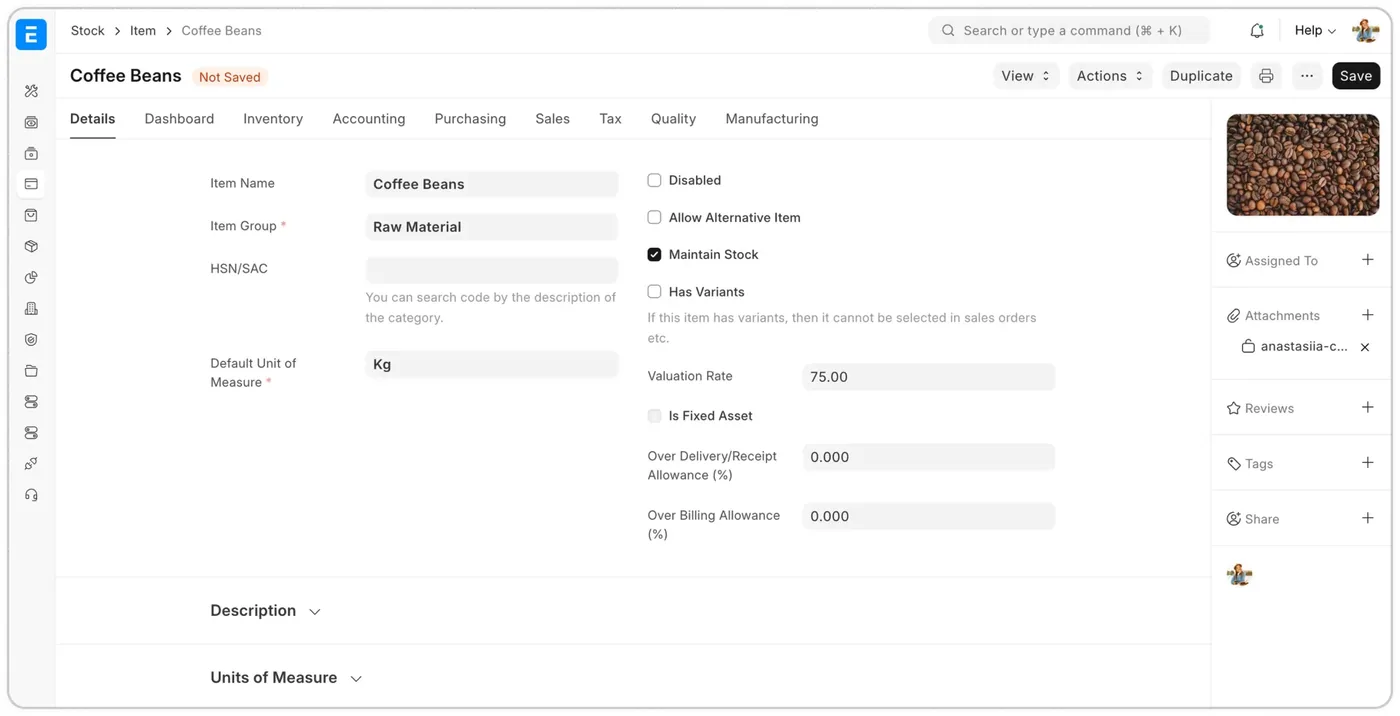
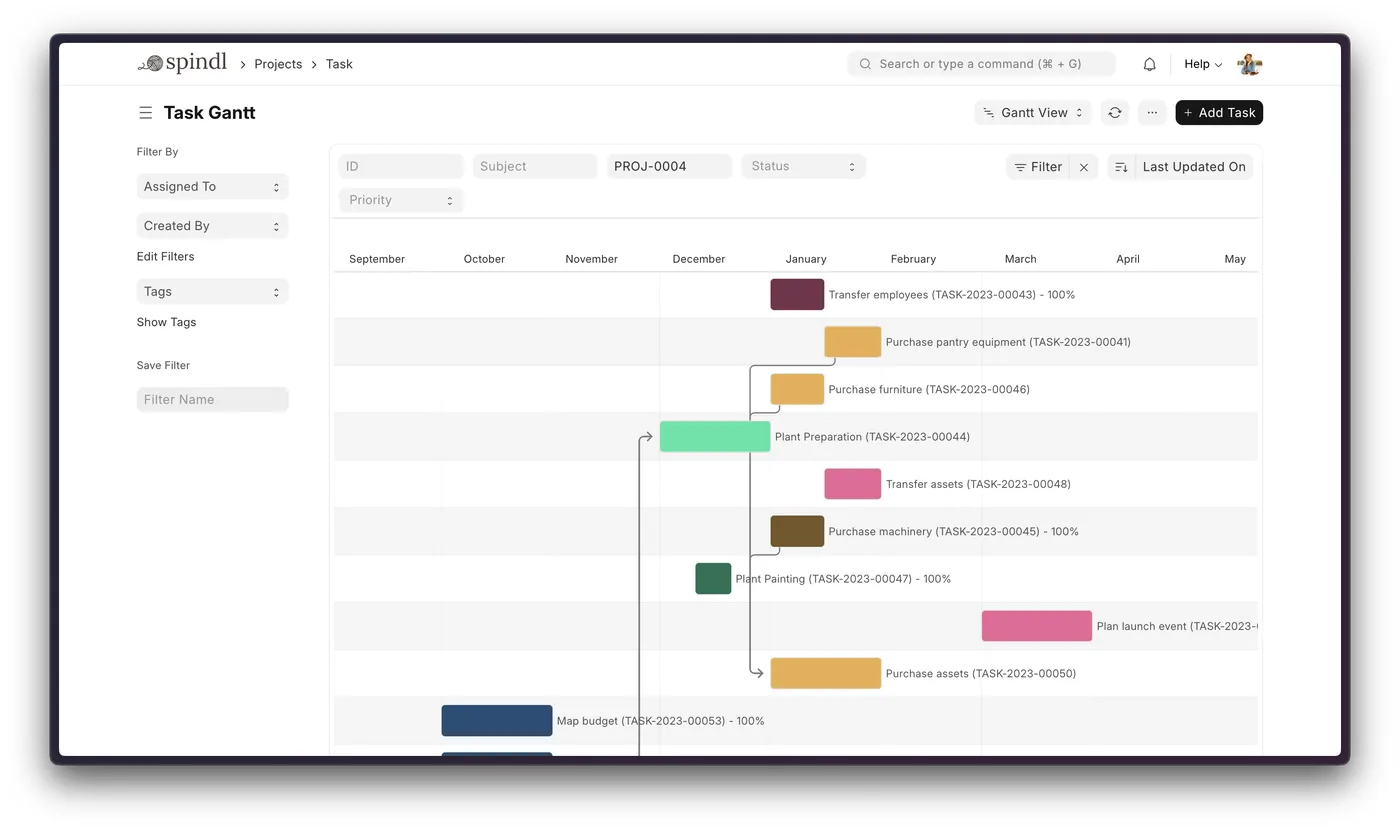
See it in ERPNext
Real ERPNext and Frappe screens for the work described on this page. We configure them for Egyptian rules and your data.
ERPNext and the Frappe apps we implement
One open-source platform, one database, no per-user licence fees.







Egyptian rules addressed during implementation
| Topic | The Egyptian rule | What we set up |
|---|---|---|
| Output VAT | Most goods and services carry VAT at 14% under Law No. 67 of 2016. | Default 14% templates by item group, with other rates applied only where your tax adviser confirms them. Export sales carry the treatment your adviser specifies. |
| Invoice clearance | B2B and B2G invoices are cleared by the Egyptian Tax Authority under the e-invoicing system introduced by Ministerial Decree 188 of 2020. | Submission from ERPNext through the Egypt Compliance app, with rejected invoices listed for correction the same day. Submission status is visible on each invoice. |
| Input VAT evidence | Since January 2022, input VAT on paper invoices cannot be deducted where the supplier is already required to issue e-invoices. | Supplier records flagged for e-invoice status, so purchasing can chase suppliers who still send paper. |
| Workforce rules | Labour Law No. 14 of 2025, in force since 1 September 2025, requires written Arabic contracts and an annual increment of at least 3% of the social insured salary. | Contract templates in Arabic and an annual increment process in Frappe HR where payroll is in scope. |
We configure the system and check it against your accountant’s figures; we are not tax advisers, and your accountant files the returns. Last reviewed 27 November 2026.
Phases of an Egyptian ERPNext rollout
Blueprint
Workshops at your head office and at least one plant produce the blueprint, the module list, the data plan and a dated project schedule.
Pilot site build
One plant or warehouse is configured first. Weekly reviews with its supervisors catch problems while changes are still easy. Master data for the remaining sites is prepared in parallel so later waves move faster.
ETA testing
Invoices from the pilot are signed and submitted to the ETA pre-production environment until every scenario, including returns, clears.
Go-live per site
The pilot goes live with counted stock and checked balances. Other sites follow in planned waves using the same templates. Lessons from each wave feed into the next.
Stabilise and extend
After the first month ends cleanly, we add modules such as Assets, Projects or Frappe HR and continue support under a maintenance plan.
Every ERPNext page for Egyptian businesses
Services
- ERPNext Partner in Egypt
- ERPNext Implementation in Egypt
- ERPNext Migration in Egypt
Locations
Other countries
Worldwide

Written and reviewed by Vikas Saroj, Co-Founder, COO & Growth at Shyphan AI Solutions, who owns ERPNext, Odoo and Zoho delivery across Egypt and the wider region. Reviewed against current Egyptian rules on 27 November 2026. Meet the team · LinkedIn
ERPNext Implementation in Egypt: questions answered
Can ERPNext handle costing when the pound moves against the dollar?
Do we need to buy anything apart from implementation?
Will supervisors on the factory floor manage the system?
Is Shyphan an official Frappe partner?
Can you implement one plant at a time?
Will you be on site in Egypt?
Request your free quote
Tell us about your project and a senior ERPNext consultant - not a bot - replies within 24 hours with scope, timeline and a fixed quote. The first 30-minute discovery call is free, with no obligation.
- Free 30-minute discovery call
- Fixed-quote SOW - no surprises
- Arabic · English delivery
- VAT 14%, ETA e-invoicing & NOSI ready