





















 Saudi Arabia
 UAE
 Qatar
 Bahrain
 Kuwait
 Oman
 Lebanon
 Egypt
 Jordan
 Iraq
 India
 UK
 Ireland
 Germany
 USA
 Australia
 Singapore
 South Africa
 France
 Hungary
 Georgia
 Turkey
 Canada
 LagosNigeria




ERPNext Migration in Egypt
Leaving an older accounting package or a home-grown system is risky only when nobody checks the numbers. Our Egyptian migrations carry across masters, open balances and ETA item codes, then prove line by line that the new figures match the old ones.
- Structured extraction
- ETA code consolidation
- Customer and supplier clean-up
- Multi-currency opening balances
 ERPNext & FrappeImplementation · migration · AMC
Get a free quote
Reply within 24 hours with scope and a fixed quote.
ERPNext Migration in Egypt: the short answer
- Typical starting points
- Desktop accounting packages, older ERPs, in-house systems built years ago and large Excel workbooks.
- What we bring across
- Customers, suppliers, items with ETA codes, open invoices, stock by warehouse, fixed assets and a trial balance.
- Currency handling
- EGP as company currency, with US dollar and euro balances carried at their original rates.
- Sign-off
- A reconciliation pack reviewed and signed by your finance manager or auditor before the old system is closed.
- Delivered by
- Shyphan AI Solutions, an ERPNext implementation partner and Zoho Premium Partner, with 24/7 support. Call +91 95651 53545.
- Last reviewed
- 27 November 2026
Migration as a project in its own right
Egyptian companies often reach ERPNext after years on a desktop accounting package, with the ETA portal or a separate connector bolted on for e-invoicing. The result is two sets of item codes, customers registered twice and stock figures that only one person understands.
For example, an FMCG wholesaler in Obour City moving off an older ERP would start by deciding which item codes survive. Its internal codes, the GS1 or EGS codes registered with the ETA and the supplier codes on purchase invoices all need to line up in one ERPNext item master. Customer tax registration numbers are checked at the same time, because the ETA rejects B2B invoices that carry wrong ones.
Only after that clean-up do we load data, and we do it twice: once into a test site that your team checks, and once more at the real cut-over with fresh figures.
From first record to the finished report
One open-source system, so each step feeds the next without re-keying.
How we move your data safely
Structured extraction
Ledgers, open documents and masters are exported from your current system into workbooks we can audit, whatever the source package or database.
ETA code consolidation
Internal item codes are matched to the GS1 or EGS codes you registered with the ETA, and gaps are listed for your team to resolve before loading.
Customer and supplier clean-up
Duplicates are merged, tax registration numbers are checked for format, and addresses are completed with governorate and city so ETA submissions validate. Payment terms and credit limits are reviewed with sales before they move.
Multi-currency opening balances
Open receivables and payables in dollars or euros are loaded at their original rates, so the first revaluation in ERPNext produces sensible results.
Stock by warehouse and batch
Quantities and values are loaded per warehouse, with batch numbers and expiry dates where products need them, and checked against a physical count. Slow-moving and obsolete stock is flagged during the count so you can decide what to write off before loading.
Documented reconciliation
Trial balance, debtor and creditor ageing, stock value and VAT accounts are compared between systems, and every difference has a written explanation. The pack is written so an external auditor can follow it without our help.
See it in ERPNext
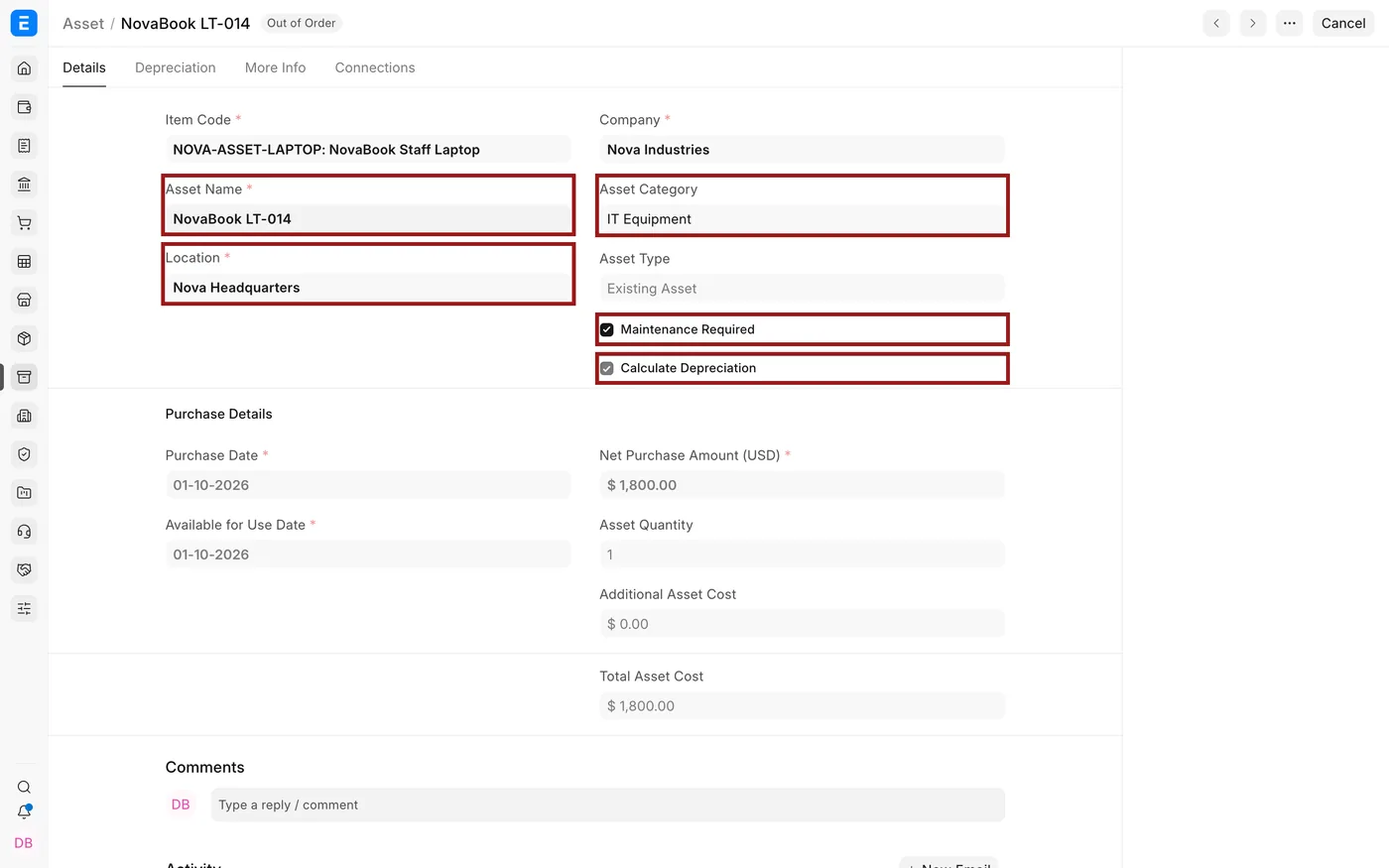
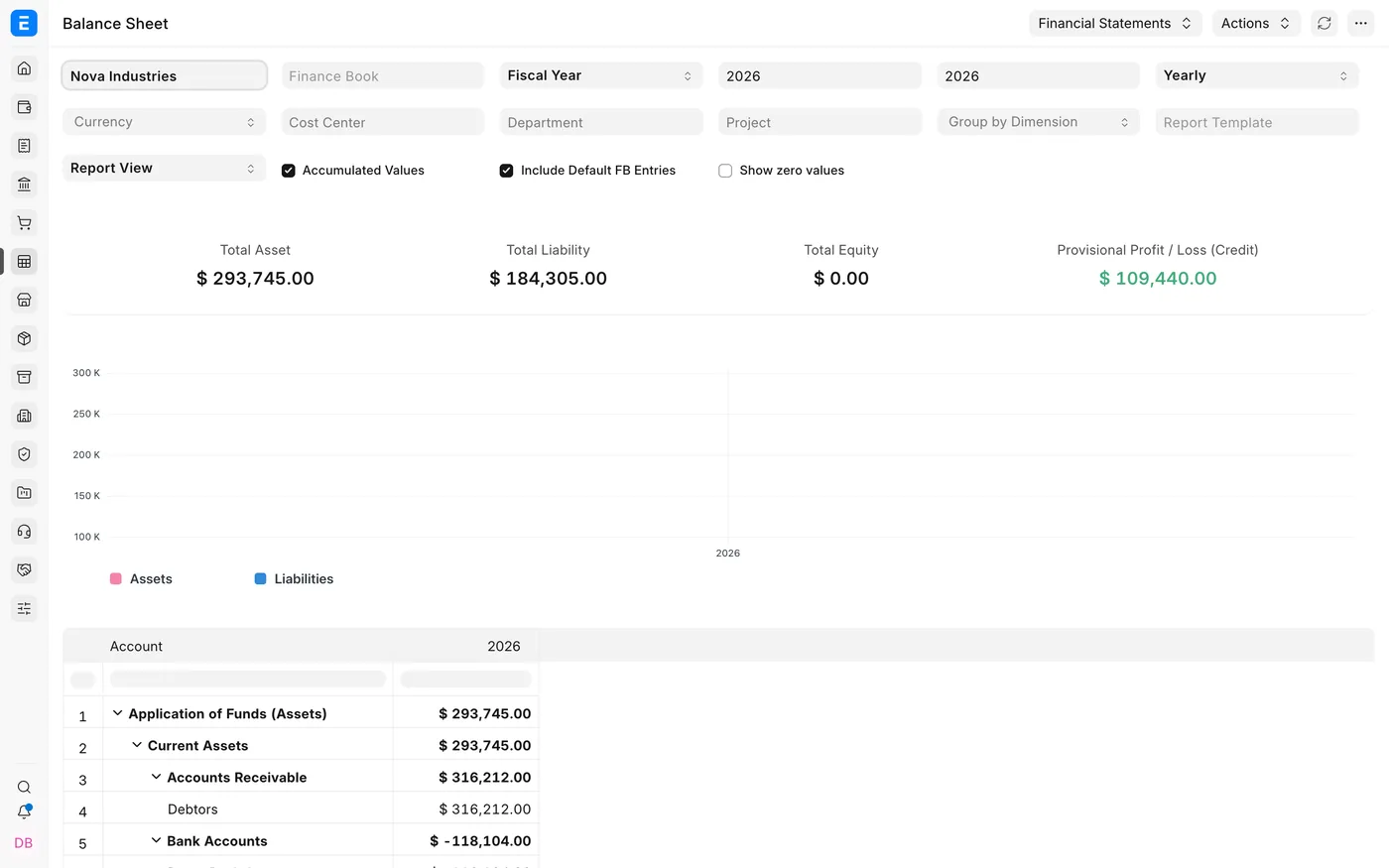
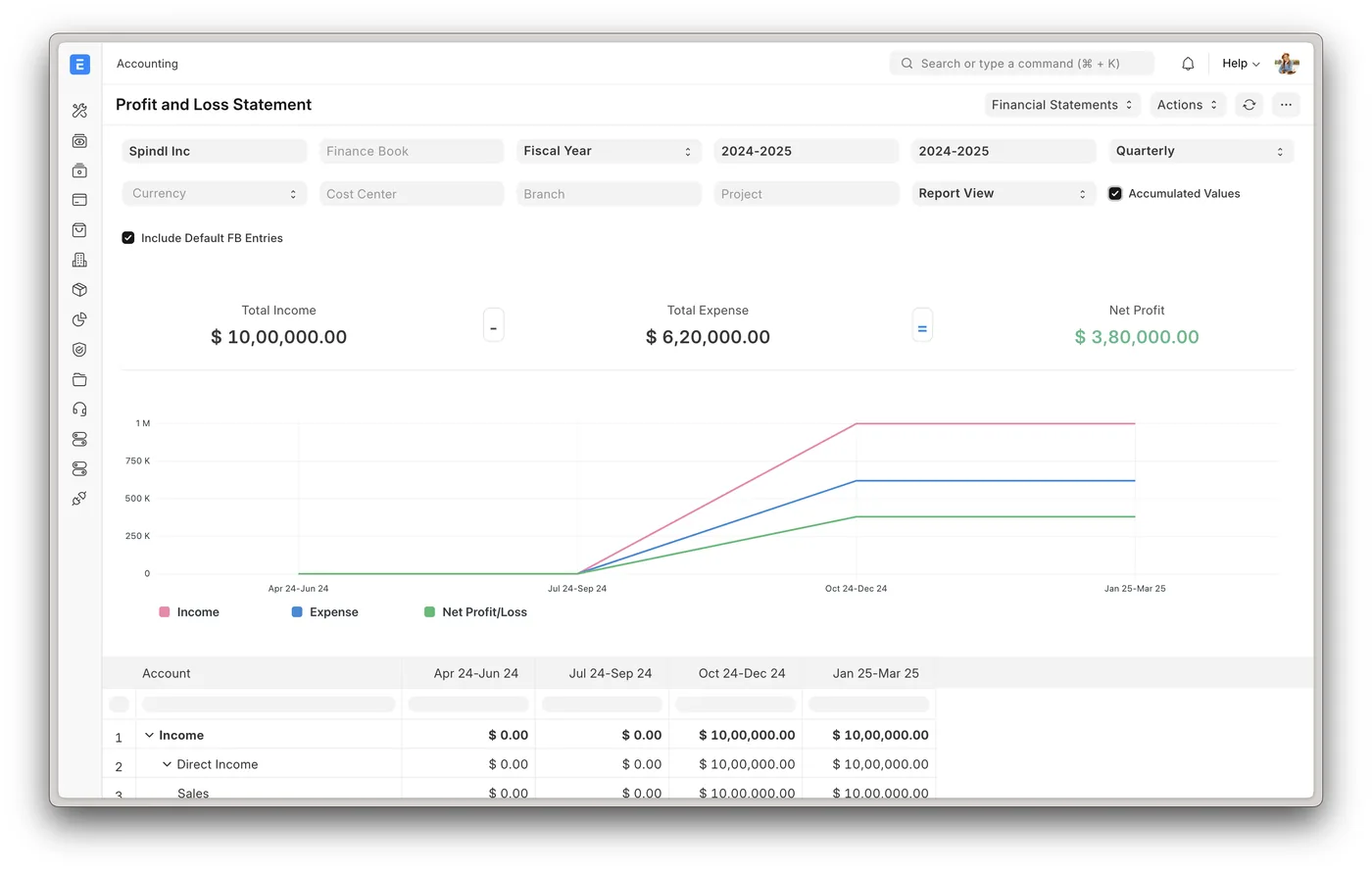
Real ERPNext and Frappe screens for the work described on this page. We configure them for Egyptian rules and your data.
ERPNext and the Frappe apps we implement
One open-source platform, one database, no per-user licence fees.







Egyptian points that affect migration
| Topic | The Egyptian rule | What we set up |
|---|---|---|
| ETA history | Invoices issued since your company joined the ETA e-invoicing system are already held by the Tax Authority with their UUIDs. | Open invoices are loaded with their ETA references, and the full history stays retrievable from the ETA portal rather than being re-submitted. Credit notes against migrated invoices then reference the original ETA document correctly. |
| VAT accounts | VAT at 14% under Law No. 67 of 2016 means most companies carry output and input VAT balances at any cut-over date. | VAT balances are loaded as opening entries at the start of a tax period so the first return from ERPNext covers a clean month. Prior returns stay in the old system's archive. |
| Insured wages | Social insurance under Law No. 148 of 2019 is calculated on an insurable wage that changes each January; from 1 January 2026 it runs from EGP 2,700 to EGP 16,700. | Where payroll moves too, each employee's insurable wage and contribution history is carried across and checked against the last payroll. |
| Personal data | Personal Data Protection Law No. 151 of 2020 and its Executive Regulations, issued in 2025, govern handling of employee and customer data. | Restricted transfer files, named access only and deletion of temporary copies once loading is confirmed. |
We configure the system and check it against your accountant’s figures; we are not tax advisers, and your accountant files the returns. Last reviewed 27 November 2026.
Our migration sequence
Assess sources
We list every system and spreadsheet holding data, rate its quality and agree a cut-over date, ideally at the start of a month or financial year.
Clean with your team
Scripts handle duplicates and formats. Your staff decide on item codes, customer merges and obsolete stock, because only they know the business. A shared issues log shows what is resolved and what is still open.
Trial migration
A complete load into a test site is reconciled and reviewed by finance, sales and stores. Problems are fixed in the scripts, not by hand.
Cut-over weekend
The old system is frozen, stock is counted, the final extract runs and the same scripts load it. Reconciliation is repeated on the live figures. Users start entering live transactions only after the totals agree.
Close the old system
Once the pack is signed, the legacy system becomes read-only and archived exports are handed to you for audit purposes.
Every ERPNext page for Egyptian businesses
Services
- ERPNext Partner in Egypt
- ERPNext Implementation in Egypt
- ERPNext Migration in Egypt
Locations
Other countries
Worldwide

Written and reviewed by Vikas Saroj, Co-Founder, COO & Growth at Shyphan AI Solutions, who owns ERPNext, Odoo and Zoho delivery across Egypt and the wider region. Reviewed against current Egyptian rules on 27 November 2026. Meet the team · LinkedIn
ERPNext Migration in Egypt: questions answered
Will migration interrupt our ETA submissions?
How much history should we migrate?
Can Arabic item and customer names be kept?
Are there licence fees after we move?
Is Shyphan an official Frappe partner?
Who approves the migrated balances?
Request your free quote
Tell us about your project and a senior ERPNext consultant - not a bot - replies within 24 hours with scope, timeline and a fixed quote. The first 30-minute discovery call is free, with no obligation.
- Free 30-minute discovery call
- Fixed-quote SOW - no surprises
- Arabic · English delivery
- VAT 14%, ETA e-invoicing & NOSI ready