





















 Saudi Arabia
 UAE
 Qatar
 Bahrain
 Kuwait
 Oman
 Lebanon
 Egypt
 Jordan
 Iraq
 India
 UK
 Ireland
 Germany
 USA
 Australia
 Singapore
 South Africa
 France
 Hungary
 Georgia
 Turkey
 Canada
 LagosNigeria




ERPNext VAT and E-Invoicing in Oman
Oman taxes supplies at 5% VAT and is moving every VAT-registered business to electronic invoicing under the Fawtara programme during 2027. We configure ERPNext so tax is calculated correctly today and invoice data is ready to flow to your accredited service provider when your date arrives.
- Tax templates by supply type
- VAT return report
- Clean invoice data
- Service provider integration
 ERPNext & FrappeImplementation · migration · AMC
Get a free quote
Reply within 24 hours with scope and a fixed quote.
ERPNext VAT and E-Invoicing in Oman: the short answer
- VAT rate
- A standard rate of 5%, in force since 16 April 2021 and administered by the Oman Tax Authority.
- E-invoicing dates
- 1 April 2027 for annual supplies above OMR 5 million, and 1 October 2027 for everyone else, under Decision 189/2026.
- Exchange model
- Peppol-based, with invoices sent through an accredited service provider rather than straight to the Authority.
- Our role
- We configure and test ERPNext. Your accountant classifies supplies and files returns.
- Delivered by
- Shyphan AI Solutions, an ERPNext implementation partner and Zoho Premium Partner, with 24/7 support. Call +91 95651 53545.
- Last reviewed
- 27 November 2026
Where Omani VAT and Fawtara stand in late 2026
The Oman Tax Authority piloted Fawtara with a first group of large taxpayers selected for August 2026. Decision 189/2026 then amended the VAT Executive Regulations and replaced the earlier four-wave schedule with two legal dates tied to annual supplies. Pilot taxpayers were encouraged to go live by October 2026.
The Authority has joined OpenPeppol as a Peppol Authority and accredits service providers as access points. In practice that means your ERP produces a structured invoice, your provider validates and transmits it over the Peppol network, and tax data reaches the Authority's platform. ERPNext does not ship with this connection, so it has to be configured and integrated.
For most businesses the work is less about software and more about data. Invoices without a buyer tax number, items described only by an internal code and credit notes that do not reference the original invoice will all cause rejections once Fawtara is live. Fixing those habits in ERPNext now, while the deadline is still months away, is far cheaper than fixing rejected invoices one by one in October 2027.
From first record to the finished report
One open-source system, so each step feeds the next without re-keying.
How we prepare ERPNext for Omani tax
Tax templates by supply type
We create item and transaction tax templates for standard-rated, zero-rated and exempt supplies as your adviser classifies them, so users never choose a rate by hand.
VAT return report
A report totals sales and purchase VAT by period and category from posted entries. The open-source ERPGulf Oman_VAT app offers one starting point, which we review, configure and test.
Clean invoice data
Customer VAT numbers, addresses, item descriptions and units are made mandatory where Fawtara needs them, so invoices pass validation first time.
Service provider integration
A Fawtara integration app, open-source community code or one we build, converts submitted invoices to the required format and sends them to your provider.
Status back in ERPNext
Acceptance or rejection messages return to the invoice record, so your team sees which invoices cleared and which need a correction. A daily list of rejected invoices goes to the person responsible for fixing them.
Testing before your date
We test against the provider's sandbox with real invoice scenarios, including credit notes and foreign customers, well before 1 April or 1 October 2027.
See it in ERPNext
Real ERPNext and Frappe screens for the work described on this page. We configure them for Omani rules and your data.
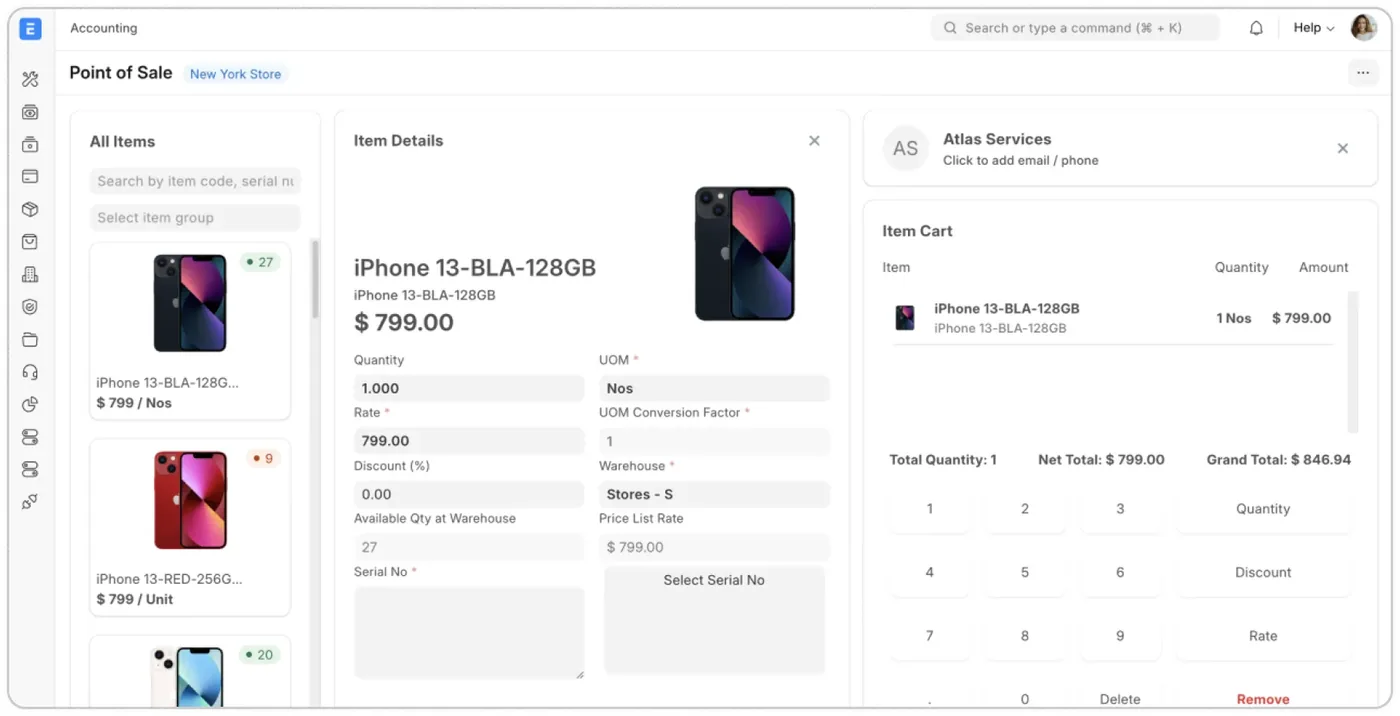
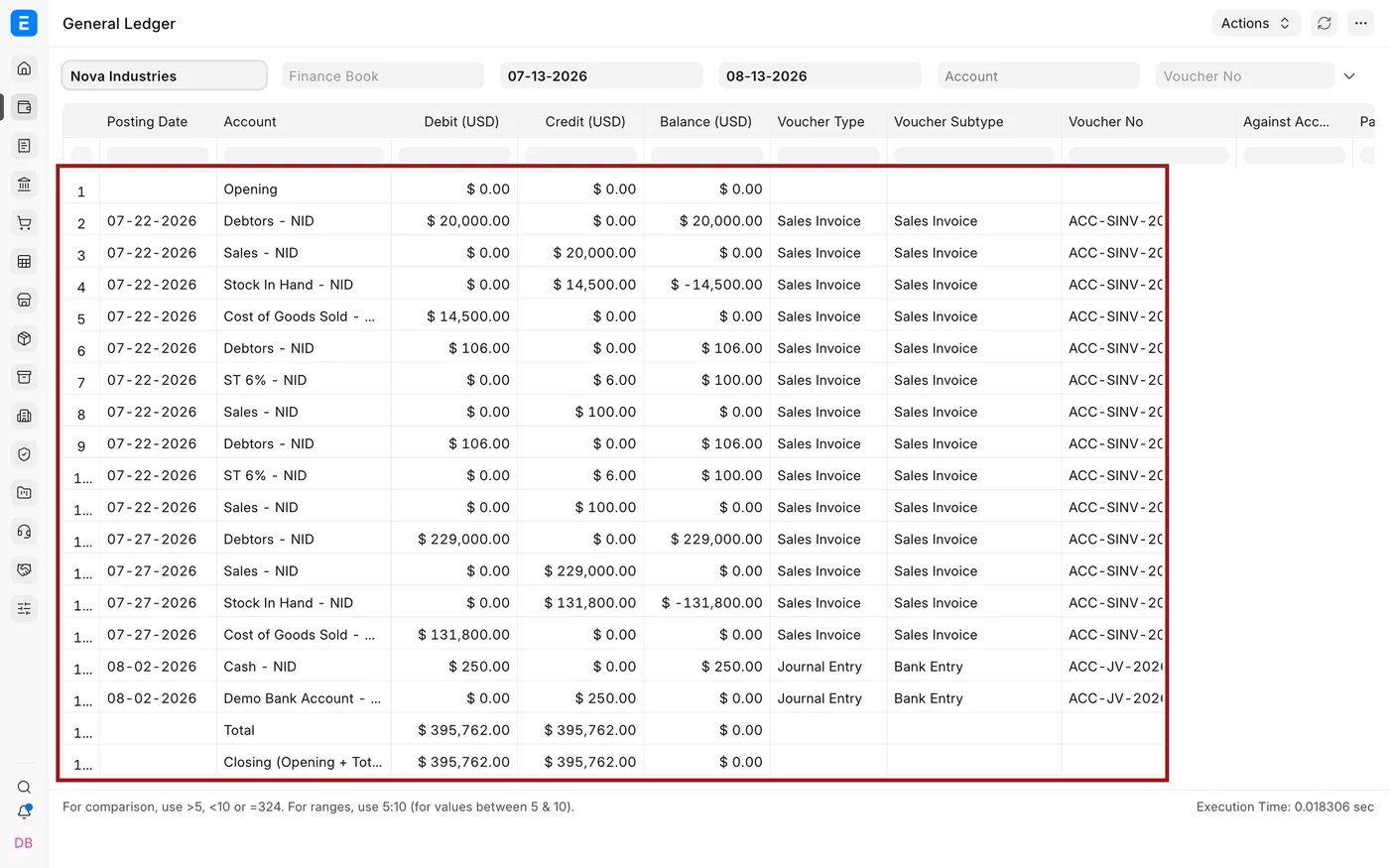
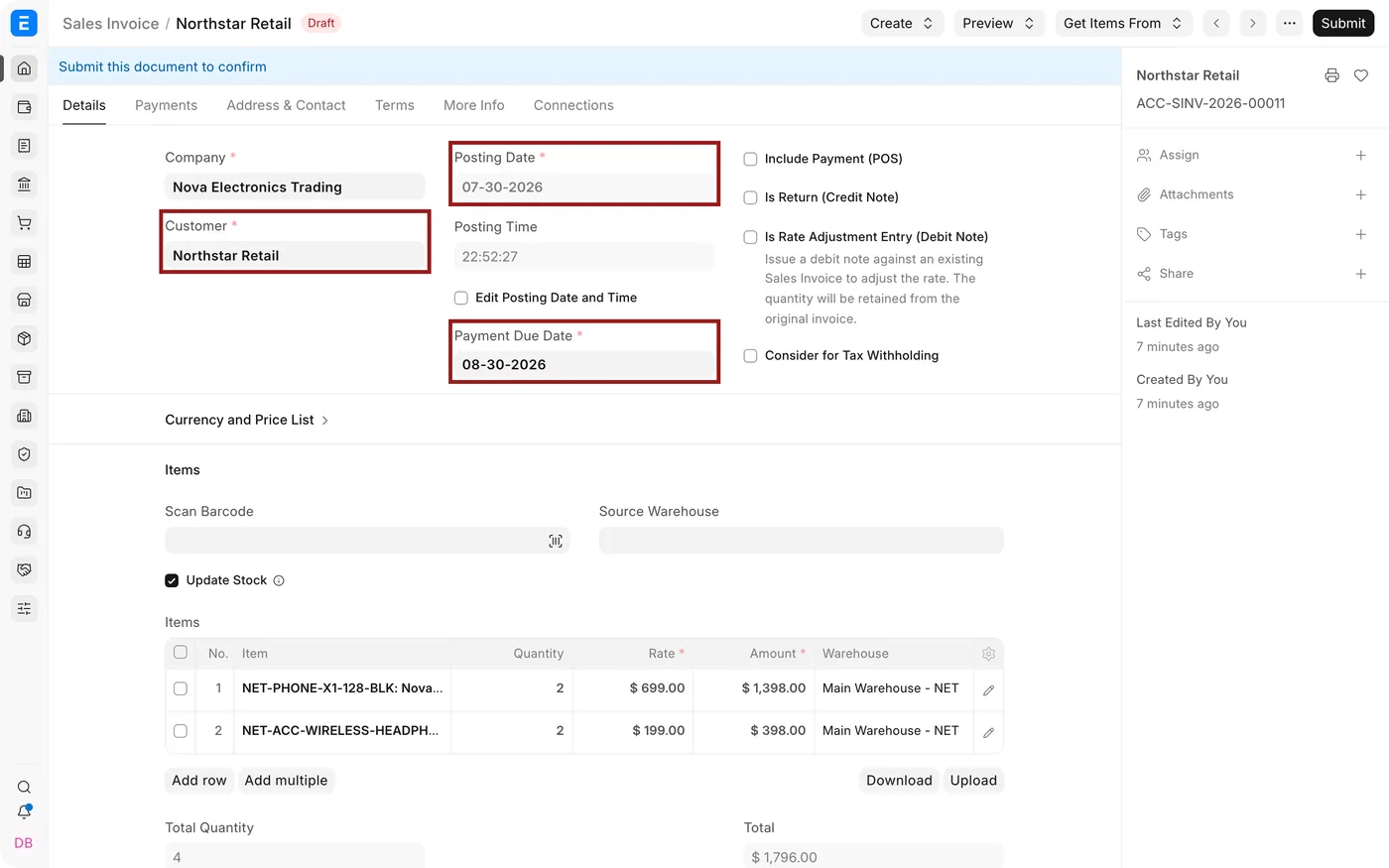
ERPNext and the Frappe apps we implement
One open-source platform, one database, no per-user licence fees.







Oman VAT and e-invoicing rules and what we set up
| Topic | The Omani rule | What we set up |
|---|---|---|
| Standard rate | VAT is charged at 5% on standard-rated supplies of goods and services in Oman. | Default 5% templates on item groups, with zero-rated and exempt templates applied where your adviser says they belong. |
| Registration threshold | Registration is mandatory once annual supplies exceed OMR 38,500, and voluntary from OMR 19,250. | A rolling turnover report helps you watch the threshold if you are not yet registered. Once registered, your VAT number prints on every tax invoice. |
| Large business deadline | Decision 189/2026 requires taxpayers with annual supplies above OMR 5 million to issue electronic invoices from 1 April 2027. | Integration built and tested on your provider's sandbox early, with a dated go-live plan. |
| Deadline for others | Taxpayers with annual supplies of OMR 5 million or less must issue electronic invoices from 1 October 2027. | Invoice data captured correctly now, so switching on the connection later is a short project. |
| Peppol exchange | The Tax Authority acts as Peppol Authority and accredits service providers as access points under a five-corner model. | ERPNext connected to the provider you choose, with credentials stored securely and a log of every transmission. |
We configure the system and check it against your accountant’s figures; we are not tax advisers, and your accountant files the returns. Last reviewed 27 November 2026.
Getting from VAT setup to live e-invoicing
Review current tax setup
We check how VAT is configured today, find invoices posted with the wrong rate and agree corrections with your accountant. This review also shows which documents and users need the most attention before e-invoicing starts.
Fix master data
Customer tax numbers, addresses and item data are completed, because e-invoices are only as good as the records behind them.
Choose a service provider
You select an accredited provider through the Fawtara portal. We review its technical documentation and plan the connection.
Build and test
The integration is configured on a staging site and run against the provider's sandbox with normal invoices, credit notes and edge cases.
Go live and monitor
On your date the connection is switched on in production. Our support desk watches rejections and helps your team correct them quickly.
Every ERPNext page for Omani businesses
Compliance
- ERPNext VAT and E-Invoicing in Oman
- Frappe HR and Payroll in Oman
Locations
Other countries
Worldwide

Written and reviewed by Vikas Saroj, Co-Founder, COO & Growth at Shyphan AI Solutions, who owns ERPNext, Odoo and Zoho delivery across Oman and the wider region. Reviewed against current Omani rules on 27 November 2026. Meet the team · LinkedIn
ERPNext VAT and E-Invoicing in Oman: questions answered
When must my business start Fawtara e-invoicing?
Does ERPNext connect to Fawtara out of the box?
Can invoices show Arabic text?
Do you file our VAT return?
Is there a licence fee for the VAT or e-invoicing features?
Is Shyphan an official Frappe partner?
Request your free quote
Tell us about your project and a senior ERPNext consultant - not a bot - replies within 24 hours with scope, timeline and a fixed quote. The first 30-minute discovery call is free, with no obligation.
- Free 30-minute discovery call
- Fixed-quote SOW - no surprises
- Arabic · English delivery
- VAT 5%, OTA & SPF ready