





















 Saudi Arabia
 UAE
 Qatar
 Bahrain
 Kuwait
 Oman
 Lebanon
 Egypt
 Jordan
 Iraq
 India
 UK
 Ireland
 Germany
 USA
 Australia
 Singapore
 South Africa
 France
 Hungary
 Georgia
 Turkey
 Canada
 LagosNigeria




ERPNext Migration in Bahrain
In Bahrain a migration has one extra constraint: VAT. Open invoices, credit notes and the current tax period must move without breaking the next return. We plan the switch around your VAT calendar and prove every balance before you stop using the old system.
- Tax category clean-up
- Open invoices with their VAT
- Batches and expiry dates
- Bank and VAT control balances
 ERPNext & FrappeImplementation · migration · AMC
Get a free quote
Reply within 24 hours with scope and a fixed quote.
ERPNext Migration in Bahrain: the short answer
- Typical sources
- QuickBooks, Sage, Tally, Zoho Books, older local packages, Odoo and spreadsheets.
- Timing
- At the start of a VAT period, so each return comes from one system only.
- VAT history
- Filed periods stay in the old system's archive; open invoices move with their VAT amounts.
- Proof
- Trial balance, receivables, payables, stock and VAT control accounts reconciled and signed.
- Delivered by
- Shyphan AI Solutions, an ERPNext implementation partner and Zoho Premium Partner, with 24/7 support. Call +91 95651 53545.
- Last reviewed
- 27 November 2026
Planning a migration around VAT
Take a medical and laboratory supplies distributor in Bahrain serving hospitals, clinics and pharmacies. It runs QuickBooks for accounts and a large spreadsheet for batches and expiry dates. Some customers are government bodies with long payment cycles, some products are zero-rated and others are standard-rated, and the company files VAT quarterly. If the switch to ERPNext happens mid-quarter, half the return comes from QuickBooks and half from ERPNext, and the accountant has to stitch them together.
We avoid that by setting the cut-over at the start of a VAT period. The last return from the old system covers the period before the switch, and every return after it comes from ERPNext alone. Open customer and supplier invoices move with their original VAT amounts, so credit notes issued later reference the right tax, and the VAT control accounts open with balances that match the last filed return.
The rest of the method is the same discipline we use everywhere: clean the masters, map the fields, load by script, reconcile and only then switch. Payroll can follow on its own date, usually the start of a salary month, so SIO contributions and the wage file for any month come from one system.
From first record to the finished report
One open-source system, so each step feeds the next without re-keying.
What our Bahrain migration covers
Tax category clean-up
Before loading, each item is classified as standard-rated, zero-rated or exempt, and each customer and supplier tagged as local, GCC or overseas. This is the step that makes future returns correct, and your accountant confirms the treatment before anything is loaded.
Open invoices with their VAT
Unpaid sales and purchase invoices move individually with net, VAT and gross amounts, so ageing reports work and later credit notes carry the right tax. Government customers with long payment cycles keep their full invoice history.
Batches and expiry dates
For pharmaceutical, food and chemical goods, stock moves by batch with expiry dates and valuation, so first-expiry-first-out picking works from day one.
Bank and VAT control balances
Bank accounts open at reconciled balances, and VAT input and output accounts open at amounts that agree with the last return and any payment due to NBR.
Scripted, repeatable loads
Every import runs through a script that can be rerun after each correction, so the final load is exactly the method tested in rehearsal. Each script logs what it loaded and what it rejected, giving you a record for the audit file.
Archive of filed periods
Transactions behind filed VAT returns stay in a read-only archive or as summary journals, so you can answer NBR or auditor questions about past periods.
See it in ERPNext
Real ERPNext and Frappe screens for the work described on this page. We configure them for Bahraini rules and your data.
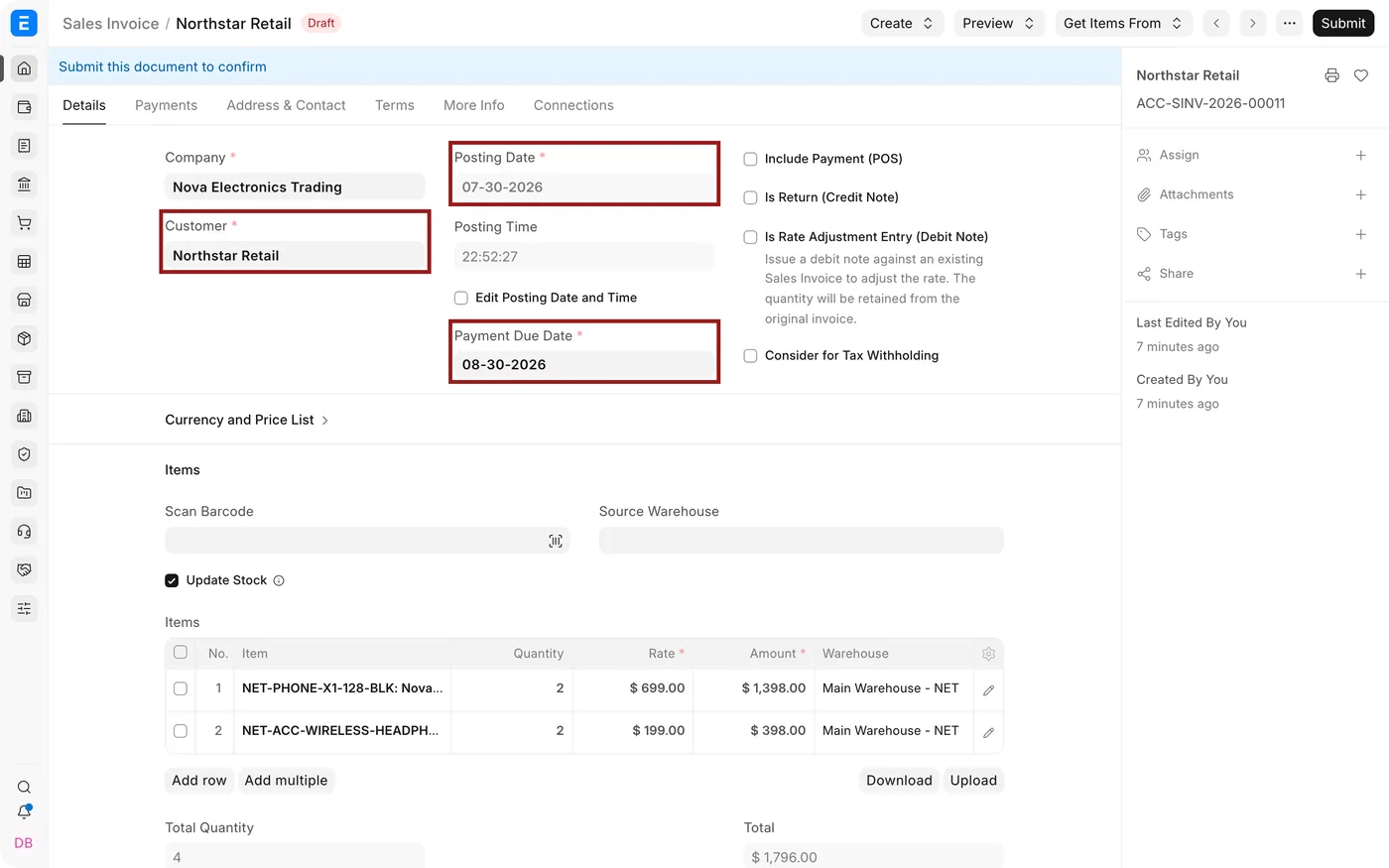
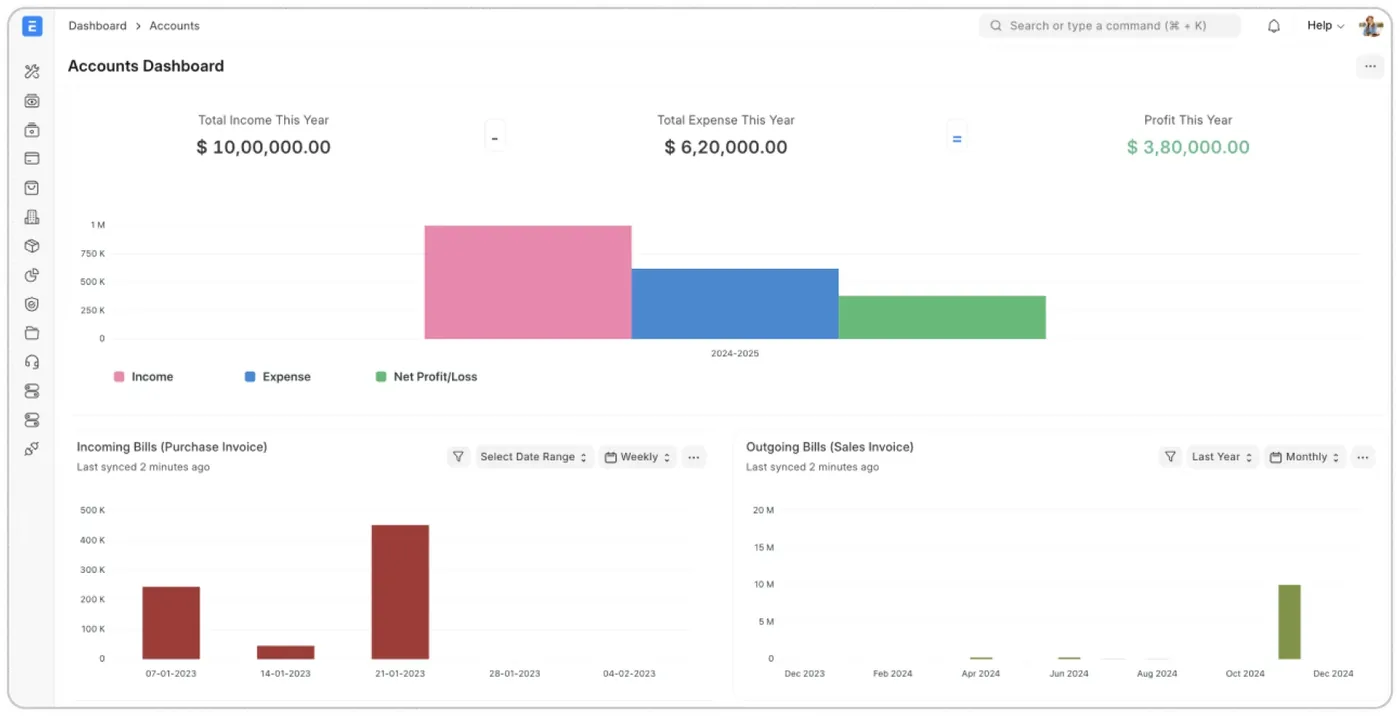
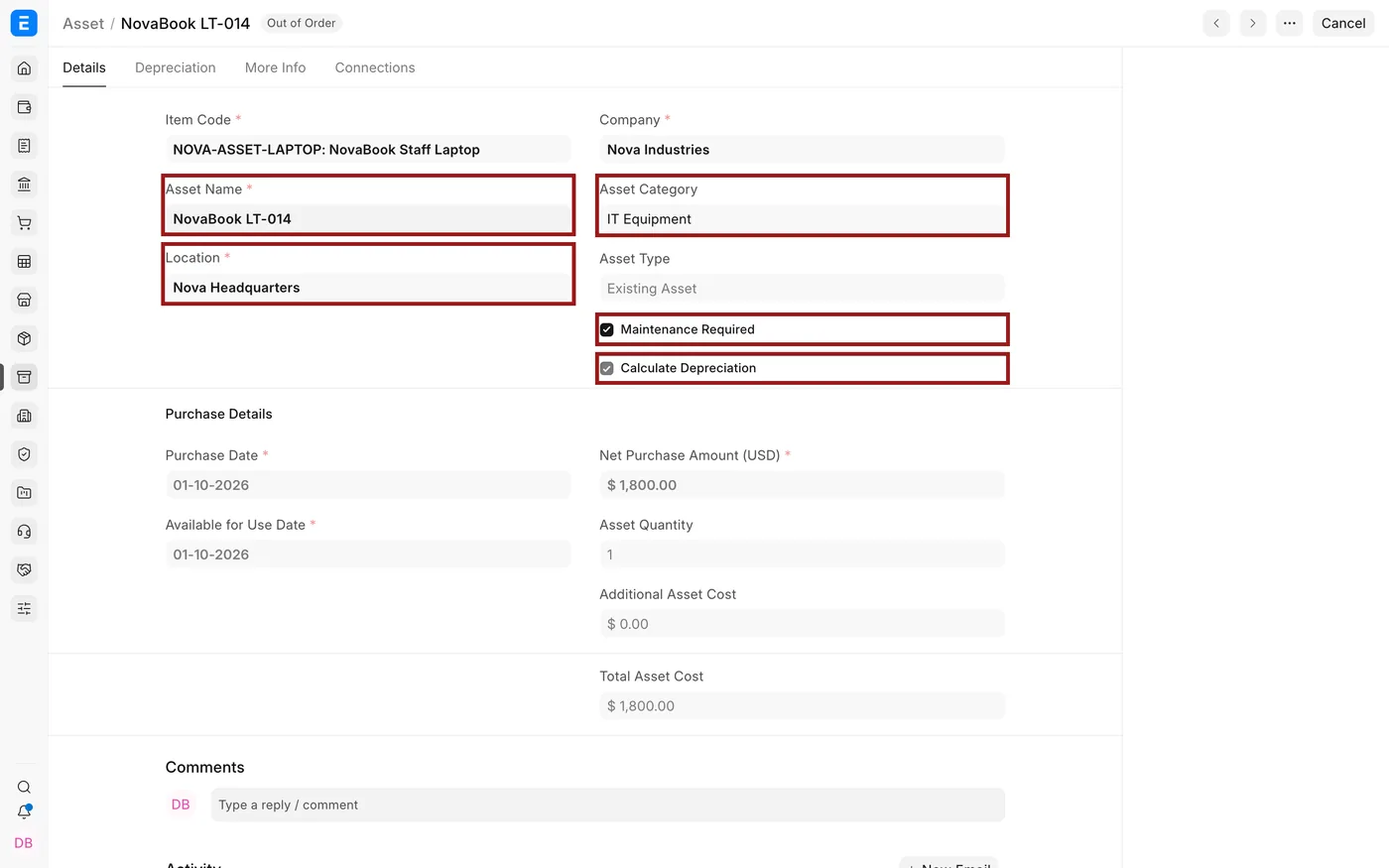
ERPNext and the Frappe apps we implement
One open-source platform, one database, no per-user licence fees.







Bahrain points that shape a migration
| Topic | The Bahraini rule | What we set up |
|---|---|---|
| VAT period alignment | Returns are quarterly, or monthly where annual supplies exceed BHD 3 million, and are due with payment by the last day of the following month. | Cut-over set on the first day of a period, with the old system closed only after its final return is prepared. |
| Rate history | The standard rate rose from 5% to 10% on 1 January 2022, with transitional rules for older contracts. | Old 5% invoices that are still open, or credit notes against them, keep their original rate through a separate template. |
| Expatriate end of service | Since 1 March 2024 SIO pays expatriate end of service for service after that date, while the employer still owes gratuity for earlier service. | Pre-March 2024 service and its liability are migrated per employee, so final settlements split correctly between employer and SIO. |
| Personal data | Personal data is protected under Law No. 30 of 2018, in force since 1 August 2019. | Only needed data is migrated, exports are deleted after loading and access to HR records is restricted by role. |
| SIO contributions | SIO contributions for Bahraini staff are 18% employer and 8% employee from 1 January 2026, and 3% and 1% for expatriates, on salary up to BHD 4,000. | Payroll moves at a salary month start, with each employee's nationality and contribution base checked on the first parallel run. |
We configure the system and check it against your accountant’s figures; we are not tax advisers, and your accountant files the returns. Last reviewed 27 November 2026.
Our migration sequence for Bahrain
Agree the VAT cut-over date
We look at your filing calendar and pick a period start that suits finance, usually the first day of a quarter.
Audit and classify
Exports from every source are checked for duplicates and gaps, and tax categories are agreed for items, customers and suppliers.
Rehearse twice
Data is loaded into a test site at least twice. After each load, finance compares trial balance, debtors, creditors, stock and VAT accounts.
Final return and freeze
The old system produces its last return for the closing period, then is frozen. The final load runs over a weekend.
Sign-off
Your finance manager signs the reconciliation pack, and the archive location is recorded for auditors and NBR enquiries.
Every ERPNext page for Bahraini businesses
Services
- ERPNext Partner in Bahrain
- ERPNext Implementation in Bahrain
- ERPNext Migration in Bahrain
Locations
Other countries
Worldwide

Written and reviewed by Vikas Saroj, Co-Founder, COO & Growth at Shyphan AI Solutions, who owns ERPNext, Odoo and Zoho delivery across Bahrain and the wider region. Reviewed against current Bahraini rules on 27 November 2026. Meet the team · LinkedIn
ERPNext Migration in Bahrain: questions answered
Can we migrate in the middle of a VAT quarter?
Do filed VAT periods move into ERPNext?
Can you migrate from Zoho Books or QuickBooks?
Is migration cheaper because there is no licence?
Are you an official Frappe partner?
Will Arabic customer names be kept?
Request your free quote
Tell us about your project and a senior ERPNext consultant - not a bot - replies within 24 hours with scope, timeline and a fixed quote. The first 30-minute discovery call is free, with no obligation.
- Free 30-minute discovery call
- Fixed-quote SOW - no surprises
- Arabic · English delivery
- VAT 10%, NBR & SIO ready