





















 Saudi Arabia
 UAE
 Qatar
 Bahrain
 Kuwait
 Oman
 Lebanon
 Egypt
 Jordan
 Iraq
 India
 UK
 Ireland
 Germany
 USA
 Australia
 Singapore
 South Africa
 France
 Hungary
 Georgia
 Turkey
 Canada
 LagosNigeria




ERPNext Migration in Kuwait
Moving a Kuwait business off an ageing ERP carries real risk: lost history, wrong balances, staff working in two systems. This page explains the risks we see most often and how our migration method deals with each one.
- Arabic text that breaks on export
- Duplicate customers and items
- Balances that do not agree
- Lost history
 ERPNext & FrappeImplementation · migration · AMC
Get a free quote
Reply within 24 hours with scope and a fixed quote.
ERPNext Migration in Kuwait: the short answer
- Source systems
- Microsoft Dynamics NAV, Sage, QuickBooks, Tally, older Arabic accounting packages, Odoo and spreadsheets.
- Data in scope
- Masters, open invoices and orders, stock with batches, fixed assets, employees and opening balances.
- Cut-over
- Usually at a month or year start, with the final load over a weekend.
- Sign-off
- Your finance manager signs a reconciliation pack before the old system is closed.
- Delivered by
- Shyphan AI Solutions, an ERPNext implementation partner and Zoho Premium Partner, with 24/7 support. Call +91 95651 53545.
- Last reviewed
- 27 November 2026
Why Kuwait companies migrate, and what can go wrong
Many Kuwait firms run an accounting system installed fifteen or twenty years ago, sometimes a local Arabic package whose vendor no longer updates it, sometimes an old version of Dynamics NAV on a server in the office cupboard. Reports are produced by one person who knows the workarounds. When that person is on leave, month end waits. The move to ERPNext is often triggered by exactly that fragility.
Consider a restaurant group with a central kitchen in Al Rai, several outlets and catering contracts. Recipes and ingredient costs live in spreadsheets, each outlet has its own point of sale, and the accounts are rebuilt monthly from sales summaries. Migrating that business is not one export and one import. It means agreeing a single item list for ingredients, building recipes as bills of materials, and deciding how much sales history is worth bringing across.
Our method treats migration as a project of its own, with named risks, owners and tests. Below are the risks that come up most often in Kuwait and what we do about them. Each one is logged at the start of the project with an owner on your side and one on ours, and reviewed at every weekly meeting until it is closed.
From first record to the finished report
One open-source system, so each step feeds the next without re-keying.
Migration risks and how we handle them
Arabic text that breaks on export
Older systems sometimes store Arabic in encodings that turn into question marks on export. We test exports early, convert text to Unicode and check a sample of names with your team before loading.
Duplicate customers and items
Years of quick entries create the same customer under three spellings. We match records by phone, civil ID or commercial registration number and merge them with your approval.
Balances that do not agree
Every load ends with a comparison of trial balance, receivables, payables and stock value. Differences are traced to their cause and fixed in the source or the mapping, never forced with a plug entry.
Lost history
Closed years stay available as summary journals inside ERPNext or as a read-only archive, so questions from auditors or the tax department can still be answered.
Employee service dates
Indemnity depends on length of service, so joining dates, unpaid leave and past settlements are checked carefully. A wrong date today becomes a wrong indemnity years later.
Users stuck between systems
A firm freeze date and a weekend final load mean staff stop using the old system on Thursday and start in ERPNext on Sunday, with no period of double entry.
See it in ERPNext
Real ERPNext and Frappe screens for the work described on this page. We configure them for Kuwaiti rules and your data.
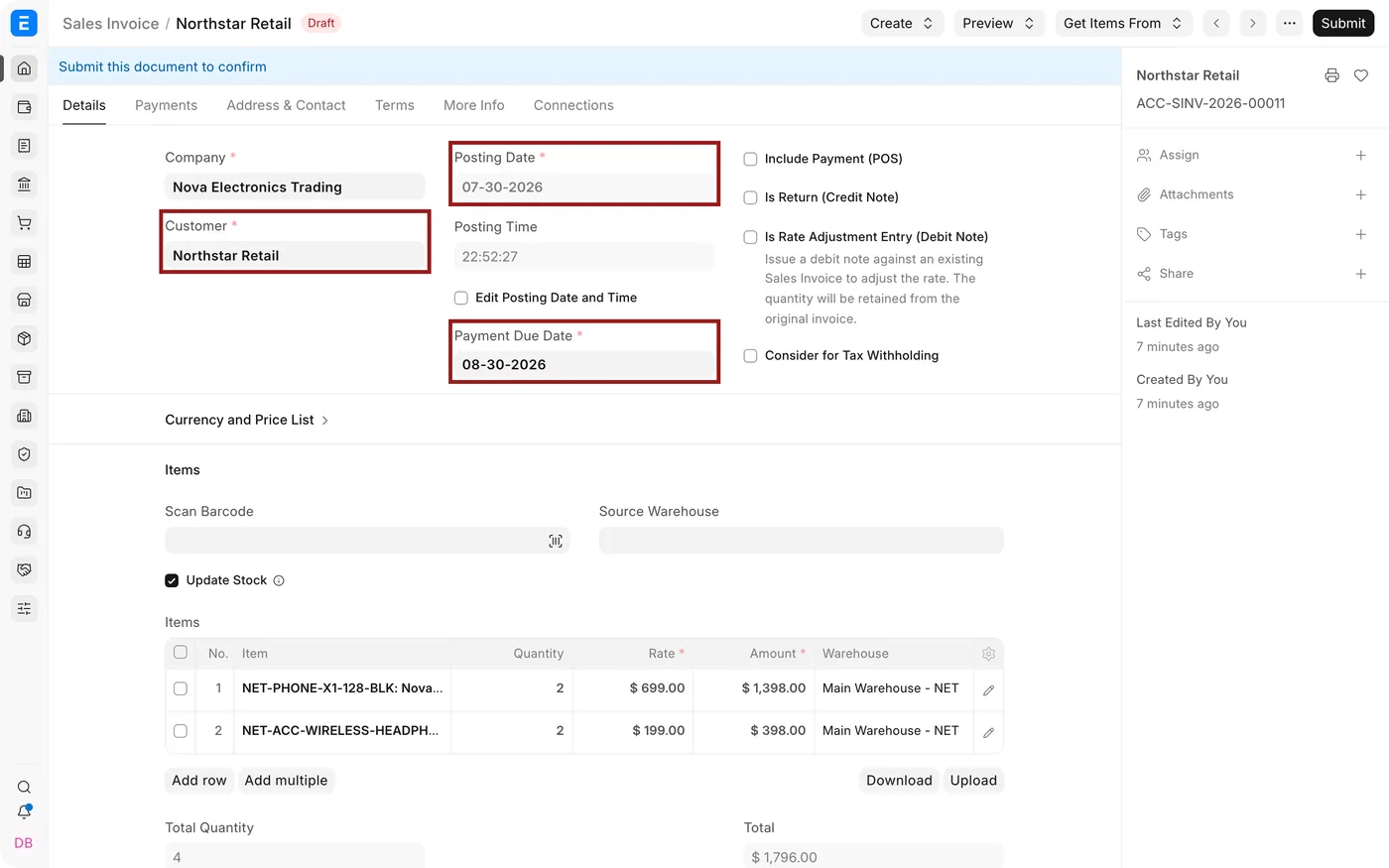
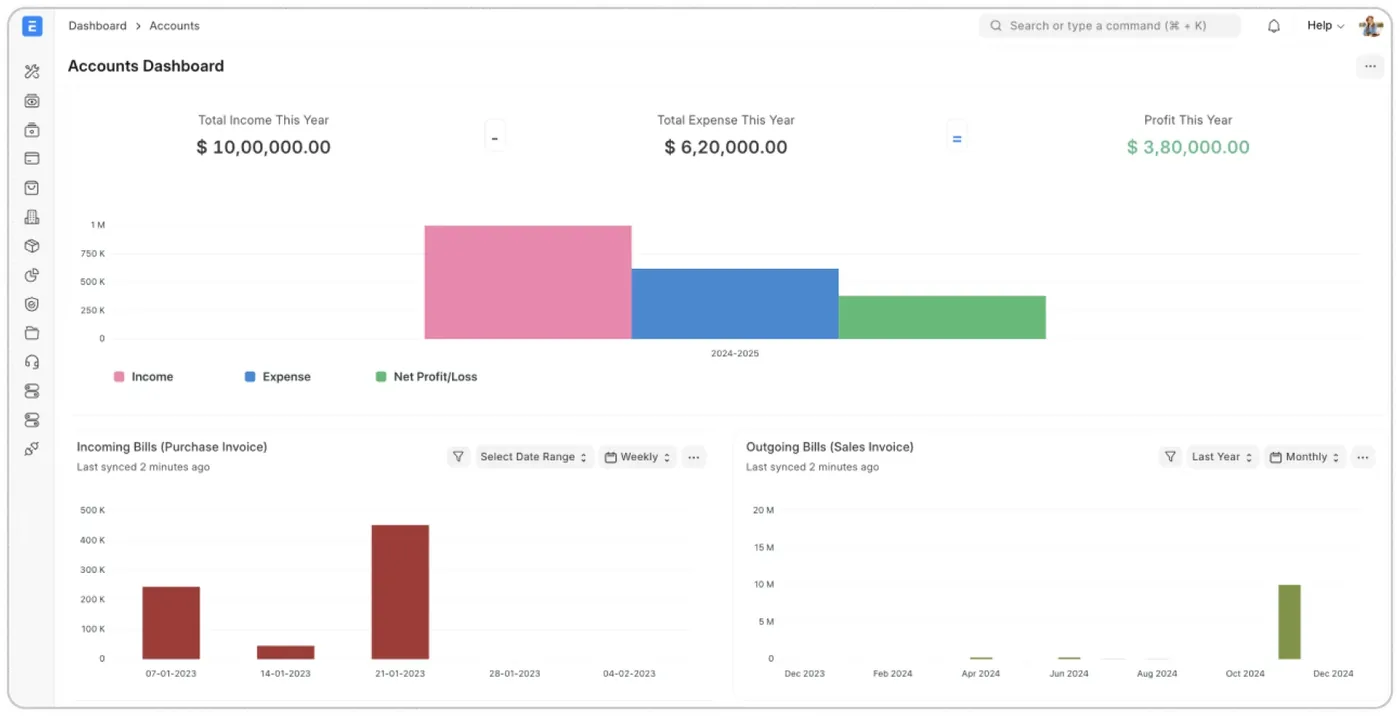
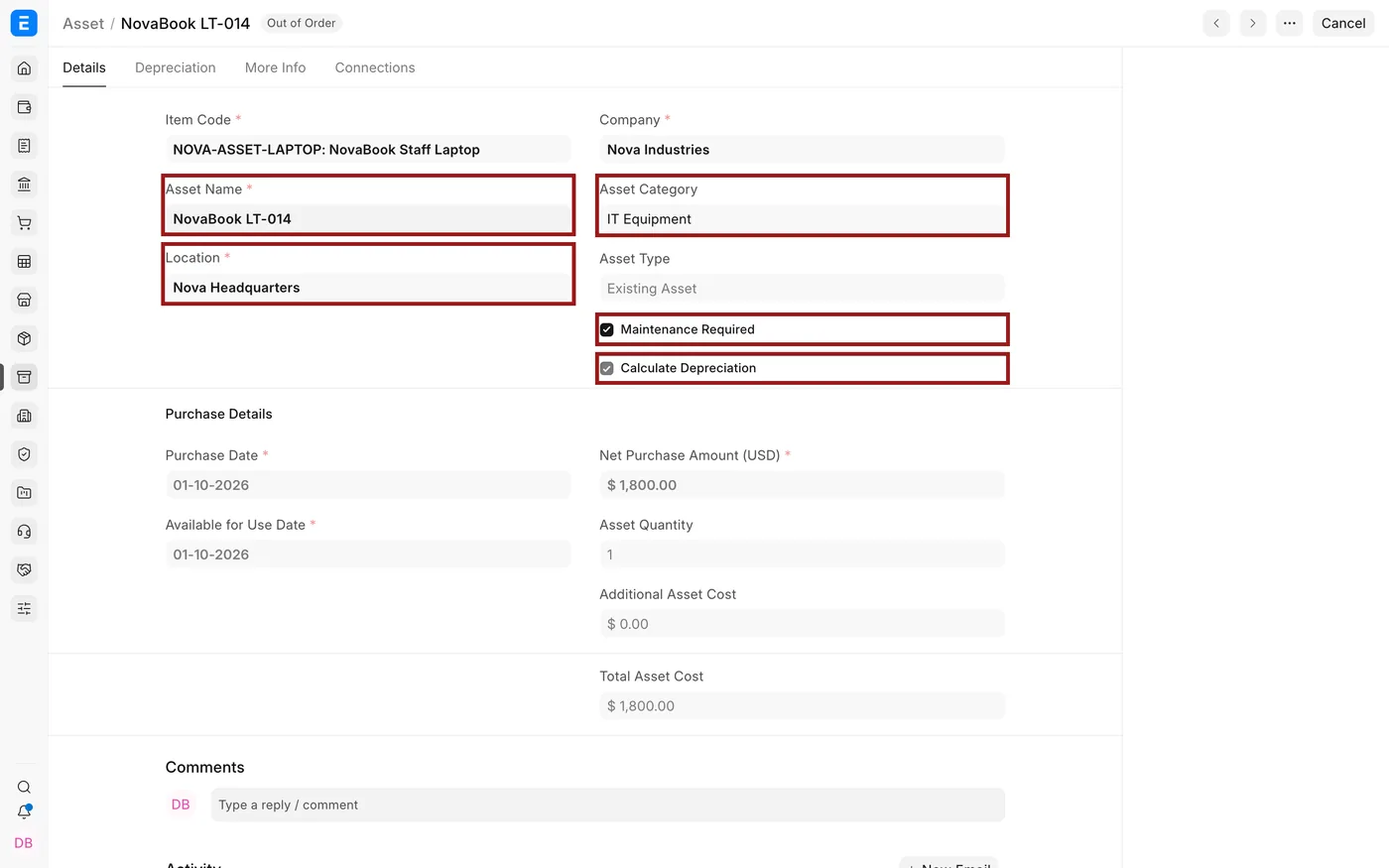
ERPNext and the Frappe apps we implement
One open-source platform, one database, no per-user licence fees.







Kuwait points that affect a migration
| Topic | The Kuwaiti rule | What we set up |
|---|---|---|
| Zakat and NLST periods | Zakat at 1% and NLST at 2.5% apply to annual net profit for the relevant shareholding companies, with the audited Zakat declaration due by the 15th of the fourth month after year end. | Go-live is planned so a full year's profit sits in one system where possible, or the year is split with a documented bridge report. |
| Foreign income tax | Foreign corporate bodies pay 15% on Kuwait profits, with returns due within three months and 15 days of year end. | Opening balances for branches and foreign-owned shares are loaded separately, so the first year's tax report reads correctly. |
| Indemnity balances | Indemnity under Labour Law No. 6 of 2010 depends on years of service, at 15 days' pay per year for the first five years and one month per year after. | Joining dates and any previous partial settlements are migrated, and the opening provision is agreed with finance. |
| PIFSS registration | Kuwaiti employees are registered with PIFSS, with contributions shared between employer and employee. | Each Kuwaiti employee's PIFSS details are imported, and contribution components are tested on the first parallel payroll. |
We configure the system and check it against your accountant’s figures; we are not tax advisers, and your accountant files the returns. Last reviewed 27 November 2026.
Our migration sequence
Data audit
We take a full export from each source and report what we find: counts, duplicates, missing fields and encoding problems. You see the size of the job before it is priced.
Rules and clean-up
Naming rules, item groups and customer categories are agreed. Your staff fix what only they can fix, such as which of two addresses is current, using simple sheets we provide.
Scripted trial loads
Data is loaded into a test site by script at least twice. After each run finance compares the totals and we adjust the mapping.
Freeze and final load
The old system is frozen at an agreed date, after the last invoices and receipts are posted. The final load runs over the weekend using the same scripts as the trials, and key users check their own records on Saturday before staff return.
Reconcile and archive
The reconciliation pack is signed, the old system becomes read-only and the archive location is recorded for your auditors.
Every ERPNext page for Kuwaiti businesses
Services
- ERPNext Partner in Kuwait
- ERPNext Implementation in Kuwait
- ERPNext Migration in Kuwait
Locations
Other countries
Worldwide

Written and reviewed by Vikas Saroj, Co-Founder, COO & Growth at Shyphan AI Solutions, who owns ERPNext, Odoo and Zoho delivery across Kuwait and the wider region. Reviewed against current Kuwaiti rules on 27 November 2026. Meet the team · LinkedIn
ERPNext Migration in Kuwait: questions answered
Can you migrate from Microsoft Dynamics NAV?
Will Arabic names survive the move?
How do you avoid errors in opening balances?
Does migration cost more because ERPNext is free?
Are you an official Frappe migration partner?
What happens to the old server?
Request your free quote
Tell us about your project and a senior ERPNext consultant - not a bot - replies within 24 hours with scope, timeline and a fixed quote. The first 30-minute discovery call is free, with no obligation.
- Free 30-minute discovery call
- Fixed-quote SOW - no surprises
- Arabic · English delivery
- PIFSS, KNET & KWD-ready