





















 Saudi Arabia
 UAE
 Qatar
 Bahrain
 Kuwait
 Oman
 Lebanon
 Egypt
 Jordan
 Iraq
 India
 UK
 Ireland
 Germany
 USA
 Australia
 Singapore
 South Africa
 France
 Hungary
 Georgia
 Turkey
 Canada
 LagosNigeria




ERPNext Accounting in Kuwait
Kuwait's company taxes all start from net profit, but each defines its base and its payer differently. We set up ERPNext so the profit figures for Zakat, NLST, foreign income tax and, for large groups, the domestic minimum tax come from one ledger.
- Accounts that separate tax items
- Multi-company groups
- Ownership register
- Monthly accruals
 ERPNext & FrappeImplementation · migration · AMC
Get a free quote
Reply within 24 hours with scope and a fixed quote.
ERPNext Accounting in Kuwait: the short answer
- VAT
- None in force. Kuwait has signed the GCC framework but has not passed a VAT law.
- Zakat and NLST
- 1% Zakat for Kuwaiti closed and listed shareholding companies, plus 2.5% NLST for listed companies.
- Income tax
- A flat 15% on profits of foreign corporate bodies doing business in Kuwait.
- Minimum tax
- A 15% domestic minimum top-up tax for large multinational groups from 1 January 2025.
- Delivered by
- Shyphan AI Solutions, an ERPNext implementation partner and Zoho Premium Partner, with 24/7 support. Call +91 95651 53545.
- Last reviewed
- 27 November 2026
One ledger, several Kuwait profit taxes
Imagine a Kuwaiti closed shareholding company in the industrial services sector. A foreign engineering firm owns a minority stake, the parent company is listed on the stock exchange, and the group belongs to a wider family holding. In one year the company may need a Zakat profit base for itself, an NLST figure at the listed parent, a 15% income tax computation on the foreign partner's share, and reporting for any group entity caught by the minimum tax rules. Each calculation adds back or excludes different items.
ERPNext is a full double-entry system with multi-company support, cost centres, accounting dimensions, budgets, bank reconciliation and period closing. It has no Kuwait tax module. We add the structure that makes these calculations straightforward: accounts that isolate board remuneration, KFAS contributions, Zakat and NLST, an ownership register with effective dates, and reports that produce each profit base in the layout your auditor uses. We configure the system. Your auditor or tax adviser prepares and files.
The other change worth planning for is the domestic minimum tax. Groups above the revenue threshold now calculate a 15% top-up under rules that follow the OECD model, and the in-scope Kuwait entities stop paying the old income tax and Zakat. That shift changes which reports each entity needs, so we flag in-scope companies in ERPNext and give the group tax team clean entity-level data rather than a set of spreadsheets rebuilt each year.
From first record to the finished report
One open-source system, so each step feeds the next without re-keying.
How we configure ERPNext accounting for Kuwait
Accounts that separate tax items
Board remuneration, KFAS contributions, donations, Zakat and NLST each post to their own accounts. The profit base report can then exclude them correctly without manual adjustments.
Multi-company groups
Parent, subsidiaries and branches run as separate companies in one ERPNext site, with intercompany invoices, eliminations support and consolidated statements.
Ownership register
Shareholdings are recorded with effective dates. Reports apply the right percentage to each period, which matters when a foreign partner enters or leaves mid-year.
Monthly accruals
Zakat, NLST and income tax are accrued monthly from the running profit, so management accounts show a realistic net result rather than a shock at year end.
Period locking and audit trail
Closed months are locked, edits are versioned and every report line drills down to the source documents your auditor wants to see.
Group reporting packs
For groups in scope of the minimum tax, ERPNext produces entity trial balances and dimension reports that your group tax team uses in its own calculation tools.
See it in ERPNext
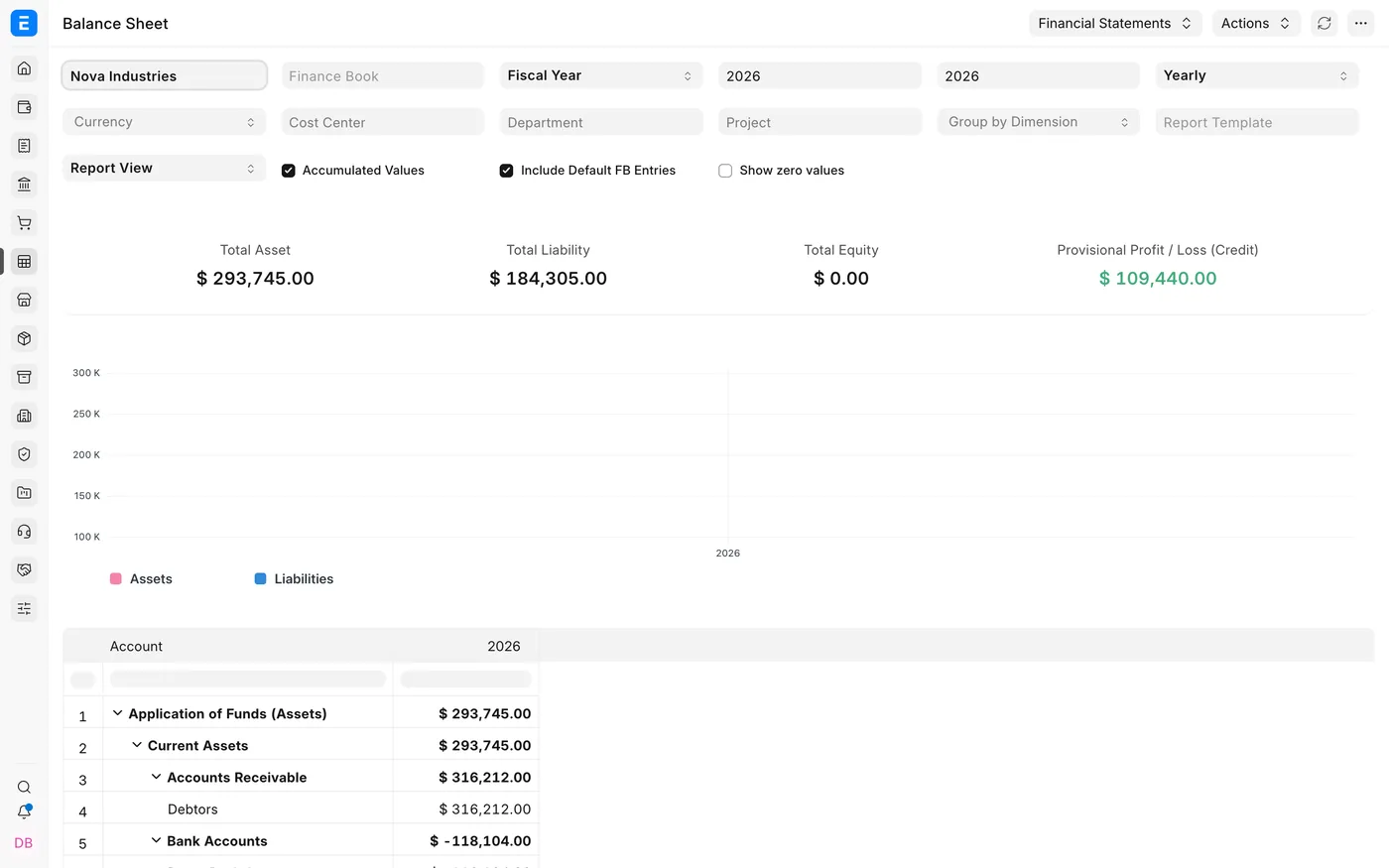
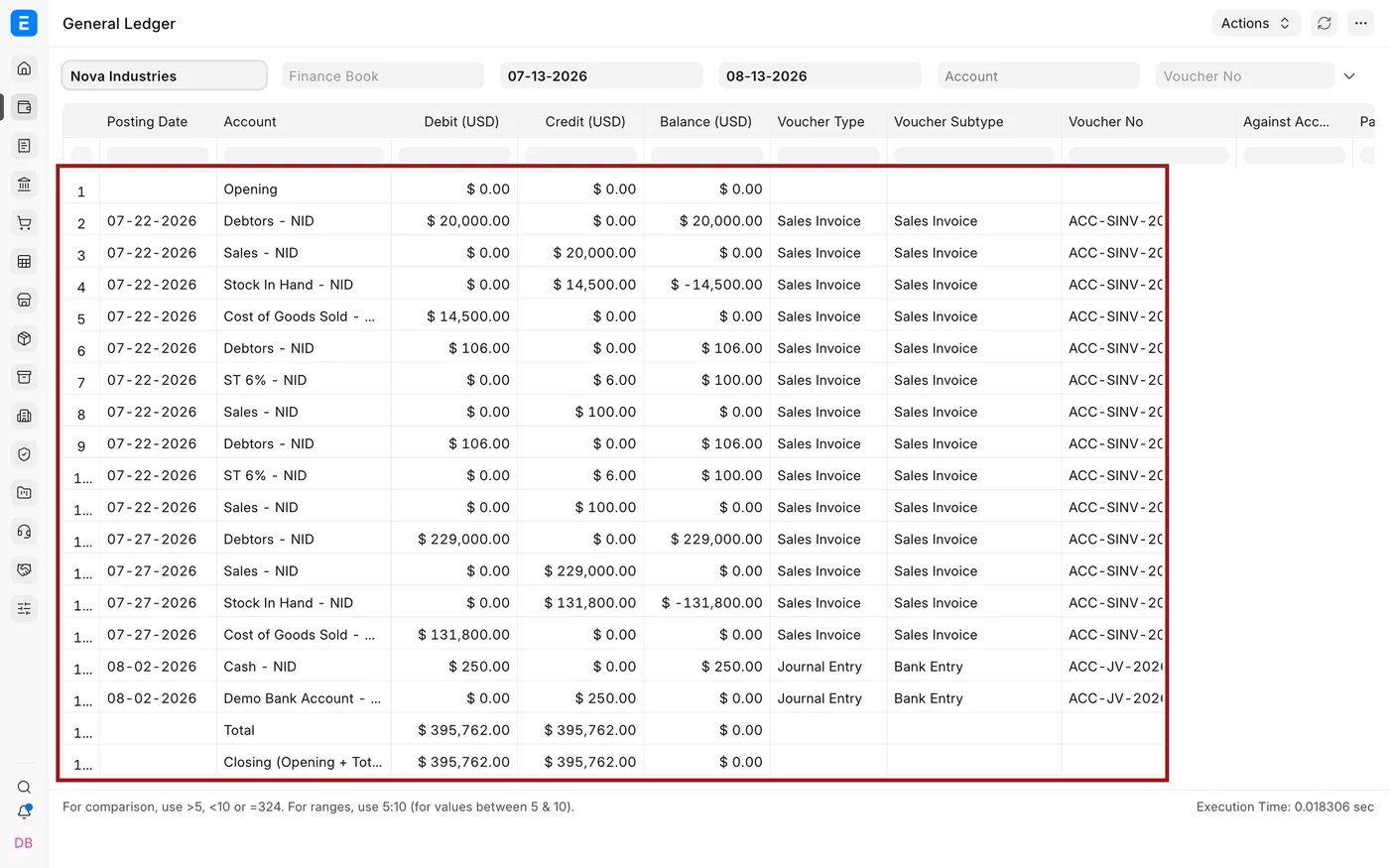
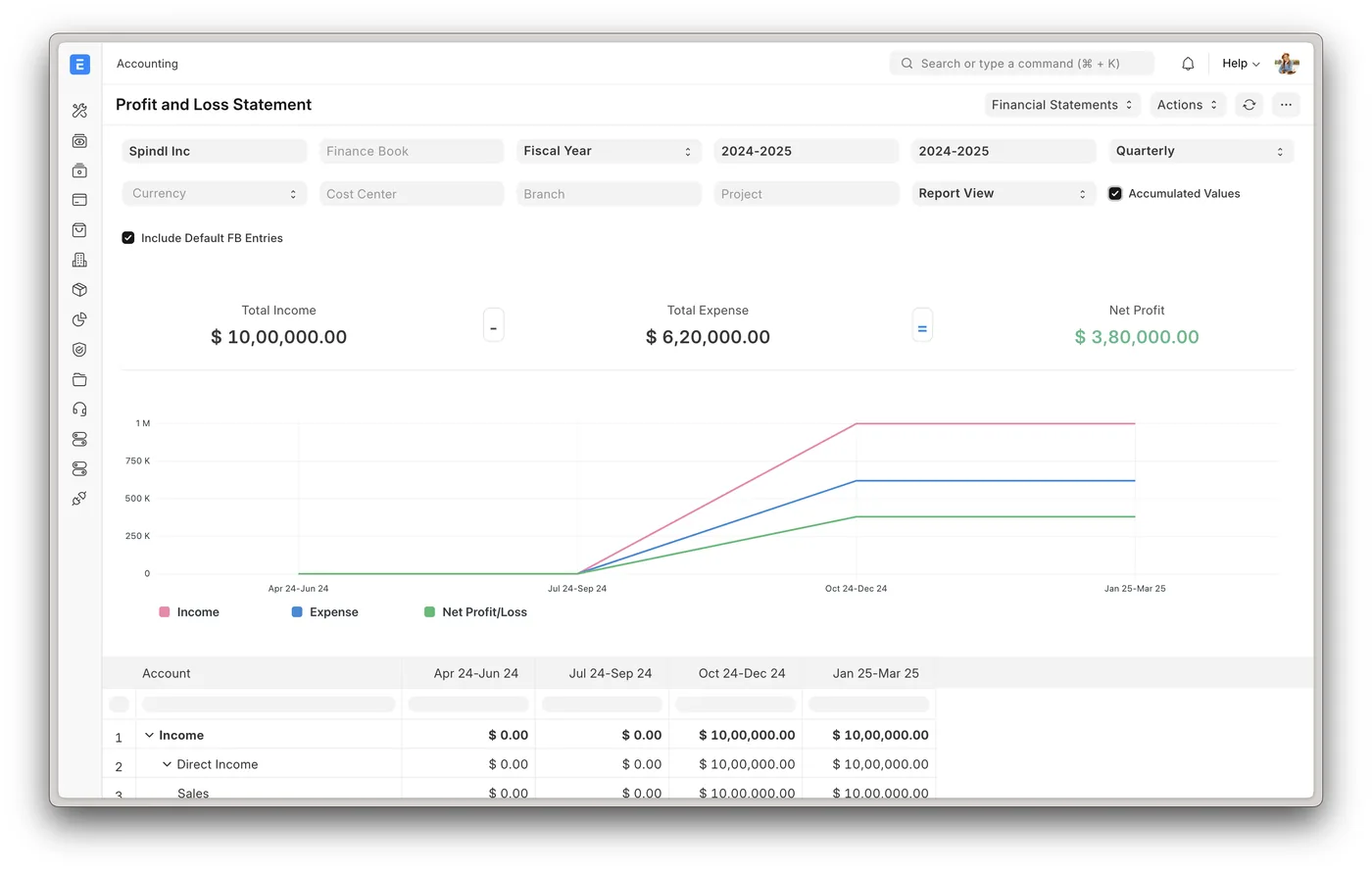
Real ERPNext and Frappe screens for the work described on this page. We configure them for Kuwaiti rules and your data.
ERPNext and the Frappe apps we implement
One open-source platform, one database, no per-user licence fees.







Kuwait tax rules and our ERPNext setup
| Topic | The Kuwaiti rule | What we set up |
|---|---|---|
| VAT | No VAT is in force in Kuwait. The GCC framework agreement is still under discussion in Parliament. | No VAT configuration is active. Item tax categories are kept so a rate can be added later without rework. |
| Zakat | Law No. 46 of 2006 charges 1% of annual net profit on Kuwaiti closed and listed shareholding companies. The audited declaration is due by the 15th of the fourth month after year end, even in a loss year. | A Zakat base report excluding board remuneration, KFAS, Zakat and NLST from deductions, monthly accruals and a year-end checklist. |
| NLST | Law No. 19 of 2000 charges 2.5% of annual net profit on Kuwaiti companies listed on the stock exchange. | An NLST line on the same profit base for listed entities, with its own payable account. |
| Income tax | Foreign corporate bodies pay a flat 15% on Kuwait profits. Companies wholly owned by Kuwaiti or GCC nationals are exempt, and the foreign share of GCC companies is taxed. Returns are due within three months and 15 days of year end. | Foreign share computed from the ownership register, with add-back columns for non-deductible items and drill-down to entries. |
| Domestic minimum tax | Decree-Law No. 157 of 2024 imposes a 15% top-up tax on multinational groups with consolidated revenue of EUR 750 million or more, for years from 1 January 2025. In-scope entities no longer pay the old income tax and Zakat. | Entity flags for in-scope companies, so the right reports apply, plus trial balances by entity for the group tax team. |
We configure the system and check it against your accountant’s figures; we are not tax advisers, and your accountant files the returns. Last reviewed 27 November 2026.
Setting up Kuwait tax reporting
Read last year's filings
With your auditor we review the most recent Zakat, NLST and income tax workings, so ERPNext reproduces numbers the auditor already accepts.
Map entities and owners
Each company's ownership, listing status and tax position is recorded. This decides which reports each entity needs.
Build the chart and reports
Accounts that isolate tax-sensitive items are added and the profit base reports built and tested on sample data.
Run a parallel quarter
For one quarter your current method and ERPNext produce the same figures side by side. Differences are explained before we rely on ERPNext alone.
Support the first year end
We help with closing entries, period locks and the schedules the auditor requests, then tidy up anything that slowed the close.
Every ERPNext page for Kuwaiti businesses
Compliance
- ERPNext Accounting in Kuwait
- Frappe HR and Payroll in Kuwait
Locations
Other countries
Worldwide

Written and reviewed by Vikas Saroj, Co-Founder, COO & Growth at Shyphan AI Solutions, who owns ERPNext, Odoo and Zoho delivery across Kuwait and the wider region. Reviewed against current Kuwaiti rules on 27 November 2026. Meet the team · LinkedIn
ERPNext Accounting in Kuwait: questions answered
Does Kuwait have VAT?
Can ERPNext calculate Zakat for a Kuwaiti company?
Who pays NLST?
Is there a licence fee for ERPNext accounting?
Are you an official Frappe partner?
Can reports be produced in Arabic?
Request your free quote
Tell us about your project and a senior ERPNext consultant - not a bot - replies within 24 hours with scope, timeline and a fixed quote. The first 30-minute discovery call is free, with no obligation.
- Free 30-minute discovery call
- Fixed-quote SOW - no surprises
- Arabic · English delivery
- PIFSS, KNET & KWD-ready