




















 Saudi Arabia
 UAE
 Qatar
 Kuwait
 Oman
 Lebanon
 Egypt
 Jordan
 Iraq
 India
 UK
 Ireland
 Germany
 USA
 Australia
 Singapore
 South Africa
 France
 Hungary
 Georgia
 Turkey
 Canada
 LagosNigeria





 AI for Planning · Bahrain
AI Predictive Analytics for Demand, Cash and Customer Risk in Bahrain
AI predictive analytics in Bahrain from Shyphan forecasts what your reports cannot yet show: demand by item and branch, cash position weeks ahead, customers likely to stop buying and invoices likely to be paid late. We build models on your ERP and CRM history, test them against past months you can check, and put the forecasts into the screens your buyers, finance and sales teams already use.
Prefer to talk? Call +91 95651 53545
Book a free AI consultation
Tell us what you want to fix. A senior consultant replies within one working day with a written view.

The first AI Enabled Zoho Partner in the Middle East and Africa. Accredited by Zoho on 14 October 2026 after the Zoho AI Accelerator Series, alongside our Zoho Premium Partner tier.
Read the announcementTrusted by businesses in Bahrain, the Gulf and beyond










AI Predictive Analytics for Demand, Cash and Customer Risk in Bahrain: the short answer
- What it is
- AI predictive analytics uses statistical and machine learning models on historical business data to forecast quantities, timings or risks, with a measured error so people know how far to trust each forecast.
- Best suited to
- Bahraini distributors, retailers, F&B groups and service companies with at least two years of reasonably clean transaction history and decisions, such as buying or credit control, that a better forecast would change.
- Core stack
- Python with LightGBM, Prophet, Azure Machine Learning, AWS me-south-1, Power BI, Zoho Analytics
- Typical timeline
- A measured pilot on one workflow in four to six weeks, then a phased rollout once accuracy is proven.
- What it costs
- We quote a fixed price in BHD after a discovery session, broken into phases so you are never committing to the whole build on day one. Model usage is billed at cost.
- Local specifics
- Ramadan and Eid move each year; Causeway and weekend visitors; PDPL and customer data.
- Delivered by
- Shyphan AI Solutions, which builds AI agents, document AI and Arabic and English assistants on top of Zoho, Odoo and Dynamics 365.
- Last reviewed
- 27 November 2026
AI Predictive Analytics for Demand, Cash and Customer Risk in Bahrain: who it is for
Bahraini distributors, retailers, F&B groups and service companies with at least two years of reasonably clean transaction history and decisions, such as buying or credit control, that a better forecast would change. AI predictive analytics uses statistical and machine learning models on historical business data to forecast quantities, timings or risks, with a measured error so people know how far to trust each forecast.
- Demand forecasting by item
- Cash flow projection
- Churn and reorder prediction
- Late payment risk
What we use to deliver AI predictive analytics for demand, cash and customer risk
Tools and platforms we typically use, and the systems it connects to. The final choice is made against your systems, budget and team.





 Odoo
 Business Central
 Microsoft 365
 WhatsApp
AI Predictive Analytics for Demand, Cash and Customer Risk in Bahrain: what is included
AI predictive analytics in Bahrain from Shyphan forecasts what your reports cannot yet show: demand by item and branch, cash position weeks ahead, customers likely to stop buying and invoices likely to be paid late.
Demand forecasting by item
Weekly or monthly forecasts by item and branch, using sales history, promotions, prices, stock-outs and holidays. Suggested reorder quantities respect supplier lead times, minimum order sizes and container fill, and buyers accept or override each suggestion with a reason.
Cash flow projection
A rolling cash forecast built from open receivables with predicted payment dates, scheduled payables, payroll and recurring costs. Finance sees likely cash by week in BHD as a range rather than a single number, and can test what happens if a large customer pays late.
Churn and reorder prediction
For customers who buy repeatedly, such as garages, clinics or cafés, the model flags accounts whose ordering has slowed against their own history. Sales teams get a ranked call list in the CRM with the reason, such as fewer lines or longer gaps between orders.
Late payment risk
Each open invoice gets a probability of being paid late, based on the customer's payment history, invoice size, terms and season. Collections teams start with the riskiest balances and can review credit limits before exposure to a slow payer grows.
Backtesting you can check
Before anything goes live, we forecast past months the model has not seen and compare the results with what actually happened, by item group and branch. You see the error in plain terms and decide whether the forecast beats your current method.
Monitoring and retraining
Forecast accuracy is tracked every period, and models retrain on new data on a schedule. When accuracy drops, for example after a new product line or a lost key customer, the owner is alerted instead of the forecast quietly drifting.
FMCG distributor forecasts Ramadan demand properly
How AI predictive analytics for demand, cash and customer risk in Bahrain looks in practice. Illustrative; every project is scoped to the business.
For example, an FMCG distributor in Hidd supplies supermarkets and cold stores across Bahrain from a large catalogue of food and household items. Buyers order from experience and last year's sales, which goes wrong when Ramadan moves earlier. The result is overstock on some lines, empty shelves on others, and cash tied up in slow-moving imports.
- Join three years of sales, purchase orders, stock levels and promotions from the ERP, marking stock-outs and the moving Ramadan and Eid dates as model features.
- Train and backtest weekly forecasts by item and customer group against the last two Ramadan periods, comparing error with the buyers' existing method category by category.
- Write suggested order quantities into the ERP replenishment screen with supplier lead times, and track which suggestions buyers accept or change each week.
See it on the platforms we deliver
Real screens from the platforms we implement. Yours are configured to your entities, processes and KPIs.
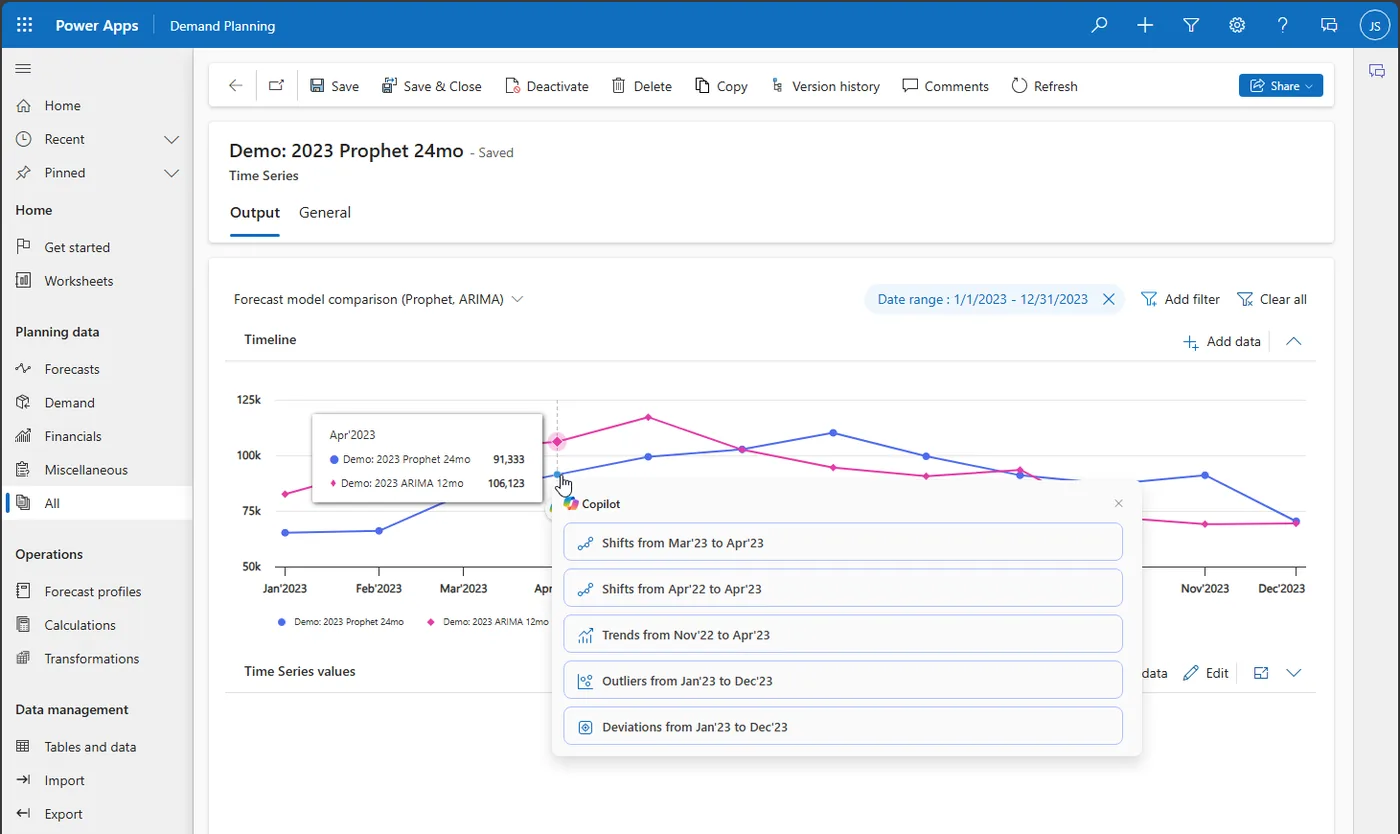
Demand planning with Copilot in Supply Chain Management
A forecast comparison of two models over a year, with Copilot offering to explain shifts, trends, outliers and deviations in the time series.
- Demand forecasting by item
- Cash flow projection
- Churn and reorder prediction
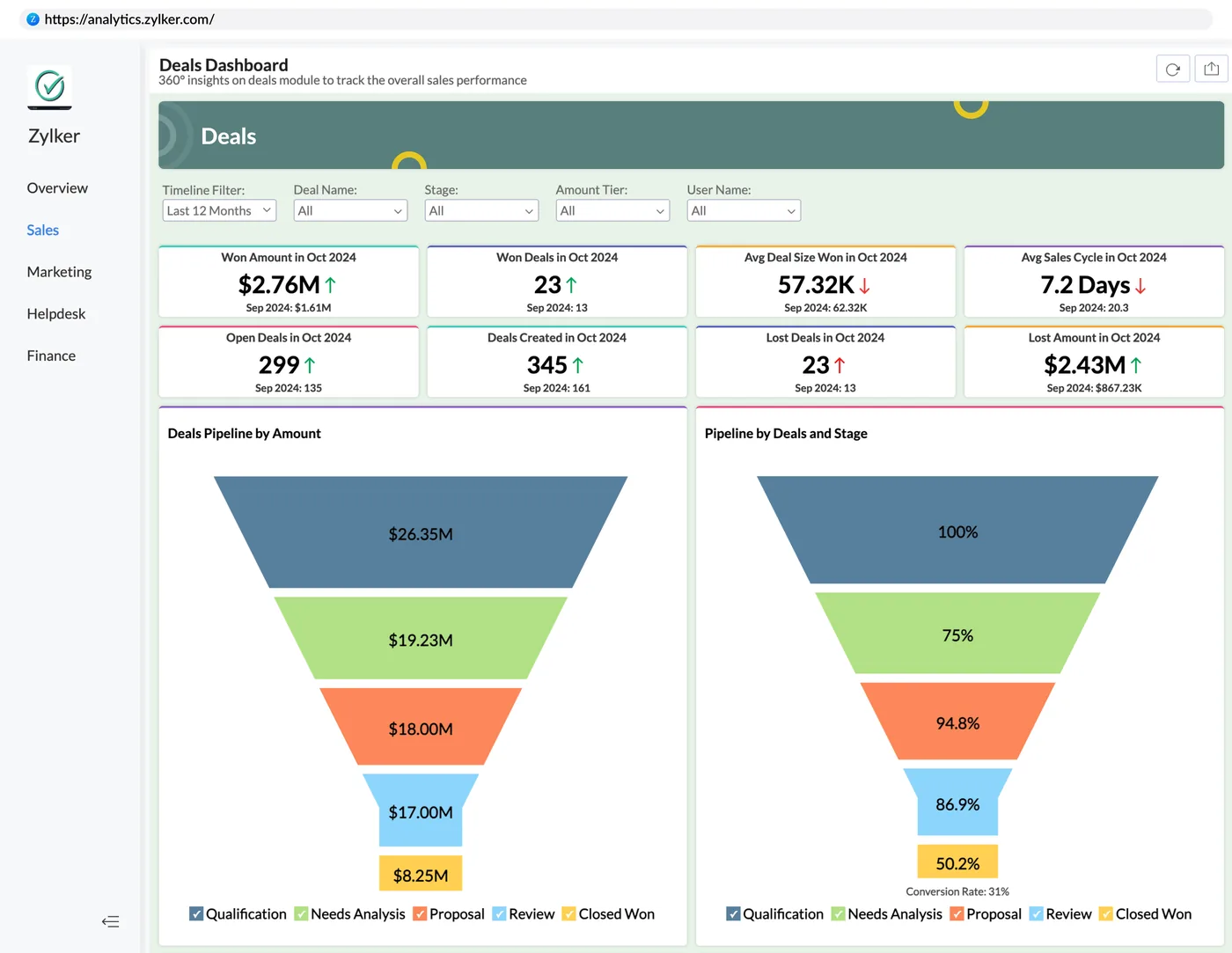
A deals dashboard in Zoho Analytics
Won, open and lost deal values and counts with month-on-month change, and funnels of the pipeline by amount and by stage conversion.
- Late payment risk
- Ramadan and Eid move each year
- Causeway and weekend visitors
Which platform for AI predictive analytics for demand, cash and customer risk in Bahrain?
An honest comparison. We implement all of these, so the recommendation follows your processes, team and budget.
| Option | Best when | How it fits this need |
|---|---|---|
| Spreadsheet and buyer judgement | Few items, stable demand and an experienced buyer. | Cheap and often good enough, but this approach struggles with large catalogues, moving holidays and staff changes, because the forecasting knowledge sits in one person's head. |
| Built-in ERP forecasting | You want a quick start inside Odoo, Zoho or Dynamics 365. | Odoo replenishment, Dynamics 365 demand planning and Zoho Analytics forecasts give basic projections. They rarely handle Bahrain's moving holidays or promotions well, but are worth trying first for simple catalogues. |
| Custom machine learning models | Many items, strong seasonality and decisions worth getting right. | Models trained on your own data, with backtests and monitoring, written back into your systems. More effort and some running cost, justified when stock or cash decisions are large. |
| Dedicated planning software | You need full supply planning, not only forecasting. | Specialist planning tools add multi-site planning and supplier collaboration. They cost more and need their own implementation, so they suit larger distributors with complex supply chains. |
What changes in Bahrain
The local rules and realities we design for before go-live. Rules change, so we re-check the current position at scoping.
Ramadan and Eid move each year
Ramadan and both Eids fall about eleven days earlier each year, so comparing with the same month last year misleads. We model them as moving events, which matters for food, retail, F&B and gifting demand in Bahrain.
Causeway and weekend visitors
Saudi and other GCC visitors crossing the King Fahd Causeway lift weekend and holiday trade in malls, restaurants and hotels. Where your data shows the effect, weekend patterns and Saudi holiday calendars become forecast features.
PDPL and customer data
Churn and payment-risk models use personal data about customers. We minimise fields, keep data in your environment or a region agreed at scoping, document the purpose under Bahrain's PDPL and keep a person responsible for every credit decision.
What drives the cost, and what it connects to
No price list: we quote a fixed price in BHD after discovery. These are the factors that move the effort up or down.
Data preparation effort
Clean, consistent history is quick to use. Unrecorded stock-outs, changed item codes or merged branches need repair before any model can learn from them, and that repair is often the largest task.
Number of items and locations
Forecasting thousands of item and branch combinations needs more computation, testing and review than forecasting a few product groups at company level.
Seasonal and event effects
Moving holidays, promotions and event weekends must be captured as features, and each one adds data gathering and testing to the backtest before the model can be trusted.
Operational integration
Writing forecasts back into ERP screens, approval flows and dashboards adds build effort beyond the model itself, but it is what makes people actually use the forecast.
What it connects to
Sales, stock and purchase history flow out for training, and suggested order quantities flow back into replenishment screens.
Customer order history flows to the model, and churn risk scores with reasons return as fields and call lists.
Forecasts, ranges and accuracy measures appear beside actual figures in existing dashboards for management review.
Receivables, payables and bank balances feed the cash forecast, and projected weekly cash returns to the finance dashboard.
Daily store and web sales feed demand models for retail and F&B, including promotion and channel effects.
How we deliver AI predictive analytics for demand, cash and customer risk
Phases, indicative timing and what is delivered in each. Scope is fixed and priced in BHD before we start.
Decision and data check
We agree which decision the forecast will change, then check two or more years of history for gaps, stock-outs and data quality.
Data preparation
Sales, stock, pricing and calendar data are cleaned and joined, with Bahrain holidays, Ramadan dates and promotions marked as features.
Model and backtest
We train candidate models, backtest them on held-out months and compare them with your current method and simple baselines.
Deploy to screens
Forecasts are written back into your ERP, CRM or Power BI so buyers and finance use them where they already work.
Monitor and retrain
Accuracy is reported each period, models retrain on schedule, and we review features whenever your business mix changes.
When AI predictive analytics for demand, cash and customer risk is the wrong answer
If you have less than a year or two of reliable history, frequent stock-outs that hide real demand, or a handful of very large irregular orders, a machine learning model will not beat an experienced buyer. In that case we would fix data capture first, start with simple statistical forecasts in Power BI or Zoho Analytics, and revisit AI later.
How we handle it: We implement Zoho, Odoo and Dynamics 365 and build AI and custom software, so our written recommendation can point you to a simpler option, or to doing nothing yet.
Checklist and common mistakes
Buyer's checklist
What to ask for before you choose a provider.
- Ask the provider to backtest on past months the model has never seen and show the error by item group.
- Require a comparison against your current forecasting method, not only against a simple statistical baseline.
- Check how Ramadan, Eid, public holidays and promotions are represented as features in the model.
- Confirm forecasts are written back into your ERP or CRM rather than left in a separate tool nobody opens.
- Ask who monitors accuracy after go-live and what triggers retraining or a full model review.
- Make sure the use of personal data in churn or credit models is documented under Bahrain's PDPL.
Common mistakes
What we see go wrong in Bahrain projects, and how to avoid it.
- Forecasting without stock-out recordsWhen an item is out of stock, zero sales does not mean zero demand. Record stock-outs, or the model will learn to under-order your best-selling lines.
- Judging on one good monthA model that looks accurate in one month may fail badly in the next Ramadan. Backtest across several periods, including holiday months, before letting it drive purchasing.
- Leaving forecasts in a separate toolIf buyers must open another system to see forecasts, they will not. Put suggestions where purchase orders are created and track acceptance of each suggestion.
- No owner after go-liveModels drift as products and customers change. Name an owner, review accuracy every period and agree in advance when a model should be retrained or retired.
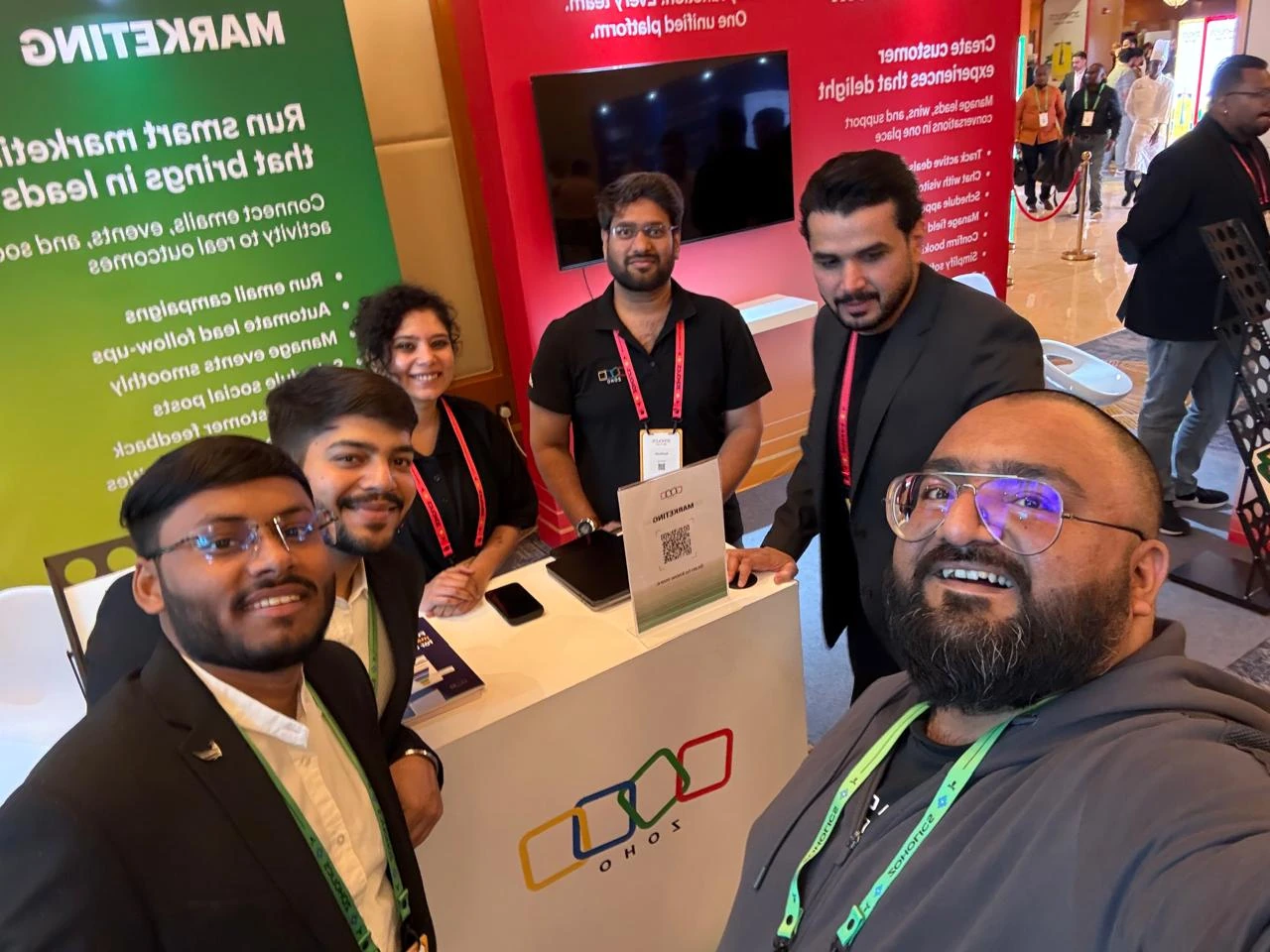

The team behind your Bahrain project
That is our team at Zoholics 2026. We deliver AI projects for Bahraini businesses remotely from our Gulf offices in Riyadh and Ras Al Khaimah and our delivery centre in India, working 24/7 across our offices, and we arrange on-site workshops in Bahrain when a project needs them.
AI Predictive Analytics for Demand, Cash and Customer Risk in Bahrain: questions we get asked
What is AI predictive analytics in Bahrain used for most?
How much data do we need for predictive analytics?
How is this different from a BI dashboard project?
Can forecasts go back into Odoo, Zoho or Dynamics 365?
Which AI tools do you use for forecasting?
How do you price an AI forecasting project?
Can predictive analytics help a restaurant group plan staffing and prep?
Do you use generative AI for predictive analytics?
Can a forecasting model run inside Bahrain?
Why choose Shyphan?

Talk to a consultant about AI predictive analytics for demand, cash and customer risk
A free 30-minute call, then a written recommendation and a fixed quote in BHD, including the honest option that this is not the right fit.