





















 Saudi Arabia
 UAE
UAE Qatar
Qatar Bahrain
 Kuwait
 Oman
Oman Lebanon
 Egypt
Egypt India
India UK
UK Ireland
 Germany
 USA
USA Australia
 Singapore
 South Africa
 Iraq
Iraq Jordan
 Hungary
 Georgia
 Turkey
 LagosNigeria




 Supply chain planning · UAE
Supply Chain Management Software in the UAE
Supply chain management in the UAE means planning stock that mostly arrives by sea or air, sits in more than one emirate and sells into both mainland and free zone customers. We implement forecasting, replenishment, purchasing, landed cost and inter-warehouse transfers on Odoo, Dynamics 365 or Zoho, so planners order the right quantity early enough to beat long import lead times.
Prefer to talk? Call +971 55 145 3265
Get a free recommendation
Tell us what you want to fix. A senior consultant replies within one working day with a written view.
Trusted by businesses across the UAE, Saudi Arabia and beyond












Supply Chain Management Software in the UAE: the short answer
- What it is
- Supply chain management software plans and controls the flow of goods from forecast and purchase through inbound shipping, warehousing and replenishment to delivery.
- Best suited to
- UAE importers, distributors and manufacturers holding stock in several locations, where stock-outs and excess stock both cost real money.
- Core stack
- Dynamics 365 Supply Chain Management, Odoo Inventory, Odoo Manufacturing, Zoho Inventory, Power BI
- Typical timeline
- Four to sixteen weeks depending on the platform, modules, data migration and integrations; we phase larger programmes.
- What it costs
- A fixed price in AED after a free discovery call, phased so you are never committing to the whole programme on day one. Platform licences are billed by the vendor.
- Local specifics
- Long import lead times; Designated zones and mainland; Ramadan and summer demand.
- Delivered by
- Shyphan AI Solutions: Zoho Premium Partner, Official Odoo Partner, independent Dynamics 365 consultancy and custom software house, so the platform is chosen by fit.
- Last reviewed
- 29 September 2026
Supply Chain Management Software in the UAE: who it is for
UAE importers, distributors and manufacturers holding stock in several locations, where stock-outs and excess stock both cost real money. Supply chain management software plans and controls the flow of goods from forecast and purchase through inbound shipping, warehousing and replenishment to delivery.
- Demand forecasting by item
- Replenishment with real lead times
- Inbound shipment tracking
- Landed cost on every receipt
What we use to deliver supply chain management software
Tools and platforms we typically use, and the systems it connects to. The final choice is made against your systems, budget and team.





 Odoo
Odoo Business Central
 Microsoft 365
 WhatsApp
Supply Chain Management Software in the UAE: what is included
Supply chain management in the UAE means planning stock that mostly arrives by sea or air, sits in more than one emirate and sells into both mainland and free zone customers.
Demand forecasting by item
Forecasts use sales history, seasonality such as Ramadan and summer, and known promotions. Planners adjust the numbers they disagree with, and the system records who changed what so forecast accuracy can be measured.
Replenishment with real lead times
Reorder points and quantities use the actual lead time per supplier, including sea freight and clearance. A supplier in China and a distributor in Sharjah get different rules for the same item.
Inbound shipment tracking
Purchase orders link to containers or air shipments with ETA dates. Planners see stock on the water, which stops duplicate orders when a container is delayed at sea. Receiving teams also see what is due next week, so they can plan labour and space before the container arrives.
Landed cost on every receipt
Freight, insurance, customs duty and clearing charges are allocated to items on receipt. Margins and reorder decisions then use the true cost, not the supplier invoice price. Where charges arrive after the goods, the cost is updated when the clearing agent's bill is posted, with an adjustment to stock value.
Multi-emirate stock balancing
Stock held in Dubai, Abu Dhabi and Sharjah is visible in one view. Transfers are suggested when one location is short and another is overstocked, before a new purchase is raised.
Supply chain KPIs
Fill rate, stock cover in days, supplier on-time delivery and slow-moving stock are reported weekly in Power BI or the platform dashboards, so the supply chain meeting starts from the same numbers.
A building materials distributor across emirates
How supply chain management software in the UAE looks in practice. Illustrative; every project is scoped to the business.
Picture a building materials distributor importing tiles, sanitaryware and adhesives from Asia and Europe, with warehouses in Abu Dhabi's Musaffah, a Sharjah industrial area and Ras Al Khaimah. Buyers order by instinct, one warehouse runs out while another overflows, and summer project slowdowns leave slow-moving stock sitting for months before anyone notices it.
- Build item-level demand forecasts in Odoo from past sales per warehouse, adjusted for summer and Ramadan patterns, and set reorder points using real supplier lead times by origin.
- Track each inbound container from purchase order to arrival, and allocate freight, customs duty and clearing charges as landed cost when goods are received.
- Set rules for inter-warehouse transfers between Musaffah, Sharjah and RAK, so surplus stock moves to where it sells before new purchase orders are raised.
See it on the platforms we deliver
Real screens from the platforms we implement. Yours are configured to your entities, processes and KPIs.
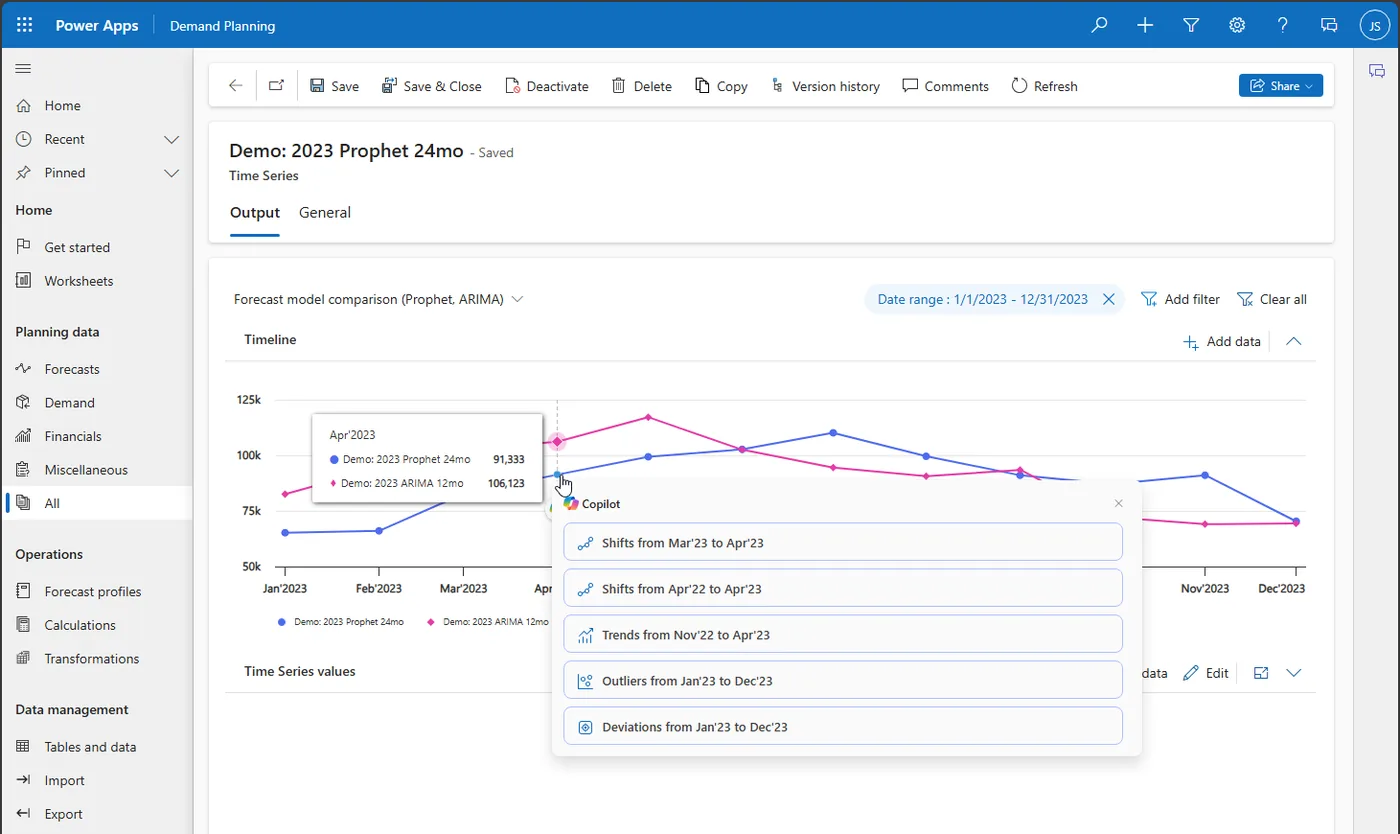
Demand planning with Copilot in Supply Chain Management
A forecast comparison of two models over a year, with Copilot offering to explain shifts, trends, outliers and deviations in the time series.
- Demand forecasting by item
- Replenishment with real lead times
- Inbound shipment tracking
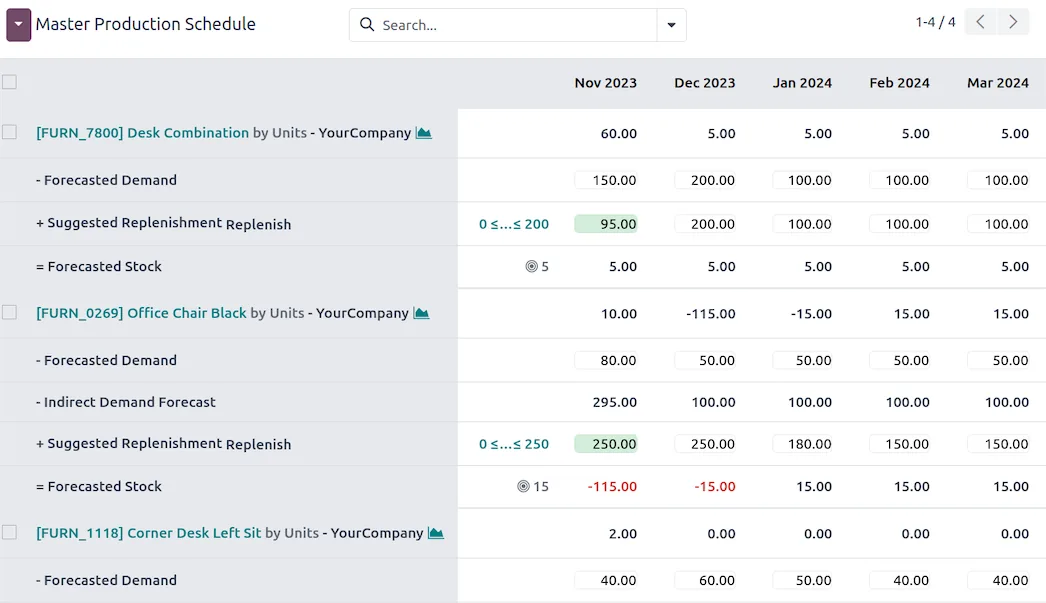
The master production schedule in Odoo
Forecasted demand, indirect demand, suggested replenishment and forecasted stock per product, month by month, for planning what to make or buy.
- Landed cost on every receipt
- Long import lead times
- Designated zones and mainland
Which platform for supply chain management software in the UAE?
An honest comparison. We implement all of these, so the recommendation follows your processes, team and budget.
| Option | Best when | How it fits this need |
|---|---|---|
| Odoo | Distributors wanting replenishment, landed cost and accounts in one system | Reordering rules, routes, landed costs and multi-warehouse transfers are native. A strong fit for UAE distributors with several warehouses who want planning and finance in one place. |
| Dynamics 365 Business Central | Finance-led mid-size groups with Microsoft already in place | Solid planning worksheets, item tracking and multi-location stock, with Power BI for analysis. Needs a partner UAE localisation and suits organisations comfortable with Microsoft tools. |
| Zoho Inventory with Zoho Books | Smaller distributors with one or two warehouses and simpler ranges | Landed cost, batches and multi-warehouse are covered for simpler needs. Forecasting and replenishment rules are basic, so larger ranges usually outgrow it. |
| Specialist planning tool on top | Very large ranges needing statistical forecasting beyond ERP features | If you manage many thousands of items with volatile demand, a dedicated planning tool feeding your ERP may justify itself. Most UAE distributors do not need one. |
What changes in the UAE
The local rules and realities we design for before go-live. Rules change, so we re-check the current position at scoping.
Long import lead times
Most UAE stock is imported, often through Jebel Ali or Khalifa Port. Planning must cover sea transit, clearance and inland transport, so lead times are recorded per supplier route rather than as one default.
Designated zones and mainland
Goods held in a designated free zone and goods on the mainland can have different VAT and customs treatment. We model locations by jurisdiction so transfers raise the right documents. We confirm the current requirement at scoping.
Ramadan and summer demand
Demand in food, retail and many trades shifts sharply around Ramadan, Eid and the summer months. Forecasts need these calendars, which move each year, built in explicitly.
What drives the cost, and what it connects to
No price list: we quote a fixed price in AED after discovery. These are the factors that move the effort up or down.
Forecasting sophistication
Simple reorder points are quick to set up. Seasonal forecasts by item and warehouse, with review workflows for buyers, need more data preparation, testing and training.
Warehouses across emirates
Each warehouse adds locations, routes and transfer rules. Balancing stock across several emirates requires agreed rules on who can move stock and when.
Import routes and suppliers
Many suppliers and origins with different lead times, incoterms and currencies add setup for vendor data, landed cost categories and shipment tracking.
Quality of sales history
Forecasts depend on clean sales and stock history. Where history is incomplete or mixed across items, extra cleansing is needed before planning can be trusted.
What it connects to
Booking confirmations, vessel dates and arrival notices flow in to update expected receipt dates on purchase orders.
Duty and clearing charges flow in against each shipment and are allocated as landed cost on receipt.
Purchase orders flow out to suppliers and order confirmations with ship dates flow back into purchasing.
Supplier payments and letter of credit charges flow in for matching and landed cost allocation.
Stock cover, ageing and fill rate by warehouse flow out to dashboards for buyers and management.
How we deliver supply chain management software
Phases, indicative timing and what is delivered in each. Scope is fixed and priced in AED before we start.
Supply chain diagnostic
We review stock-outs, excess stock, lead times and planning spreadsheets to find where the chain actually breaks.
Platform and design
We recommend Odoo, Dynamics 365 or Zoho by fit and design planning parameters, locations and landed cost rules.
Build and migrate
Items, suppliers, lead times and opening stock are loaded; forecasting, replenishment and shipment tracking are configured.
Parallel planning
Planners run the system alongside their spreadsheets for one cycle and compare suggestions before trusting the new numbers.
Go live and tune
Planning moves to the system, and parameters are tuned monthly using fill rate and stock cover results.
When supply chain management software is the wrong answer
If you hold one warehouse, buy locally with short lead times and have fewer than a few hundred items, full supply chain management software is overkill; inventory with reorder points in Zoho Inventory or Odoo is enough. Large multi-country groups with complex production may need Dynamics 365 SCM rather than a lighter platform.
How we handle it: We implement Zoho, Odoo and Dynamics 365 and build AI and custom software, so our written recommendation can point you to a simpler option, or to doing nothing yet.
Checklist and common mistakes
Buyer's checklist
What to ask for before you choose a provider.
- Ask how forecasts will account for Ramadan, summer and project cycles, not just a simple moving average.
- Confirm reorder points use actual supplier lead times by origin, including sea freight and clearing time.
- Check how landed cost is allocated per receipt, and whether duty paid under the GCC tariff is captured correctly.
- Require inter-warehouse transfer suggestions before new purchases, so surplus in one emirate is used first.
- Ask which supply chain KPIs will be reported, such as stock cover, fill rate and ageing, and who owns them.
- Confirm the design separates designated zone and mainland stock where VAT treatment differs.
Common mistakes
What we see go wrong in the UAE, and how to avoid it.
- Using one lead time for everythingSuppliers in China, India and Europe have very different transit and clearing times. Set lead times by supplier and origin so reorder points reflect reality.
- Ignoring seasonal demand in the UAERamadan, summer and year-end project pushes shift demand sharply. Forecasts that ignore these patterns overstock in quiet months and run short in busy ones.
- Buying before checking other warehousesBuyers often raise purchase orders while surplus sits in another emirate. Require a transfer check across warehouses before new stock is ordered.
- Measuring nothing after go-liveWithout agreed KPIs such as stock cover and ageing, improvements cannot be seen. Define a small KPI set and review it monthly with buyers.


A UAE team you can meet in person
That is our team at Zoholics Dubai 2026. We deliver Zoho, Odoo, Dynamics 365 and custom projects from our Ras Al Khaimah office with remote delivery across all seven emirates, in English and Arabic, and we run workshops on site in Dubai, Abu Dhabi and Sharjah when a project needs it.
Supply Chain Management Software in the UAE: questions we get asked
What does supply chain management UAE software cover that inventory software does not?
Is supply chain software UAE companies use different from ERP?
Which platform suits a UAE distributor?
How is this different from your Dubai supply chain page?
Can it handle landed cost for customs duty?
How long does implementation take?
Can supply chain management software in the UAE suggest purchase orders automatically?
Can we track container arrivals against purchase orders?
Can the system identify slow-moving or dead stock?
Why choose Shyphan?

Talk to a consultant about supply chain management software
A free 30-minute call, then a written recommendation and a fixed quote in AED, including the honest option that this is not the right fit.
