





















 Saudi Arabia
 UAE
UAE Qatar
Qatar Bahrain
 Kuwait
 Oman
Oman Lebanon
 Egypt
Egypt India
India UK
UK Ireland
 Germany
 USA
USA Australia
 Singapore
 South Africa
 Iraq
Iraq Jordan
 Hungary
 Georgia
 Turkey
 LagosNigeria




 Dubai rollouts · Dubai
Dynamics 365 Implementation in Dubai
Dynamics 365 implementation in Dubai means fitting the rollout around how Dubai companies actually operate: several legal entities across mainland and free zones, high transaction volumes in retail and hospitality, and teams split between Business Bay offices and Jebel Ali warehouses. Shyphan runs design and UAT on-site in Dubai where it helps, and plans cut-over around your trading calendar.
Prefer to talk? Call +971 55 145 3265

Book a free Dynamics 365 consultation
Tell us what you want to fix. A senior consultant replies within one working day with a written view.
Trusted by businesses across the UAE, Saudi Arabia and beyond












Dynamics 365 Implementation in Dubai: the short answer
- What it is
- A Dubai Dynamics 365 implementation is a phased rollout of Business Central, Finance, Sales or Customer Service shaped to Dubai entity structures, trading peaks and on-site working patterns.
- Best suited to
- Dubai trading, retail, hospitality and logistics companies with multiple locations or entities that need a rollout planned around peak seasons and warehouse operations.
- Core stack
- Business Central, Dynamics 365 Finance, Dynamics 365 Sales, Warehouse Management mobile app, Azure DevOps, Power BI
- Typical timeline
- Six to ten weeks for Dynamics 365 Sales or Customer Service; ten to sixteen weeks for a single-entity Business Central rollout.
- What it costs
- Licences at Microsoft list price (Sales Professional USD 65, Business Central Essentials USD 70 per user per month). Implementation typically USD 8,000 to 25,000 for Sales or Customer Service and USD 20,000 to 60,000 for Business Central, quoted fixed in AED.
- Local specifics
- JAFZA and designated zone VAT; Dubai tourism and retail calendar; DIFC entities scoped separately.
- Delivered by
- Shyphan AI Solutions, an independent Dynamics 365 implementation and integration consultancy that also implements Zoho and Odoo, so recommendations are made by fit.
- Last reviewed
- 29 September 2026
Dynamics 365 Implementation in Dubai: who it is for
Dubai trading, retail, hospitality and logistics companies with multiple locations or entities that need a rollout planned around peak seasons and warehouse operations. A Dubai Dynamics 365 implementation is a phased rollout of Business Central, Finance, Sales or Customer Service shaped to Dubai entity structures, trading peaks and on-site working patterns.
- Warehouse walk-throughs in Jebel Ali
- Peak-season cut-over planning
- Volume testing for hospitality
- Phased entity rollout
What we use to deliver Dynamics 365 implementation
Only what the first phase needs is switched on; more follows in later phases.
 Business Central
 Dynamics 365 Finance
 Dynamics 365 Sales
 Azure DevOps
 Power BI
Dynamics 365 Implementation in Dubai: what is included
Dynamics 365 implementation in Dubai means fitting the rollout around how Dubai companies actually operate: several legal entities across mainland and free zones, high transaction volumes in retail and hospitality, and teams split between Business Bay offices and Jebel Ali warehouses.
Warehouse walk-throughs in Jebel Ali
For JAFZA and Dubai South distributors, part of design happens on the warehouse floor: receiving, put-away, picking and dispatch are observed, then mapped to Business Central or Warehouse Management locations, bins and scanner flows.
Peak-season cut-over planning
Retailers do not go live in the weeks before Dubai Shopping Festival or Eid trading. We plan cut-over in a quieter window and freeze scope early enough that stores and e-commerce channels are stable before the peak.
Volume testing for hospitality
Hotels and restaurant groups in Dubai post thousands of daily transactions from POS and property systems. We load-test the posting interface with realistic daily volumes during SIT, not after go-live when night audit starts failing.
Phased entity rollout
Groups with a mainland LLC, a DMCC trading arm and a JAFZA warehouse often go live entity by entity. We sequence them so intercompany flows are tested before the second entity switches on.
Role training in your office
Train-the-trainer sessions for super users run at your Dubai office, followed by role-based sessions for finance, sales and warehouse staff in English, with Arabic-speaking support where your team prefers it and short recorded guides for new joiners.
Signed exit criteria
Each phase closes only when agreed checks pass: design signed, sprint demos accepted, UAT defects closed and migration reconciled. The executive sponsor signs the go or no-go decision in writing, so nobody drifts into go-live by default.
Dubai fashion retailer going live before Ramadan
How Dynamics 365 implementation in Dubai looks in practice. Illustrative; every project is scoped to the business.
For example, a Dubai fashion retailer with stores in several malls and an online shop wants to move from an old POS-linked accounting system to Business Central and Dynamics 365 Sales. Buying, stock allocation and finance teams work in Business Bay, the warehouse is in Al Quoz, and management insists the new system is live before the busy Ramadan and Eid trading period.
- Plan the project backwards from a go-live date well before Ramadan, with a freeze on new features during the final weeks and a fallback date agreed upfront.
- Run design workshops at the Business Bay office with buyers, finance and store operations, and a separate warehouse walk-through in Al Quoz to capture receiving and allocation.
- Rehearse data migration and store stock loads twice, then run a dress rehearsal weekend where selected stores trade on the new system before the full switch.
See it in Dynamics 365
Real screens from the platforms we implement. Yours are configured to your entities, processes and KPIs.
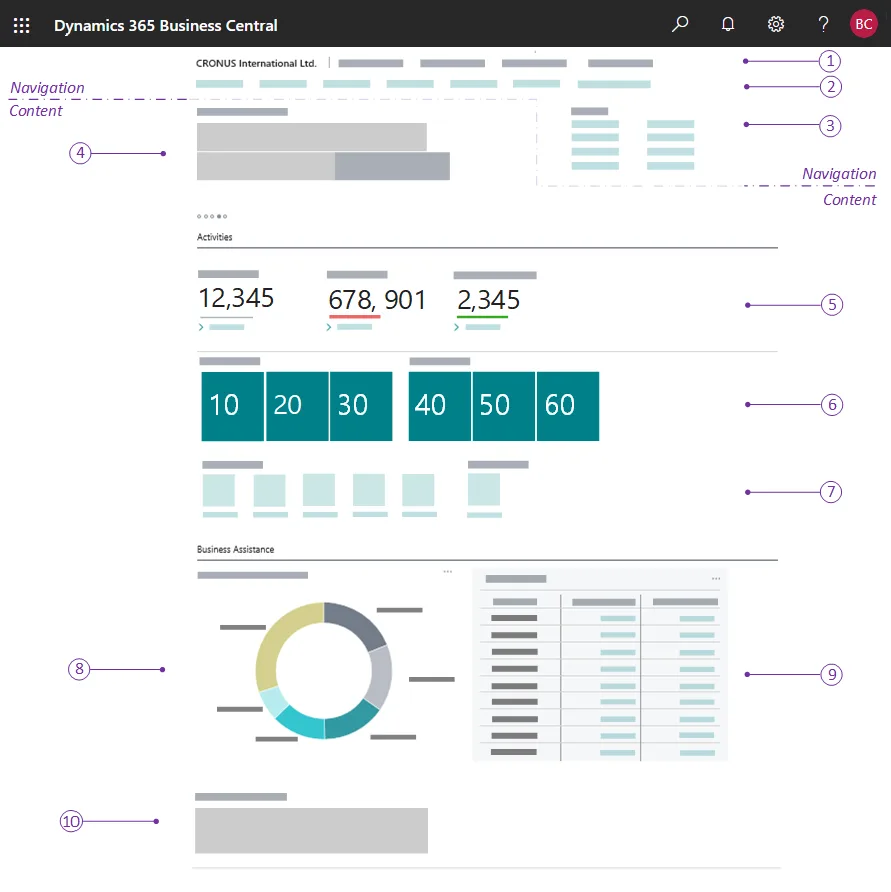
A Business Central role centre
The home page each user gets for their role: headlines, activity cues, KPI tiles, charts and actions. The numbered callouts come from Microsoft's documentation.
- Warehouse walk-throughs in Jebel Ali
- Peak-season cut-over planning
- Volume testing for hospitality
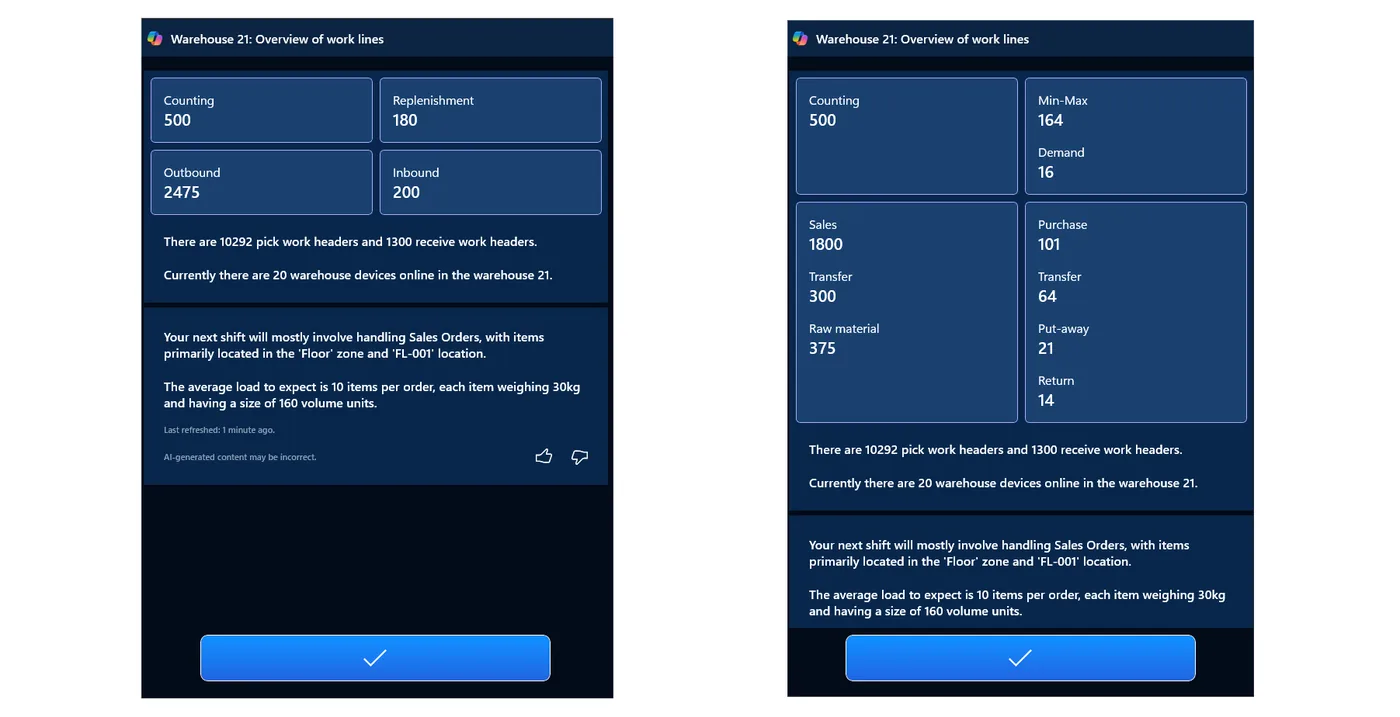
Copilot shift summary in the Warehouse Management app
The warehouse mobile app summarising work lines by type, such as counting, replenishment, sales and purchase, and what the next shift should expect.
- Phased entity rollout
- JAFZA and designated zone VAT
- Dubai tourism and retail calendar
Which platform for Dynamics 365 implementation in Dubai?
An honest comparison. We implement all of these, so the recommendation follows your processes, team and budget.
| Option | Best when | How it fits this need |
|---|---|---|
| Phased rollout by entity or store | Several Dubai entities or many stores with different readiness | Reduces risk by going live in waves, learning from each. It takes longer overall and needs temporary interfaces between old and new systems during the transition. |
| Single cut-over | One entity, simple processes, strong internal team | Faster and avoids temporary interfaces. It concentrates risk on one weekend, so it needs thorough rehearsals and a clear fallback plan agreed in advance. |
| Pilot store or department first | High-volume retail or hospitality operations | Lets real users trade on the new system with limited exposure before full rollout. Requires both systems to run in parallel for a short period. |
| Delay until after peak season | Timeline is too tight for proper testing | Sometimes the honest answer. Going live under pressure before Ramadan, Eid or year-end sales risks disruption; waiting a few weeks can be the safer choice. |
What changes in Dubai
The local rules and realities we design for before go-live. Rules change, so we re-check the current position at scoping.
JAFZA and designated zone VAT
Movements between a Jebel Ali designated zone warehouse and Dubai mainland customers need their own VAT treatment. We build separate tax posting set-ups per entity and test them in UAT with your tax adviser.
Dubai tourism and retail calendar
Dubai's busiest trading weeks fall in the cooler months and around festivals. We fix go-live dates against your own sales history so the system is settled before the peak, not launched into it.
DIFC entities scoped separately
If one group entity sits in DIFC, its users, data and audit settings are designed against the DIFC data protection law. We confirm the current requirement at scoping and test access with your compliance lead.
Working with businesses in Dubai: we support companies across JAFZA, DMCC, Dubai Silicon Oasis, Dubai Internet City, DIFC, Al Quoz and Dubai South, with remote delivery and on-site workshops where the project needs them.
What drives the cost, and what it connects to
No price list: we quote a fixed price in AED after discovery. These are the factors that move the effort up or down.
Stores and locations
Each store, warehouse or entity adds data loads, testing and training. Retailers with many mall stores need more rehearsal effort and careful scheduling around trading hours.
Timeline pressure
A comfortable timeline allows normal staffing. Fixed deadlines before Ramadan or year-end sales need more parallel work, extra consultants and weekend rehearsals, which increases effort.
Data migration volume
Opening balances only is lighter. Migrating open orders, item histories, customer loyalty data and store stock by size and colour needs extraction, cleansing and several test loads.
Training approach
Train-the-trainer is economical. Direct training for every store and warehouse user, in several languages and shifts, requires more sessions and on-site presence in Dubai.
What it connects to
Store sales and payments flow into Business Central daily; item prices and promotions flow out to POS terminals.
Online orders flow into Dynamics for fulfilment; stock availability flows back to the website to prevent overselling.
Settlement reports flow into Business Central for reconciliation against online and card sales.
Store turnover figures flow out in required formats for mall landlords who charge turnover-based rent.
Sales, sell-through and stock by store flow into dashboards for buyers and management.
How we deliver Dynamics 365 implementation
Phases, indicative timing and what is delivered in each. Scope is fixed and priced in AED before we start.
On-site discovery
Workshops at your Dubai office and warehouse to map processes, entities, volumes and the trading calendar.
Design sign-off
Solution design, entity structure, VAT set-up per entity and an entity-by-entity rollout plan agreed and signed.
Sprint build
Configuration, extensions and POS or property-system interfaces built in two-week sprints with a demonstration at the end of each.
UAT in Dubai
Facilitated UAT sessions on-site, volume tests, two data rehearsals and a reconciled VAT test for each entity.
Cut-over and support
Go-live in an agreed quiet window, on-site hyper-care in the first week, then remote support.
When Dynamics 365 implementation is the wrong answer
On-site work in Dubai adds cost and is only worth it for design, UAT and go-live. If your team is small and already comfortable working on Teams, a fully remote rollout is quicker and cheaper. Single-entity service firms with light inventory rarely need this level of planning; a standard UAE implementation is enough.
How we handle it: We implement Zoho, Odoo and Dynamics 365 and build AI and custom software, so our written recommendation can point you to a simpler option, or to doing nothing yet.
Checklist and common mistakes
Buyer's checklist
What to ask for before you choose a provider.
- Ask for a project plan showing the go-live date relative to your Dubai trading peaks, with a fallback date.
- Require at least two full data migration rehearsals with reconciliation sign-off by your finance team.
- Confirm which workshops will happen on-site in Dubai and which remotely, and who attends each.
- Ask how store, warehouse and office users will each be trained on their own processes before go-live.
- Check the hypercare support arrangements for the first weeks after go-live, including weekend cover.
- Ask how decisions will be escalated if design questions stall, and who on your side has final authority.
Common mistakes
What we see go wrong in the UAE, and how to avoid it.
- Choosing go-live by board meetingPicking a date for a board announcement rather than readiness invites trouble. Set go-live from rehearsal results, and agree go or no-go criteria in writing beforehand.
- Training too earlyTraining users months before go-live wastes effort because they forget. Train close to go-live, with short refreshers and quick-reference guides at stores and the warehouse.
- Skipping store-level testingOffice testing misses real store problems like barcode printers and returns. Test at an actual Dubai store with store staff before full rollout.
- No hypercare planThe first weeks after go-live generate many questions. Plan daily check-ins, extended support hours and fast fixes, so small issues do not turn into workarounds.


A UAE team you can meet in person
That is our team at Zoholics Dubai 2026. We deliver Dynamics 365 projects from our Ras Al Khaimah office with remote delivery across all seven emirates, in English and Arabic, and we run workshops on site in Dubai, Abu Dhabi and Sharjah when a project needs it.
Dynamics 365 Implementation in Dubai: questions we get asked
Do you run Dynamics 365 implementation in Dubai on-site or remotely?
When should a Dubai retailer go live on Dynamics 365?
Can we go live one Dubai entity at a time?
How do you test hospitality volumes before go-live?
How is this different from Dynamics 365 implementation for the UAE as a whole?
Does Dynamics 365 implementation in Dubai include Arabic?
Can a Dynamics 365 implementation in Dubai be timed around Ramadan and Eid?
How do you test a Dubai retail implementation before go-live?
What support do Dubai teams get right after a Dynamics 365 go-live?
Why choose Shyphan?

Talk to a consultant about Dynamics 365 implementation
A free 30-minute call, then a written recommendation and a fixed quote in AED, including the honest option that this is not the right fit.
