





















 Saudi Arabia
 UAE
UAE Qatar
Qatar Bahrain
 Kuwait
 Oman
Oman Lebanon
 Egypt
Egypt India
India UK
UK Ireland
 Germany
 USA
USA Australia
 Singapore
 South Africa
 Iraq
Iraq Jordan
 Hungary
 Georgia
 Turkey
 LagosNigeria




 Stock across sites · UAE
Multi-Location ERP in the UAE
Multi-location ERP in the UAE shows and moves stock across every physical place you hold it: warehouses, stores, vans, project sites and 3PL facilities. It keeps live balances by location, replenishes each site by its own rules, prices by location where needed and handles transfers, including goods moving between free zone and mainland sites. We build it for retailers, distributors and contractors.
Prefer to talk? Call +971 55 145 3265
Get a free recommendation
Tell us what you want to fix. A senior consultant replies within one working day with a written view.
Trusted by businesses across the UAE, Saudi Arabia and beyond












Multi-Location ERP in the UAE: the short answer
- What it is
- Multi-location ERP tracks inventory and operations at many physical locations in one system, with location-level stock, replenishment and transfer control.
- Best suited to
- UAE businesses holding stock in several warehouses, stores, vans or sites, where nobody trusts the stock figure for any single location.
- Core stack
- Odoo Inventory, Odoo Barcode, Zoho Inventory, Business Central, Odoo Point of Sale
- Typical timeline
- Four to sixteen weeks depending on the platform, modules, data migration and integrations; we phase larger programmes.
- What it costs
- A fixed price in AED after a free discovery call, phased so you are never committing to the whole programme on day one. Platform licences are billed by the vendor.
- Local specifics
- Free zone to mainland movements; Coverage across seven emirates; Site stores on projects.
- Delivered by
- Shyphan AI Solutions: Zoho Premium Partner, Official Odoo Partner, independent Dynamics 365 consultancy and custom software house, so the platform is chosen by fit.
- Last reviewed
- 29 September 2026
Multi-Location ERP in the UAE: who it is for
UAE businesses holding stock in several warehouses, stores, vans or sites, where nobody trusts the stock figure for any single location. Multi-location ERP tracks inventory and operations at many physical locations in one system, with location-level stock, replenishment and transfer control.
- Live stock by location
- Replenishment per location
- Transfers with in-transit tracking
- Van and site stock
What we use to deliver multi-location ERP
Tools and platforms we typically use, and the systems it connects to. The final choice is made against your systems, budget and team.





 Odoo
Odoo Business Central
 Microsoft 365
 WhatsApp
Multi-Location ERP in the UAE: what is included
Multi-location ERP in the UAE shows and moves stock across every physical place you hold it: warehouses, stores, vans, project sites and 3PL facilities.
Live stock by location
Stock is held by warehouse, store, bin, van and site, updated with every sale, receipt and transfer. Sales and customer service can promise from the nearest location that actually has the item.
Replenishment per location
Each location has its own minimum, maximum and lead time. Stores replenish from the warehouse and the warehouse from suppliers, with suggested transfers and purchase orders generated daily. Planners approve suggestions before release.
Transfers with in-transit tracking
Transfers between locations are picked, shipped, shown in transit and received. Differences on receipt are investigated, and stock never disappears between two sites without a record. Transfer times between sites are reported.
Van and site stock
Delivery vans, service vehicles and construction sites are locations with their own stock. Technicians and site storekeepers issue and return items on mobile, so consumption is charged to the right job.
Location-based pricing
Prices can vary by location or channel, such as outlet stores, airport shops or project supply. Price lists are controlled centrally and applied automatically at each location's POS or order screen.
Cycle counts by location
Locations are counted on a rolling schedule rather than one annual shutdown. High-value and fast-moving items are counted more often, and count results show which sites need process fixes. Counts are done on scanners.
The platforms we deliver it on
Real screens from the platforms we implement. Yours are configured to your entities, processes and KPIs.
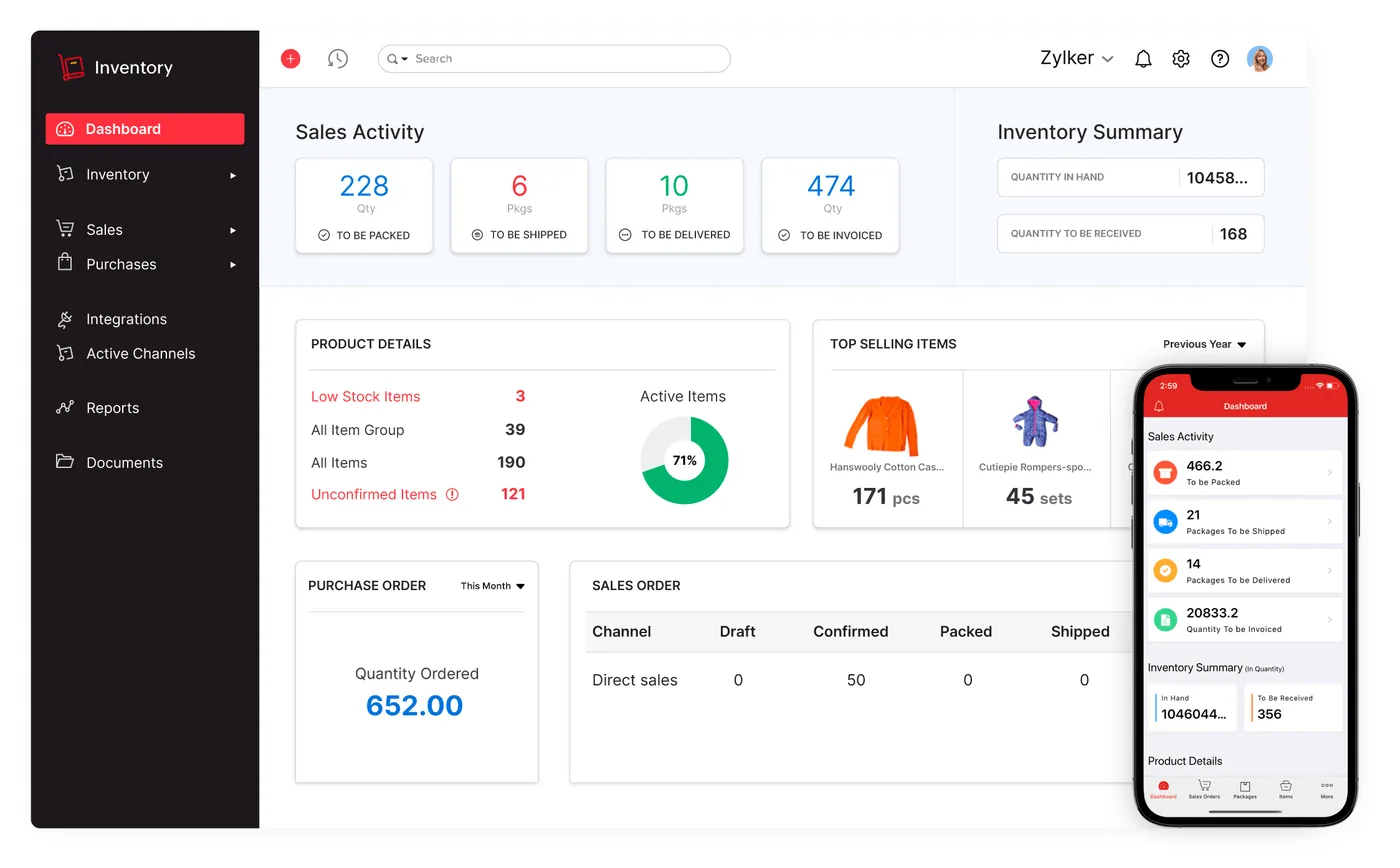
The Zoho Inventory dashboard
Sales activity, inventory summary, low-stock and top-selling items, and order status, on web and mobile.
- Zoho: fastest and lowest cost per user for SMEs and growing teams.
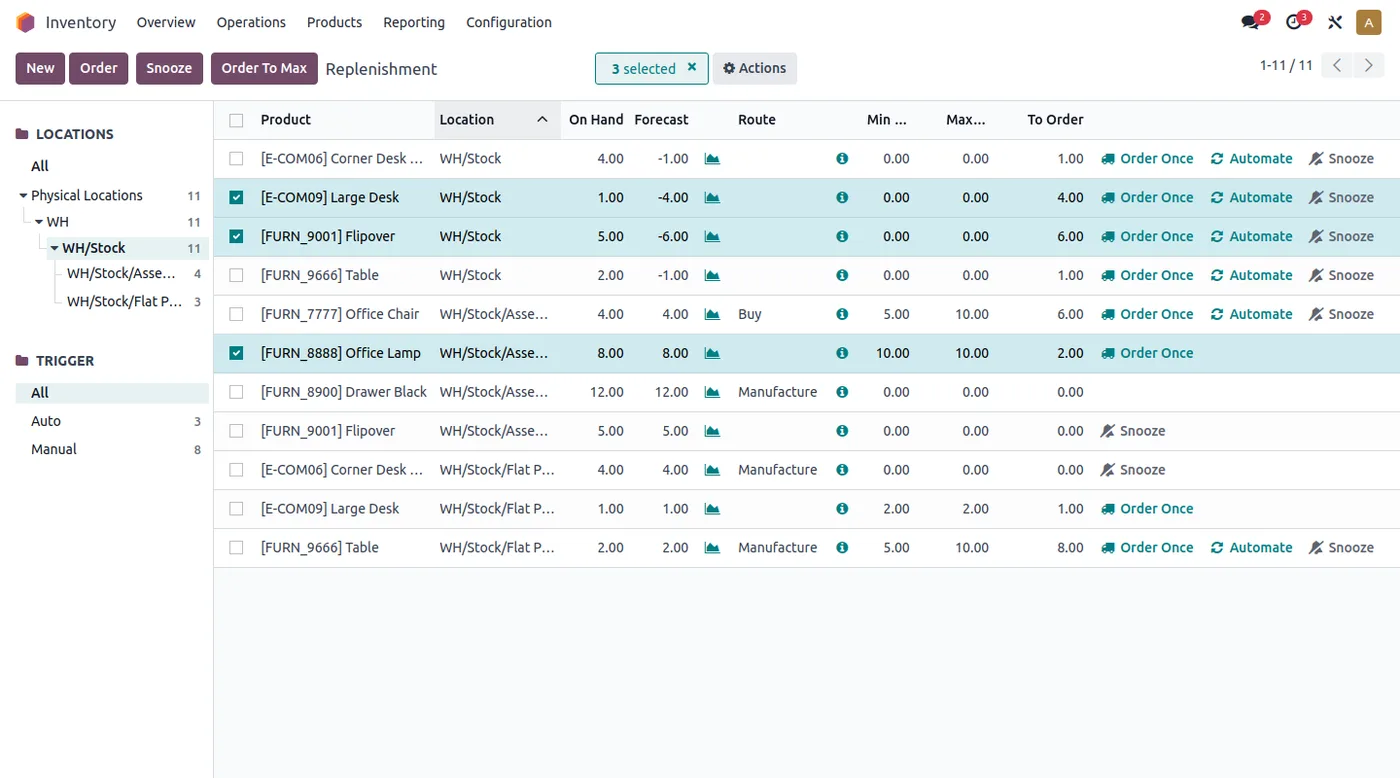
Replenishment in Odoo Inventory
Products below their minimum with the proposed route: buy, manufacture or transfer between warehouses.
- Odoo: strongest where stock, manufacturing and operations lead.
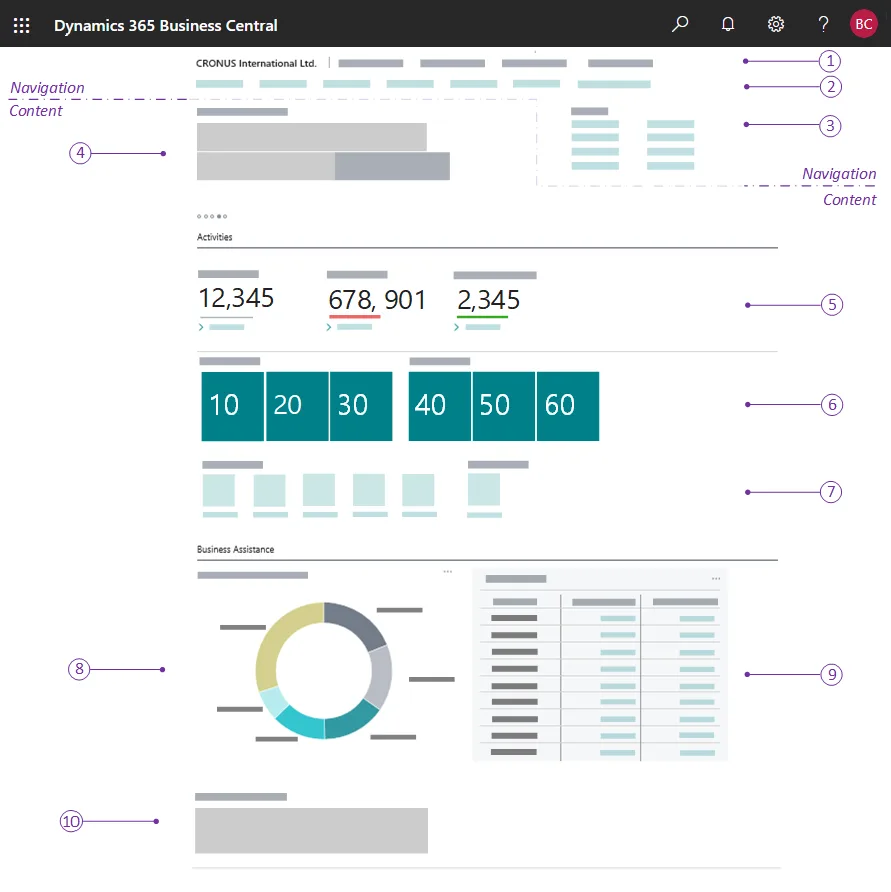
A Business Central role centre
The home page each user gets for their role: headlines, activity cues, KPI tiles, charts and actions. The numbered callouts come from Microsoft's documentation.
- Dynamics 365: best for Microsoft-centric companies and larger groups.
What changes in the UAE
The local rules and realities we design for before go-live. Rules change, so we re-check the current position at scoping.
Free zone to mainland movements
Moving goods from a free zone warehouse such as JAFZA or SAIF Zone to a mainland store can trigger customs and VAT consequences. Separate locations with documented transfers support the paperwork your broker needs.
Coverage across seven emirates
Distributors often hold stock in Dubai and Sharjah to serve all seven emirates, with smaller depots in Abu Dhabi or Al Ain. Location-level visibility shows whether a regional depot actually reduces delivery times.
Site stores on projects
UAE contractors keep materials at many project sites at once. Treating each site as a location stops over-ordering and shows materials that can be moved to another project instead of bought again.
How we deliver multi-location ERP
Phases, indicative timing and what is delivered in each. Scope is fixed and priced in AED before we start.
Location mapping
We map every stock-holding location, including vans and sites, and how stock moves between them today.
Rules design
Location hierarchy, replenishment rules, transfer approvals and count schedules are agreed with operations. Site managers review the rules before build.
Configure and count
Locations are configured, scanners deployed and opening stock counted and loaded for each location. Count sheets are reconciled before import.
Location rollout
Locations go live in groups, starting with the main warehouse and the busiest stores or sites.
Stabilise and tune
Replenishment parameters and count schedules are adjusted from the first weeks of real data. Site managers get weekly accuracy reports.
When multi-location ERP is the wrong answer
If the locations are separate companies with separate books, you need multi-entity ERP rather than multi-location. If they are branches of one company needing their own P&L, branch management is the better frame. And for a single warehouse with a showroom, standard inventory in any ERP already covers two locations.
How we handle it: We implement Zoho, Odoo and Dynamics 365 and build AI and custom software, so our written recommendation can point you to a simpler option, or to doing nothing yet.


A UAE team you can meet in person
That is our team at Zoholics Dubai 2026. We deliver Zoho, Odoo, Dynamics 365 and custom projects from our Ras Al Khaimah office with remote delivery across all seven emirates, in English and Arabic, and we run workshops on site in Dubai, Abu Dhabi and Sharjah when a project needs it.
Multi-Location ERP in the UAE: questions we get asked
What is multi-location ERP?
How does multi-location ERP in the UAE handle free zone warehouses?
How is multi-location different from branch management?
Can each store have its own reorder levels?
Do vans and project sites count as locations?
How long does a multi-location rollout take?
Why choose Shyphan?

Talk to a consultant about multi-location ERP
A free 30-minute call, then a written recommendation and a fixed quote in AED, including the honest option that this is not the right fit.
