





















 Saudi Arabia
 UAE
UAE Qatar
Qatar Bahrain
 Kuwait
 Oman
Oman Lebanon
 Egypt
Egypt India
India UK
UK Ireland
 Germany
 USA
USA Australia
 Singapore
 South Africa
 Iraq
Iraq Jordan
 Hungary
 Georgia
 Turkey
 LagosNigeria



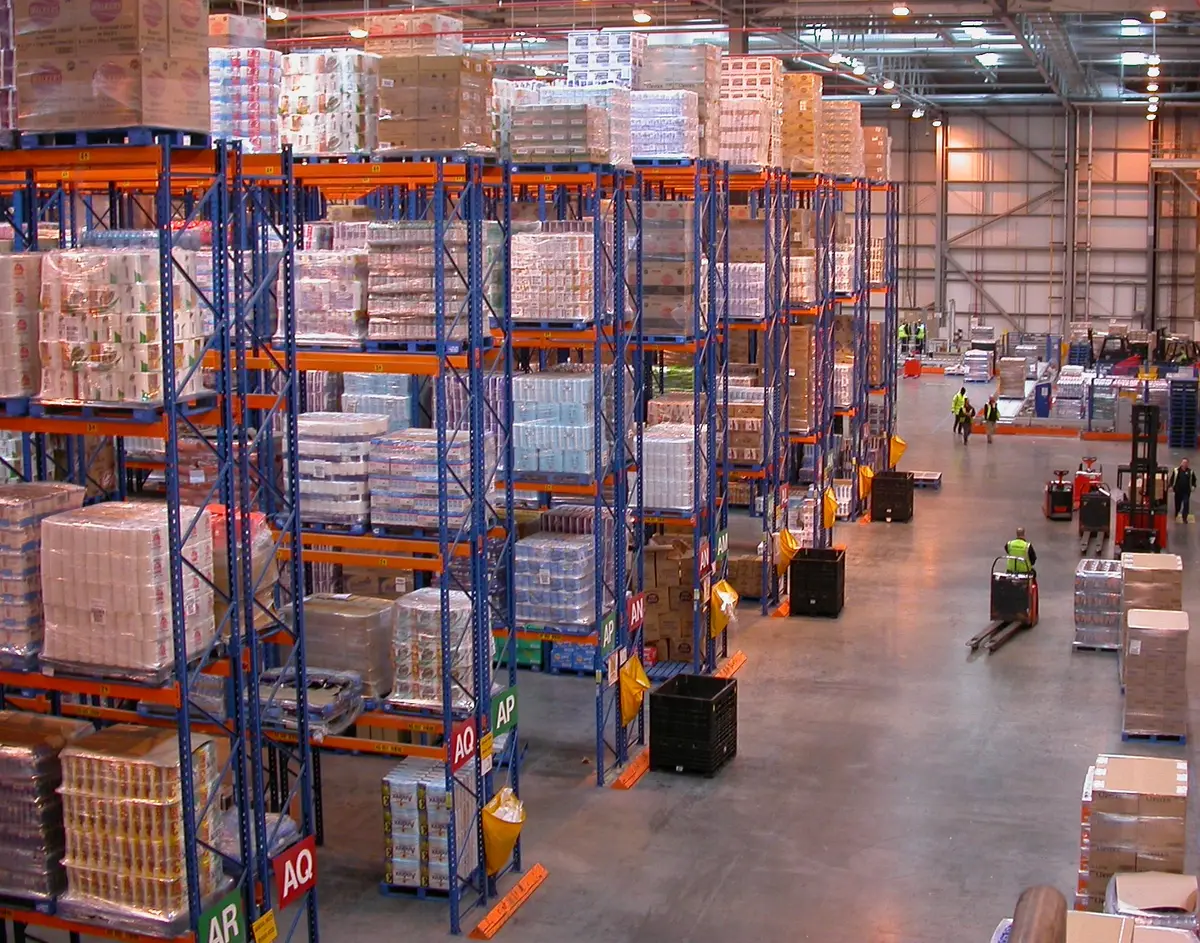
 Inventory dashboards · UAE
Inventory Dashboard Development in the UAE
Inventory dashboard development UAE distributors and retailers ask for shows where cash is tied up in stock and where stock-outs are coming. Shyphan builds dashboards for stock value, days of cover, slow and dead stock, expiry, reorder alerts and landed cost from Odoo Inventory, Zoho Inventory, Business Central or your warehouse system, with a fixed quote in AED after a free discovery call.
Prefer to talk? Call +971 55 145 3265
Get a free recommendation
Tell us what you want to fix. A senior consultant replies within one working day with a written view.
Trusted by businesses across the UAE, Saudi Arabia and beyond












Inventory Dashboard Development in the UAE: the short answer
- What it is
- An inventory dashboard is a visual view of stock levels, value, movement and risk across warehouses and branches, refreshed from the inventory or ERP system.
- Best suited to
- UAE distributors, wholesalers, retailers and manufacturers carrying hundreds or thousands of SKUs across one or more warehouses, where stock is a large share of working capital.
- Core stack
- Odoo Inventory, Zoho Inventory, Business Central, Dynamics 365 Supply Chain Management, Power BI, Zoho Analytics
- Typical timeline
- Four to sixteen weeks depending on the platform, modules, data migration and integrations; we phase larger programmes.
- What it costs
- A fixed price in AED after a free discovery call, phased so you are never committing to the whole programme on day one. Platform licences are billed by the vendor.
- Local specifics
- Stock across the emirates; Customs duty in stock cost; Designated zone stock.
- Delivered by
- Shyphan AI Solutions: Zoho Premium Partner, Official Odoo Partner, independent Dynamics 365 consultancy and custom software house, so the platform is chosen by fit.
- Last reviewed
- 29 September 2026
Inventory Dashboard Development in the UAE: who it is for
UAE distributors, wholesalers, retailers and manufacturers carrying hundreds or thousands of SKUs across one or more warehouses, where stock is a large share of working capital. An inventory dashboard is a visual view of stock levels, value, movement and risk across warehouses and branches, refreshed from the inventory or ERP system.
- Stock value and days of cover
- Slow-moving and dead stock
- Batch and expiry tracking
- Reorder and stock-out alerts
What we use to deliver inventory dashboard development
Tools and platforms we typically use, and the systems it connects to. The final choice is made against your systems, budget and team.





 Odoo
Odoo Business Central
 Microsoft 365
 WhatsApp
Inventory Dashboard Development in the UAE: what is included
Inventory dashboard development UAE distributors and retailers ask for shows where cash is tied up in stock and where stock-outs are coming.
Stock value and days of cover
Stock value by warehouse, category and brand, with days of cover based on recent sales. Buyers see which lines hold months of cover and which are close to running out, instead of a single total stock figure.
Slow-moving and dead stock
Items with no sales in 90, 180 or 365 days are listed with value and location, so management can decide on promotions, returns to suppliers or write-downs before year-end, and buyers stop reordering lines that no longer sell.
Batch and expiry tracking
Food, pharmacy and cosmetics distributors see stock by batch and expiry date, with items expiring within set windows highlighted, so sales teams push them first, first-expiry-first-out picking is checked, and write-offs fall.
Reorder and stock-out alerts
Items below reorder point, open purchase orders and expected arrival dates are shown together. Alerts go to buyers when a fast-moving item will run out before the next shipment lands.
Landed cost and margin
Freight, insurance, 5% customs duty and clearing charges are added to item cost through landed cost in the ERP, so margin by product reflects the real cost of imported goods.
Count accuracy
Cycle count results, adjustments by reason and warehouse, and shrinkage trends show where stock records drift from reality, pointing to the locations, item groups and shifts that need attention before the year-end count.
Food distributor controlling expiry across emirates
How inventory dashboard development in the UAE looks in practice. Illustrative; every project is scoped to the business.
For example, a frozen and chilled food distributor supplies restaurants and supermarkets from warehouses in Abu Dhabi and Sharjah, with a small depot in Fujairah. Stock is managed in Odoo Inventory with lot numbers, but write-offs for expired products are only noticed at month-end counts. The commercial director wants to act on short-dated stock while there is still time to sell it.
- Connect Odoo Inventory lots, expiry dates and locations to Power BI, calculating remaining shelf life for each lot against the customer minimum shelf-life requirements.
- Build a short-dated stock page by warehouse and product, grouped into action bands, with suggested actions such as transfer, promotion or return to supplier.
- Add a write-off trend page by product, supplier and warehouse, so buyers can adjust order quantities for items that repeatedly expire before sale.
See it on the platforms we deliver
Real screens from the platforms we implement. Yours are configured to your entities, processes and KPIs.
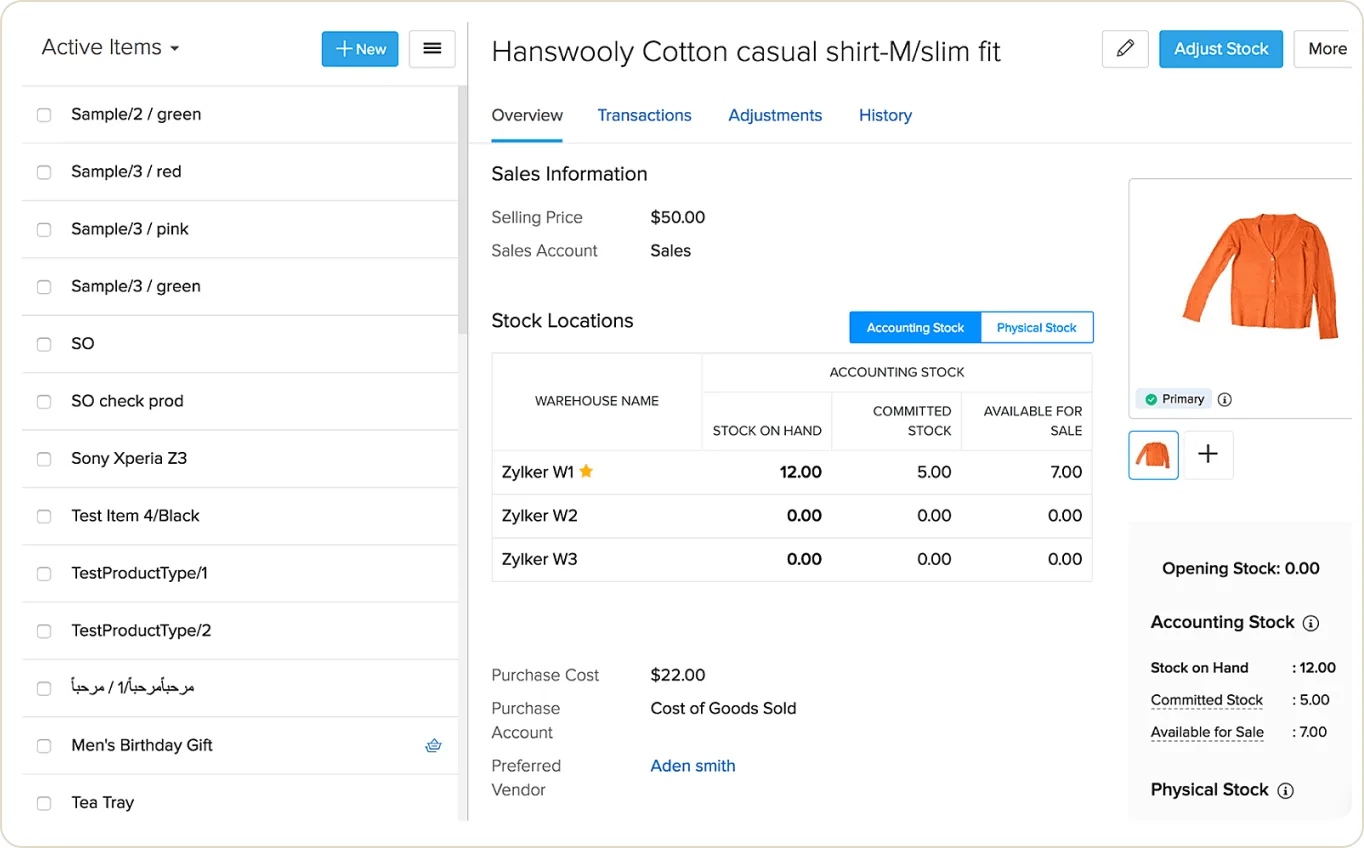
Item stock by warehouse in Zoho Inventory
Stock on hand, committed and available for sale per warehouse, for a single item.
- Stock value and days of cover
- Slow-moving and dead stock
- Batch and expiry tracking
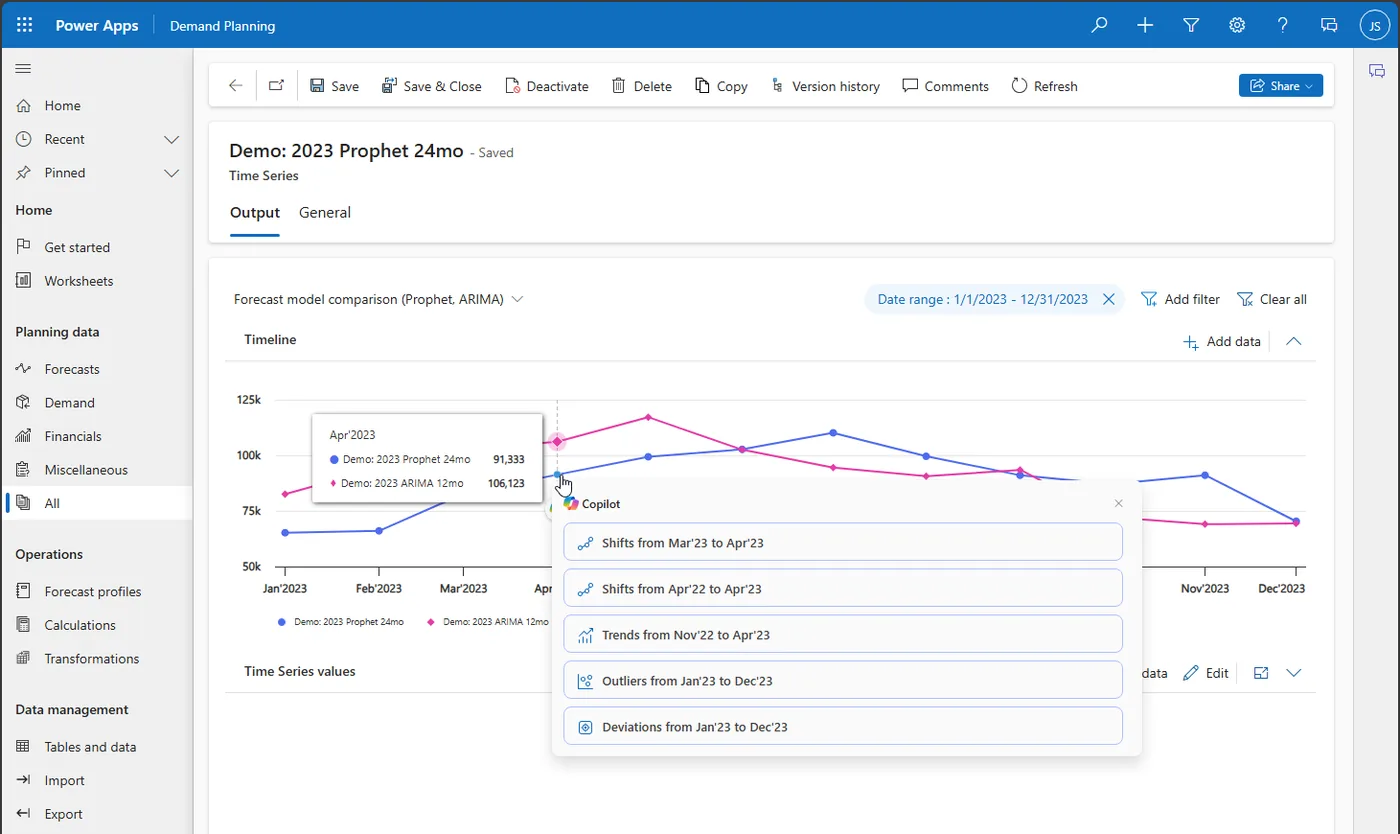
Demand planning with Copilot in Supply Chain Management
A forecast comparison of two models over a year, with Copilot offering to explain shifts, trends, outliers and deviations in the time series.
- Reorder and stock-out alerts
- Stock across the emirates
- Customs duty in stock cost
Which platform for inventory dashboard development in the UAE?
An honest comparison. We implement all of these, so the recommendation follows your processes, team and budget.
| Option | Best when | How it fits this need |
|---|---|---|
| Power BI on Odoo or Business Central | Several warehouses, lot tracking and finance reporting together. | Strong for combining lots, sales, purchases and cost into trends and exception views. Needs a modelling owner and careful handling of large transaction volumes. |
| Zoho Analytics on Zoho Inventory | The business runs Zoho Inventory with batches and warehouses. | Quick and affordable with native connectors and prepared reports. Detailed lot-level ageing across many warehouses may need custom queries or data preparation. |
| Dynamics 365 Supply Chain analytics | The business already runs Supply Chain Management at scale. | Built-in workspaces and Power BI content cover many inventory needs for large distributors. Only relevant if you already run or plan to run that platform. |
| ERP stock reports | One warehouse and a small product range. | Standard stock valuation and expiry reports may be enough for a single site. Multi-warehouse trends, write-off analysis and exception alerts usually need a dashboard layer. |
What changes in the UAE
The local rules and realities we design for before go-live. Rules change, so we re-check the current position at scoping.
Stock across the emirates
UAE companies often hold stock in Dubai, a Sharjah or Ajman warehouse and branches in Abu Dhabi. The dashboard shows each location and transfers in transit, so stock is moved before it is bought again.
Customs duty in stock cost
The 5% GCC common customs tariff applies to most imports into mainland UAE. Including duty and freight in landed cost gives true stock value and margin, especially for low-margin distributors.
Designated zone stock
Goods held in designated zones follow different VAT treatment from mainland stock. Showing zone and mainland stock separately helps finance and customs reporting stay correct.
What drives the cost, and what it connects to
No price list: we quote a fixed price in AED after discovery. These are the factors that move the effort up or down.
SKU and transaction volume
Thousands of SKUs with daily movements across several warehouses need efficient data models and incremental refresh. Smaller catalogues can load everything each time more simply.
Lot and expiry logic
Expiry bands, customer shelf-life rules and first-expiry-first-out checks require detailed lot data and agreed business rules, which add design and testing time.
Valuation and landed cost
Reconciling stock value to the ledger and including duty and freight in unit cost need finance involvement, especially if landed costs are posted late.
Warehouses and locations
More warehouses, bins and transit locations mean more mapping, security by site and testing. Single-site operations are much quicker to model and validate.
What it connects to
Stock levels, lots, expiry dates and movements feed the dashboard on each refresh from the ERP.
Supplier bills, freight and customs duty postings update unit cost so stock value and margin are accurate.
Cycle count results from warehouse scanners feed count accuracy measures by location and counter.
Recent sales rates drive days of cover, reorder suggestions and slow-moving flags per SKU and warehouse.
Minimum shelf-life requirements from key accounts are loaded so short-dated lots are matched to customers who accept them.
How we deliver inventory dashboard development
Phases, indicative timing and what is delivered in each. Scope is fixed and priced in AED before we start.
Stock questions
We agree with buyers, warehouse and finance which stock decisions they make and the measures that support them.
Data check
Item master, units, categories, costs and locations are checked in the ERP, and gaps fixed at source.
Build
Stock, movement, expiry, purchase and landed cost pages are built and reconciled to the stock valuation report.
Buyer trial
Buyers use the dashboard for their weekly purchasing and we tune reorder logic and alert thresholds.
Handover
Access, training and a guide for maintaining reorder settings and categories as the range changes.
When inventory dashboard development is the wrong answer
If stock counts rarely match the system, an inventory dashboard will present wrong numbers neatly. We would first tighten receiving, barcode scanning and cycle counts in Odoo, Zoho Inventory or Business Central, then build dashboards. Businesses with a few dozen SKUs usually manage well with their ERP's standard stock reports.
How we handle it: We implement Zoho, Odoo and Dynamics 365 and build AI and custom software, so our written recommendation can point you to a simpler option, or to doing nothing yet.
Checklist and common mistakes
Buyer's checklist
What to ask for before you choose a provider.
- Ask how the provider will handle lot and expiry data, including products with and without batch tracking in the same ERP.
- Confirm stock valuation in the dashboard reconciles with the inventory valuation in your ledger each month end.
- Check that landed cost, including customs duty and freight, is reflected in stock value and margin measures.
- Ask how slow-moving and dead stock will be defined, and agree thresholds with your commercial and finance teams.
- Require separate views for warehouse teams, buyers and management, each showing the actions that role can take.
- Ask how stock in designated zones will be reported separately from mainland stock where VAT treatment differs.
Common mistakes
What we see go wrong in the UAE, and how to avoid it.
- Valuing stock at purchase price onlyUAE importers often ignore duty and freight in stock value, overstating margin. Include landed cost in unit cost before building margin and valuation views.
- One threshold for slow stockUsing the same slow-moving rule for fast consumables and spare parts gives misleading lists. Set thresholds by product category with your buyers.
- Dashboard without actionsShowing short-dated or dead stock without owners and actions changes nothing. Assign each exception list to a role with a weekly review.
- Skipping count accuracyIf system stock is wrong, every measure is wrong. Track cycle count accuracy and fix high-variance locations before anyone trusts the dashboard.


A UAE team you can meet in person
That is our team at Zoholics Dubai 2026. We deliver Zoho, Odoo, Dynamics 365 and custom projects from our Ras Al Khaimah office with remote delivery across all seven emirates, in English and Arabic, and we run workshops on site in Dubai, Abu Dhabi and Sharjah when a project needs it.
Inventory Dashboard Development in the UAE: questions we get asked
What does inventory dashboard development UAE distributors need most?
Which inventory systems can you connect?
Can the dashboard include customs duty in stock cost?
How is an inventory dashboard different from a sales dashboard?
How long does it take?
What does an inventory dashboard cost in the UAE?
Can inventory dashboard development in the UAE include supplier performance?
How do you handle stock that belongs to consignment customers or suppliers?
Can buyers get automatic alerts instead of checking the dashboard?
Why choose Shyphan?

Talk to a consultant about inventory dashboard development
A free 30-minute call, then a written recommendation and a fixed quote in AED, including the honest option that this is not the right fit.
