





















 Saudi Arabia
 UAE
UAE Qatar
Qatar Bahrain
 Kuwait
 Oman
Oman Lebanon
 Egypt
Egypt India
India UK
UK Ireland
 Germany
 USA
USA Australia
 Singapore
 South Africa
 Iraq
Iraq Jordan
 Hungary
 Georgia
 Turkey
 LagosNigeria



 Fuel and fleet expense · UAE
Fuel Management Software in the UAE
Fuel management software in the UAE brings fuel card transactions, tank issues and odometer readings together so you know consumption and cost per vehicle, driver and job. Shyphan implements it on Odoo, Zoho Creator or Power Platform, with fuel card imports, anomaly alerts, monthly price changes and VAT-ready expense records, linked to your accounting system.
Prefer to talk? Call +971 55 145 3265
Get a free recommendation
Tell us what you want to fix. A senior consultant replies within one working day with a written view.
Trusted by businesses across the UAE, Saudi Arabia and beyond












Fuel Management Software in the UAE: the short answer
- What it is
- Fuel management software records every litre bought or issued, matches it to vehicles and usage, and flags consumption that does not make sense.
- Best suited to
- UAE fleets with fuel cards or their own diesel tanks, including logistics, construction, contracting, bus and equipment rental companies.
- Core stack
- Odoo Fleet, Zoho Creator, Zoho Books, Power Automate, Power BI, Odoo Accounting
- Typical timeline
- Four to sixteen weeks depending on the platform, modules, data migration and integrations; we phase larger programmes.
- What it costs
- A fixed price in AED after a free discovery call, phased so you are never committing to the whole programme on day one. Platform licences are billed by the vendor.
- Local specifics
- Fuel card providers in the UAE; Site diesel on projects; Input VAT on fuel.
- Delivered by
- Shyphan AI Solutions: Zoho Premium Partner, Official Odoo Partner, independent Dynamics 365 consultancy and custom software house, so the platform is chosen by fit.
- Last reviewed
- 29 September 2026
Fuel Management Software in the UAE: who it is for
UAE fleets with fuel cards or their own diesel tanks, including logistics, construction, contracting, bus and equipment rental companies. Fuel management software records every litre bought or issued, matches it to vehicles and usage, and flags consumption that does not make sense.
- Fuel card transaction imports
- Own tank and bowser issues
- Consumption anomaly alerts
- Cost per vehicle and job
What we use to deliver fuel management software
Tools and platforms we typically use, and the systems it connects to. The final choice is made against your systems, budget and team.





 Odoo
Odoo Business Central
 Microsoft 365
 WhatsApp
Fuel Management Software in the UAE: what is included
Fuel management software in the UAE brings fuel card transactions, tank issues and odometer readings together so you know consumption and cost per vehicle, driver and job.
Fuel card transaction imports
Transactions from your fuel card providers are imported daily by file or API and matched to vehicles by plate or card number, removing manual re-keying of monthly statements. Unmatched transactions go to a review queue.
Own tank and bowser issues
For construction sites and depots with diesel tanks, each issue to a vehicle or generator is recorded with meter readings, and deliveries into the tank are reconciled against issues and dips.
Consumption anomaly alerts
Fills larger than tank capacity, two fills within minutes, fills far from the vehicle's route, or litres per 100 km well above the norm trigger alerts for review. Thresholds are set per vehicle type.
Cost per vehicle and job
Fuel cost is allocated to vehicles, drivers, projects or client contracts, so you can price jobs properly and compare vehicle models on real cost. Idle and empty-running patterns become visible when fuel is compared with job records.
Monthly price changes
UAE retail fuel prices are revised monthly. The system records the price per litre per period so budget variance reports separate price movement from consumption changes. Budgets can be re-based each month.
VAT-ready expense records
Fuel invoices carry 5% VAT. Clean records per entity and vehicle support input VAT recovery where eligible and post correctly to Zoho Books or Odoo Accounting. Each receipt links to its transaction.
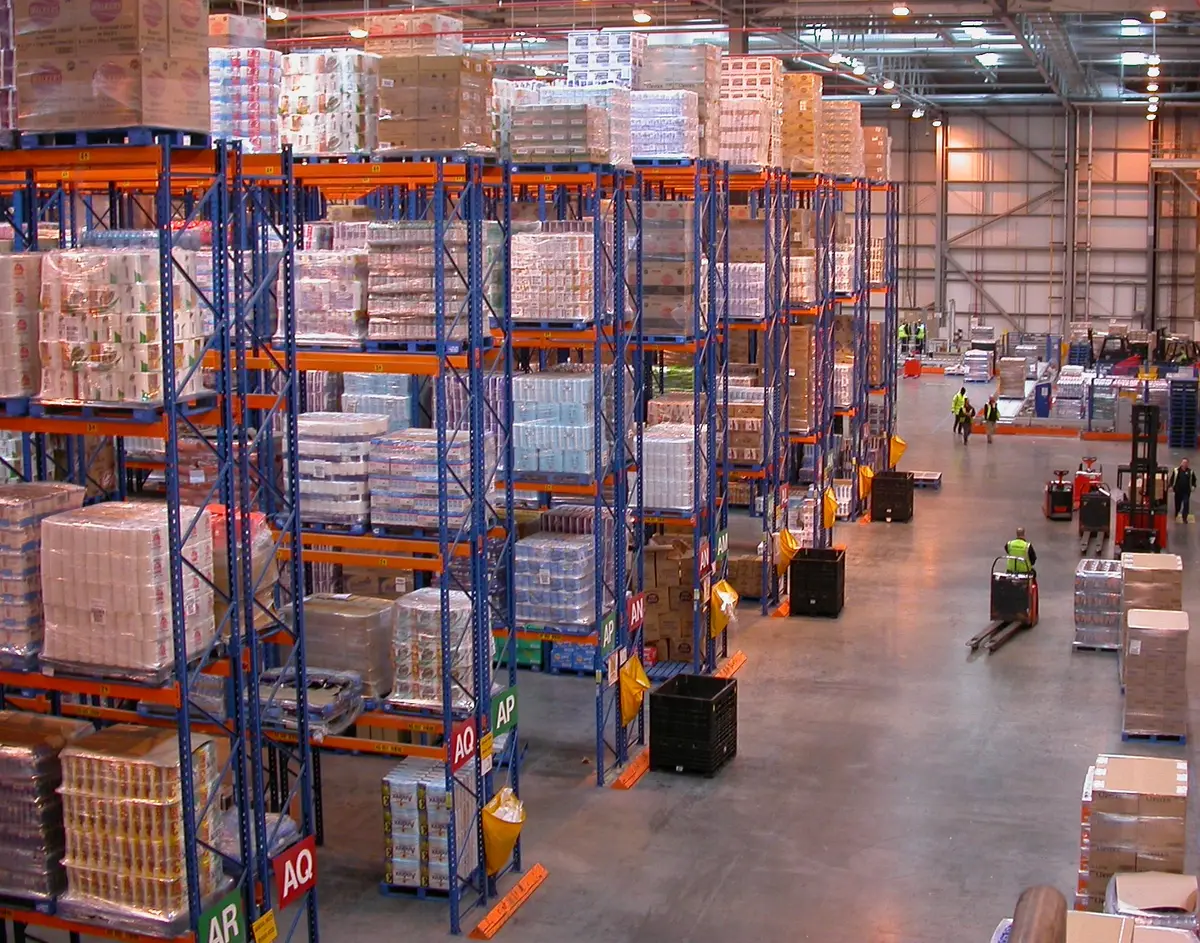
Plant hire firm fuelling machines on site
How fuel management software in the UAE looks in practice. Illustrative; every project is scoped to the business.
Picture a plant and equipment hire company in Musaffah with excavators, loaders and generators out on construction sites across Abu Dhabi, a diesel bowser that tops them up on site, and fuel cards in the pickups that carry its supervisors. Fuel is logged on paper at the machine, and nobody can say which rental contracts are quietly losing money on diesel.
- Record consumption against engine hours rather than kilometres for plant, with an expected litres-per-hour band per machine class so an overfilled excavator stands out immediately.
- Give the bowser driver a phone form that scans a QR tag on each machine, captures litres, hour meter and a photo of the gauge, and works offline on remote sites.
- Tag every issue to the rental contract, so contracts where fuel is included show true margin and contracts where fuel is rechargeable produce a VAT-correct recharge line automatically.
See it on the platforms we deliver
Real screens from the platforms we implement. Yours are configured to your entities, processes and KPIs.
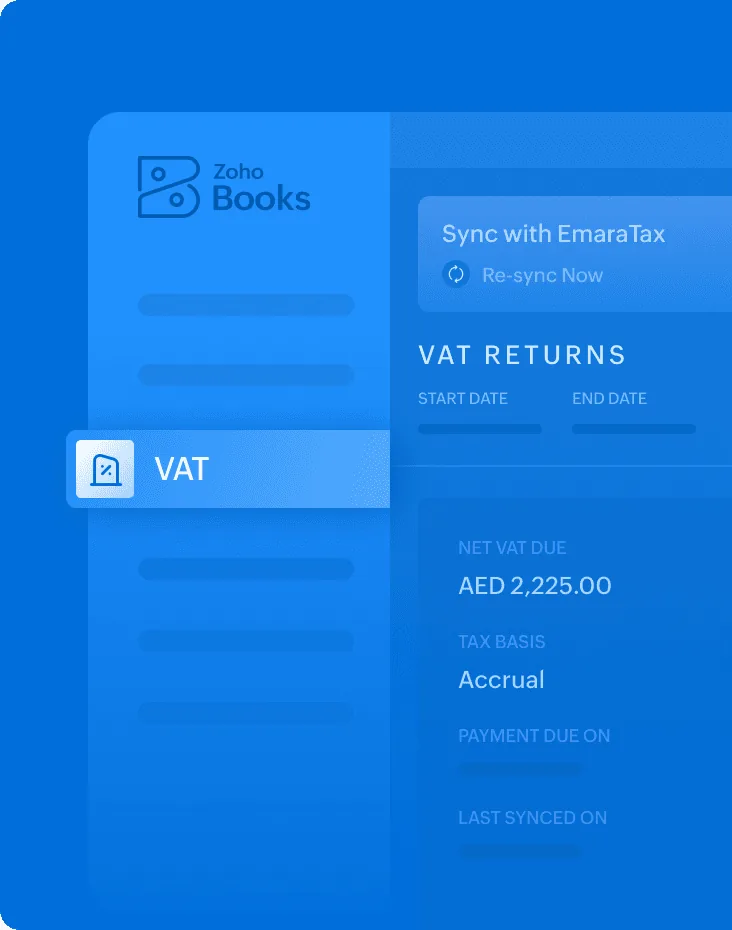
UAE VAT returns in Zoho Books
The VAT module with a return period, net VAT due in AED, accrual tax basis and a sync option for the FTA EmaraTax portal.
- Fuel card transaction imports
- Own tank and bowser issues
- Consumption anomaly alerts
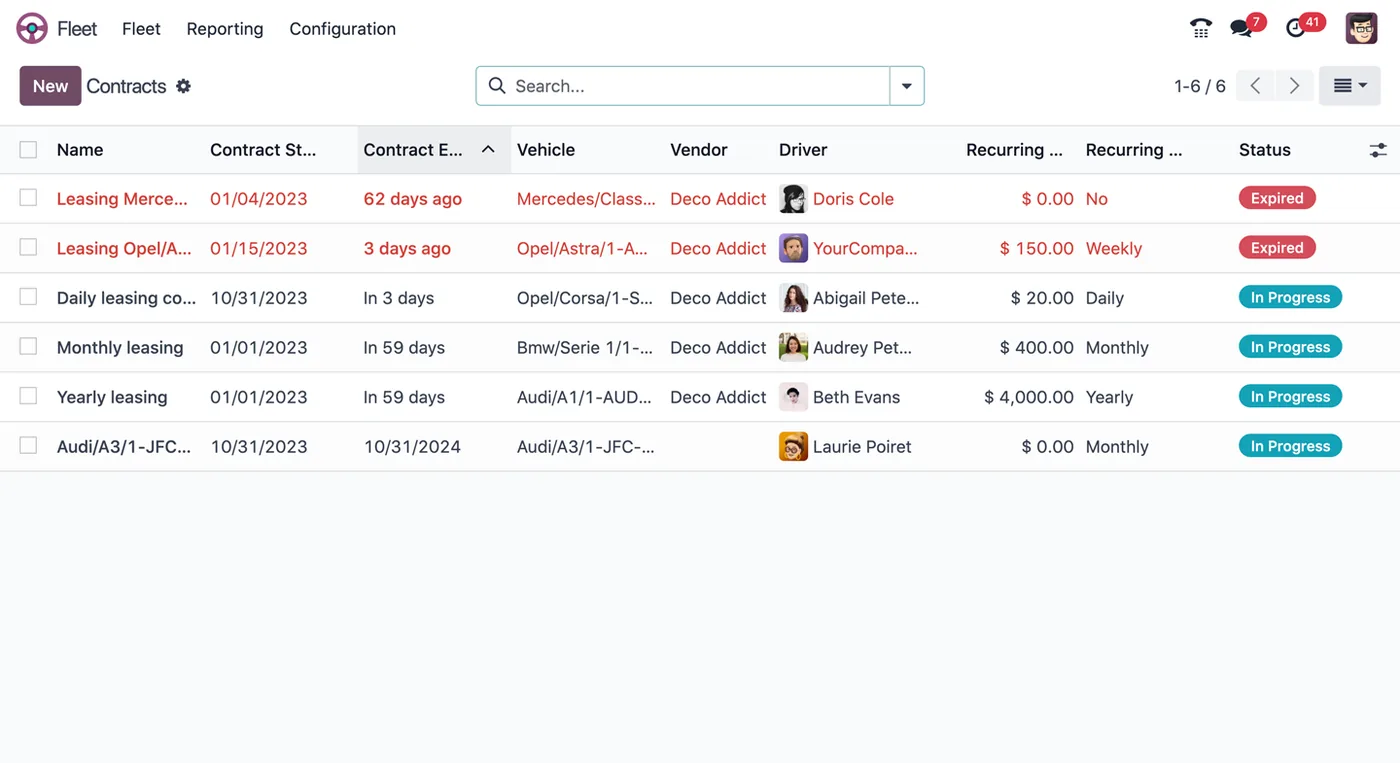
Vehicle contracts in Odoo Fleet
Leasing contracts per vehicle with start and end dates, vendor, driver, recurring cost and frequency, and expired or in-progress status.
- Cost per vehicle and job
- Fuel card providers in the UAE
- Site diesel on projects
Which platform for fuel management software in the UAE?
An honest comparison. We implement all of these, so the recommendation follows your processes, team and budget.
| Option | Best when | How it fits this need |
|---|---|---|
| Odoo Fleet + Accounting | Fuel should post straight to vehicle, job and contract costs | Strong when you already run or plan Odoo for accounting and projects. Fuel logs, vehicles and analytic accounts share one database, though engine-hour logic for plant needs light customisation. |
| Zoho Creator + Zoho Books | You want a tailored fuel app on a modest budget | Good for mid-sized fleets on Zoho Books. Creator handles bowser forms, card imports and anomaly rules well, but deep job costing is weaker than in a full ERP. |
| Power Platform + Business Central | You are a Microsoft 365 and Business Central business | Power Apps and Power BI suit firms already on Business Central. Useful for large fleets with an analytics team; heavier to run for a small operation with one bookkeeper. |
| Fuel card portal + spreadsheets | Fewer than ten vehicles and no own tanks | Honestly enough for a very small fleet using one card provider. It breaks down once you add bowsers, several card providers or need cost per job. |
What changes in the UAE
The local rules and realities we design for before go-live. Rules change, so we re-check the current position at scoping.
Fuel card providers in the UAE
Most UAE fleets use fuel cards from the major retailers. Integration depends on each provider's statement format or API, which we confirm at scoping. Manual uploads cover the rest.
Site diesel on projects
Construction and contracting sites across the UAE run generators and plant from on-site diesel tanks, where losses are hard to see without issue-level records. Issue records reveal the gaps.
Input VAT on fuel
Fuel for business vehicles may allow input VAT recovery, with restrictions for some vehicle uses. Accurate records per vehicle help your accountant apply the rules correctly.
What drives the cost, and what it connects to
No price list: we quote a fixed price in AED after discovery. These are the factors that move the effort up or down.
Number of fuel sources
Each fuel card provider, own tank and bowser needs its own import or capture flow and its own reconciliation rule, so three sources cost noticeably more to set up than one.
Meter types in the fleet
A fleet of vans needs only odometer logic. Mixed fleets with plant on engine hours, generators and reefer units need several consumption models and separate anomaly thresholds.
Depth of job costing
Posting fuel to a vehicle is simple. Splitting it across projects, rental contracts or customer recharges touches your accounting structure and needs more design and testing.
Historic data clean-up
Loading past fuel logs to set baselines is optional but useful. Messy spreadsheets with inconsistent plate numbers take real effort to clean before they are trustworthy.
What it connects to
Transaction exports flow in daily or weekly and are matched to vehicle, driver and card, with unmatched lines queued for review.
Odometer and engine-hour readings flow in automatically, replacing driver-typed figures as the basis for consumption checks.
Approved fuel costs post to the ledger with the right cost centre, and supplier invoices carry the input VAT.
Where fitted, tank readings flow in to reconcile deliveries against issues and highlight unexplained stock loss.
Consumption, cost per job and anomaly trends flow out to dashboards for the fleet manager and finance.
How we deliver fuel management software
Phases, indicative timing and what is delivered in each. Scope is fixed and priced in AED before we start.
Fuel data review
Review fuel card statements, tank records, odometer sources and how fuel is currently reconciled. We sample a few months first.
Matching rules
Define vehicle and card mapping, cost allocation and anomaly thresholds with your fleet manager. Exceptions get a named owner.
Build and import
Configure the platform, automate card imports and connect accounting. Accounting postings are tested with finance before go-live, including VAT codes per entity.
Parallel month
Run one month alongside your current process to check matches and tune alerts. Differences are explained, not hidden.
Handover
Train fleet and finance teams on reviews, alerts and monthly reports. Month-end steps are documented.
When fuel management software is the wrong answer
If all vehicles use one fuel card provider with good online reports and you have no tanks, that provider's portal plus a monthly export may be enough. Fuel software also cannot prove theft on its own; alerts need follow-up. If you need live fuel level sensors, that is a telematics hardware project first.
How we handle it: We implement Zoho, Odoo and Dynamics 365 and build AI and custom software, so our written recommendation can point you to a simpler option, or to doing nothing yet.
Checklist and common mistakes
Buyer's checklist
What to ask for before you choose a provider.
- Ask how they will handle plant measured in engine hours alongside vehicles measured in kilometres in the same reports.
- Confirm the system can import files from every fuel card provider you use, not only the one they have met before.
- Require a clear rule for how tank deliveries, bowser issues and remaining stock are reconciled each month, including dip readings.
- Check that input VAT on fuel is captured from the supplier tax invoice, not from each card swipe line.
- Ask to see how an anomaly alert reaches a supervisor, and what happens when it is ignored for a week.
- Make sure drivers and bowser operators can log fuel offline on sites with poor mobile coverage.
Common mistakes
What we see go wrong in the UAE, and how to avoid it.
- Trusting driver-entered odometer readingsConsumption figures are only as good as the meter reading. Pull odometer or hours from telematics where possible, or require a dashboard photo, before trusting any litres-per-100 km analysis.
- Claiming VAT from card statementsCard transaction lists are not always valid tax invoices. Reclaim input VAT from the provider's tax invoice with its TRN, and keep the transaction detail only as supporting data.
- One threshold for every vehicleA loaded tipper and a pickup cannot share an alert limit. Set bands per vehicle class and season, or supervisors will learn to ignore constant false alarms.
- Ignoring bowser stockMany firms track what goes into machines but not what sits in the bowser. Reconcile deliveries, issues and dip readings monthly or losses hide between the tank and the machine.


A UAE team you can meet in person
That is our team at Zoholics Dubai 2026. We deliver Zoho, Odoo, Dynamics 365 and custom projects from our Ras Al Khaimah office with remote delivery across all seven emirates, in English and Arabic, and we run workshops on site in Dubai, Abu Dhabi and Sharjah when a project needs it.
Fuel Management Software in the UAE: questions we get asked
What does fuel management software in the UAE do?
Is fleet expense management in the UAE part of this?
Can it detect fuel misuse?
Can it handle our own diesel tanks?
How does this differ from your fleet maintenance page?
How much does it cost?
Can fuel management software handle generators and plant measured in engine hours?
Can we recharge fuel to customers on rental or service contracts?
How often should fuel card data be imported?
Why choose Shyphan?

Talk to a consultant about fuel management software
A free 30-minute call, then a written recommendation and a fixed quote in AED, including the honest option that this is not the right fit.
