





















 Saudi Arabia
 UAE
UAE Qatar
Qatar Bahrain
 Kuwait
 Oman
Oman Lebanon
 Egypt
Egypt India
India UK
UK Ireland
 Germany
 USA
USA Australia
 Singapore
 South Africa
 Iraq
Iraq Jordan
 Hungary
 Georgia
 Turkey
 LagosNigeria




 Logistics operations · UAE
Logistics Management Software in the UAE
Logistics management software in the UAE runs the day-to-day of moving goods for customers: opening a shipment job, booking carriers, tracking milestones, collecting customs documents and telling the client where their cargo is. Shyphan builds it for forwarders, 3PLs and in-house logistics teams on Odoo, Zoho Creator, Dynamics 365 or custom software, linked to your accounts.
Prefer to talk? Call +971 55 145 3265
Get a free recommendation
Tell us what you want to fix. A senior consultant replies within one working day with a written view.
Trusted by businesses across the UAE, Saudi Arabia and beyond












Logistics Management Software in the UAE: the short answer
- What it is
- Logistics management software manages shipments as jobs, from booking through transport, customs and delivery, with documents and status visible to staff and customers.
- Best suited to
- UAE freight forwarders, 3PLs, project cargo firms and manufacturers or traders with an in-house logistics desk handling many shipments a month.
- Core stack
- Odoo, Zoho Creator, Dynamics 365 Sales, Power Pages, Power BI, WhatsApp Business Platform
- Typical timeline
- Four to sixteen weeks depending on the platform, modules, data migration and integrations; we phase larger programmes.
- What it costs
- A fixed price in AED after a free discovery call, phased so you are never committing to the whole programme on day one. Platform licences are billed by the vendor.
- Local specifics
- Several ports and airports; Transit and re-export; Arabic and English documents.
- Delivered by
- Shyphan AI Solutions: Zoho Premium Partner, Official Odoo Partner, independent Dynamics 365 consultancy and custom software house, so the platform is chosen by fit.
- Last reviewed
- 29 September 2026
Logistics Management Software in the UAE: who it is for
UAE freight forwarders, 3PLs, project cargo firms and manufacturers or traders with an in-house logistics desk handling many shipments a month. Logistics management software manages shipments as jobs, from booking through transport, customs and delivery, with documents and status visible to staff and customers.
- Shipment jobs
- Milestone tracking
- Document collection
- Customer portal
What we use to deliver logistics management software
Tools and platforms we typically use, and the systems it connects to. The final choice is made against your systems, budget and team.





 Odoo
Odoo Business Central
 Microsoft 365
 WhatsApp
Logistics Management Software in the UAE: what is included
Logistics management software in the UAE runs the day-to-day of moving goods for customers: opening a shipment job, booking carriers, tracking milestones, collecting customs documents and telling the client where their cargo is.
Shipment jobs
Every shipment is a job with shipper, consignee, mode, incoterm, cargo details and parties involved. Staff work from one job record instead of email threads, and a new colleague can pick up a shipment without asking around.
Milestone tracking
Standard milestones such as booked, loaded, departed, arrived, cleared and delivered are set per mode. Late milestones raise alerts, so operators chase the carrier before the customer chases them. Milestone dates also feed customer reports.
Document collection
Commercial invoices, packing lists, certificates of origin and bills of lading are uploaded against the job with checklists per trade lane, so customs clearance is not held up by a missing paper.
Customer portal
Clients log in to see their shipments, milestones and documents, and download invoices. Fewer where-is-my-cargo calls reach operations, and the portal can be in English and Arabic. Access is limited to each client's own shipments.
Carrier and agent bookings
Bookings with shipping lines, airlines, truckers and overseas agents are recorded with rates and references, so the buy side of each job is visible alongside what the customer is charged.
WhatsApp status updates
Customers who opt in receive milestone updates on WhatsApp using approved templates, which many UAE clients prefer to email. Replies are logged against the shipment job. Opt-outs are respected and recorded automatically.
Project cargo desk in a manufacturer
How logistics management software in the UAE looks in practice. Illustrative; every project is scoped to the business.
For example, a steel structures manufacturer in Hamriyah Free Zone ships fabricated sections to projects in Oman, Saudi Arabia and East Africa. Its in-house logistics desk books trucks, flat racks and breakbulk space, chases packing lists and certificates of origin, and answers project managers who ask daily where their consignment is, all from Outlook folders and a spreadsheet.
- Create a shipment job per sales order delivery, with packing list lines, piece weights and dimensions imported from production, so the desk plans loads from real data.
- Set a document checklist per destination country, including certificate of origin, packing list and inspection certificates, and block dispatch until the required ones are attached.
- Send milestone updates to project managers and the customer's site team automatically when trucks leave, cross the border or arrive at the port.
See it on the platforms we deliver
Real screens from the platforms we implement. Yours are configured to your entities, processes and KPIs.
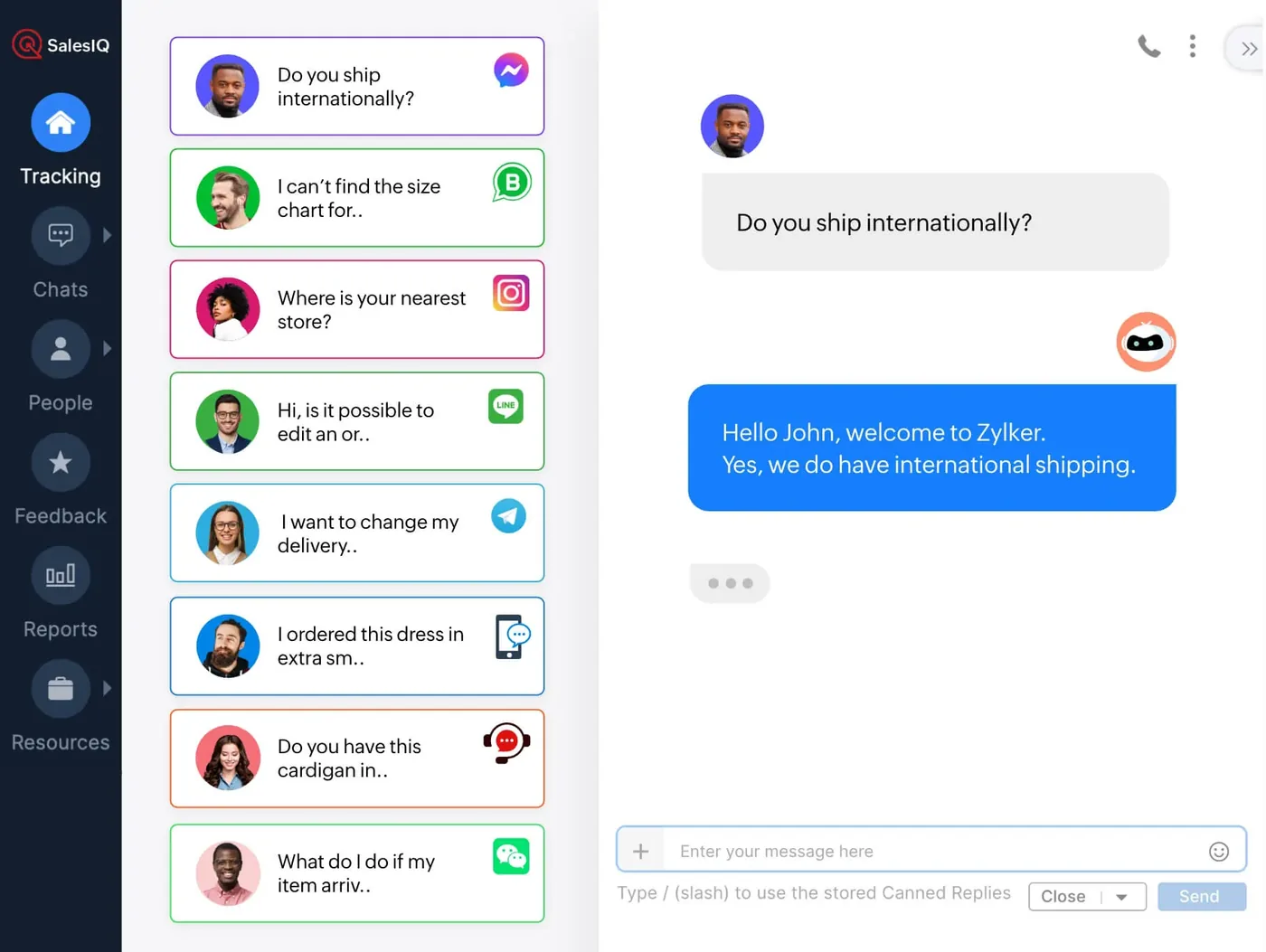
Omnichannel chat in Zoho SalesIQ
Customer messages from Messenger, WhatsApp, Instagram, Telegram and other channels in one queue, answered by a bot in the conversation panel.
- Shipment jobs
- Milestone tracking
- Document collection
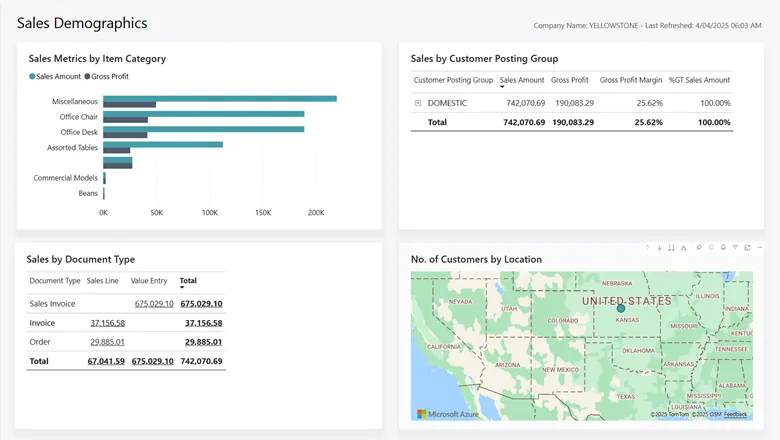
Sales demographics report for Business Central
Sales amount and gross profit by item category and customer posting group, sales by document type and a map of customers by location.
- Customer portal
- Several ports and airports
- Transit and re-export
Which platform for logistics management software in the UAE?
An honest comparison. We implement all of these, so the recommendation follows your processes, team and budget.
| Option | Best when | How it fits this need |
|---|---|---|
| Odoo | Manufacturer or trader wanting logistics inside the ERP | A natural fit if sales, manufacturing and accounting already run on Odoo. Shipment jobs link directly to sales orders and freight costs land on the right order. |
| Zoho Creator | A lean logistics desk on Zoho CRM and Books | Quick to build a shipment tracker with documents and milestone emails. Good for moderate volume; complex freight costing and rating are better handled in an ERP. |
| Dynamics 365 Sales + Power Platform | Group already on Microsoft with Business Central for finance | Power Apps and Power Pages give a capable logistics desk and customer portal. Heavier to design and license than a small desk strictly needs. |
| Spreadsheets and email | A handful of shipments a month | Workable if one person handles a few shipments monthly. Once several people share the desk or customers want self-service tracking, it becomes the bottleneck. |
What changes in the UAE
The local rules and realities we design for before go-live. Rules change, so we re-check the current position at scoping.
Several ports and airports
UAE shipments move through Jebel Ali, Khalifa Port, Fujairah and Sharjah ports and several airports. Milestones and documents are set per gateway so each job follows the right steps.
Transit and re-export
Much UAE cargo is re-exported to the GCC, Africa and Central Asia. Jobs can carry transit and re-export status so customs documents and VAT treatment match what happened to the goods.
Arabic and English documents
Customers and authorities may need documents in Arabic, English or both. Templates and the portal support both languages, including right-to-left layout for Arabic. Customs and client documents stay consistent.
What drives the cost, and what it connects to
No price list: we quote a fixed price in AED after discovery. These are the factors that move the effort up or down.
Document rules per destination
One export market means one checklist. Shipping to several GCC and African markets with different certificates and legalisation needs multiplies templates and approval rules.
Link to sales and production
Creating jobs from existing ERP orders saves time later but needs integration or configuration inside the ERP, which adds to initial effort.
External user access
Internal use only keeps costs down. Portals for customers, agents or hauliers need access rules, testing and sometimes additional licences depending on the platform.
Notification channels
Email updates are simple. WhatsApp templates need Meta approval and opt-in, and SMS or portal notifications add further configuration and testing for each audience.
What it connects to
Confirmed orders and delivery lines flow in to create shipment jobs with weights, dimensions and customer details already filled.
Booking confirmations and vehicle details flow in, updating the job and freeing the desk from copying emails.
Approved milestone templates flow out to customers who opted in, such as departed, at border and arrived.
Freight and handling invoices post against the shipment and sales order, giving true delivered cost.
Certificates, packing lists and customs papers are filed against the job and shared with the right parties.
How we deliver logistics management software
Phases, indicative timing and what is delivered in each. Scope is fixed and priced in AED before we start.
Operations mapping
We map your job types, trade lanes, milestones, documents and the systems each team uses today.
Fit decision
We compare a specialist freight package, a configured ERP and a custom build, and recommend one with reasons.
Build and configure
Jobs, milestones, documents, portal and messaging are built and connected to your accounting system. Data is tested with real jobs.
Pilot one lane
One trade lane or branch runs live on the new system while others continue as before.
Rollout
Remaining lanes move over, open jobs are migrated, and customers are invited to the portal.
When logistics management software is the wrong answer
If you mainly need the accounting side, meaning job profitability, 3PL billing and VAT in a general ERP, our logistics ERP page is the better starting point. Very large forwarders with complex consolidation and EDI to many carriers are usually better served by a specialist freight system, which we can connect rather than replace.
How we handle it: We implement Zoho, Odoo and Dynamics 365 and build AI and custom software, so our written recommendation can point you to a simpler option, or to doing nothing yet.
Checklist and common mistakes
Buyer's checklist
What to ask for before you choose a provider.
- Ask whether shipment jobs can be created from your sales orders or delivery notes rather than retyped.
- Confirm the provider can set different document requirements per destination country and per customer.
- Check how milestone updates are captured, and who is responsible for each one, before you pay for a portal.
- Require freight and handling costs to be recorded per shipment so margins per order are visible.
- Ask how Arabic and English documents are stored and whether bilingual templates are supported.
- Make sure user access separates customers so one client never sees another's shipments.
Common mistakes
What we see go wrong in the UAE, and how to avoid it.
- Tracking shipments without their costsA tracker that shows milestones but not freight cost misses half the value. Record each cost against the shipment from day one so pricing decisions use real delivered costs.
- No owner for each milestoneMilestones nobody is responsible for stay blank. Assign each update to a role, such as haulier, desk or agent, and report on overdue updates weekly.
- Treating all destinations alikeDocumentation for Oman, Saudi Arabia and African markets differs. Build per-destination checklists so missing certificates are caught before goods leave the UAE.
- Buying a forwarder system as a shipperFreight forwarding packages assume you sell freight. An in-house desk usually needs shipments linked to sales orders instead, which an ERP-based tool handles better.


A UAE team you can meet in person
That is our team at Zoholics Dubai 2026. We deliver Zoho, Odoo, Dynamics 365 and custom projects from our Ras Al Khaimah office with remote delivery across all seven emirates, in English and Arabic, and we run workshops on site in Dubai, Abu Dhabi and Sharjah when a project needs it.
Logistics Management Software in the UAE: questions we get asked
What is logistics management software in the UAE used for?
How is logistics management software different from a logistics ERP?
Is this the same as a transportation management system?
Can customers track shipments through a portal?
Should a UAE forwarder buy a freight package or build custom?
Can it link to UAE customs and port systems?
Is logistics management software useful for a manufacturer, not just a forwarder?
Can we keep documents in Arabic and English on the same shipment?
What is the first step if our logistics desk runs on spreadsheets today?
Why choose Shyphan?

Talk to a consultant about logistics management software
A free 30-minute call, then a written recommendation and a fixed quote in AED, including the honest option that this is not the right fit.
