





















 Saudi Arabia
 UAE
UAE Qatar
Qatar Bahrain
 Kuwait
 Oman
Oman Lebanon
 Egypt
Egypt India
India UK
UK Ireland
 Germany
 USA
USA Australia
 Singapore
 South Africa
 Iraq
Iraq Jordan
 Hungary
 Georgia
 Turkey
 LagosNigeria



 Import and export · UAE
Import Export Software in the UAE
Import export software UAE importers and exporters use to manage shipments rather than just stock: shipment files with milestones, HS codes and country of origin, customs and clearing documents, import VAT and 5% duty, letters of credit and landed cost across Jebel Ali, Khalifa Port and Sharjah. Shyphan builds it on Odoo, Business Central or Zoho Creator, linked to your accounts. Fixed AED quote after a free call.
Prefer to talk? Call +971 55 145 3265
Get a free recommendation
Tell us what you want to fix. A senior consultant replies within one working day with a written view.
Trusted by businesses across the UAE, Saudi Arabia and beyond












Import Export Software in the UAE: the short answer
- What it is
- Import export software tracks each inbound and outbound shipment with its documents, customs data, costs and status, and passes the results to inventory and accounting.
- Best suited to
- UAE importers, exporters and re-exporters who handle regular containers or air shipments and still track them in spreadsheets and email threads.
- Core stack
- Odoo Purchase, Odoo Inventory, Business Central, Zoho Creator, Power Automate, Power BI
- Typical timeline
- Four to sixteen weeks depending on the platform, modules, data migration and integrations; we phase larger programmes.
- What it costs
- A fixed price in AED after a free discovery call, phased so you are never committing to the whole programme on day one. Platform licences are billed by the vendor.
- Local specifics
- Ports across the emirates; Import VAT and reverse charge; Free zone and mainland moves.
- Delivered by
- Shyphan AI Solutions: Zoho Premium Partner, Official Odoo Partner, independent Dynamics 365 consultancy and custom software house, so the platform is chosen by fit.
- Last reviewed
- 29 September 2026
Import Export Software in the UAE: who it is for
UAE importers, exporters and re-exporters who handle regular containers or air shipments and still track them in spreadsheets and email threads. Import export software tracks each inbound and outbound shipment with its documents, customs data, costs and status, and passes the results to inventory and accounting.
- Shipment files with milestones
- HS codes and country of origin
- Import VAT and customs duty
- Letters of credit
What we use to deliver import export software
Tools and platforms we typically use, and the systems it connects to. The final choice is made against your systems, budget and team.





 Odoo
Odoo Business Central
 Microsoft 365
 WhatsApp
Import Export Software in the UAE: what is included
Import export software UAE importers and exporters use to manage shipments rather than just stock: shipment files with milestones, HS codes and country of origin, customs and clearing documents, import VAT and 5% duty, letters of credit and landed cost across Jebel Ali, Khalifa Port and Sharjah.
Shipment files with milestones
Each shipment has one file: supplier, purchase orders, container or AWB numbers, vessel, ETA and milestones from booking to delivery. Late milestones are flagged, and sales teams see realistic arrival dates without asking logistics.
HS codes and country of origin
Products carry HS codes, country of origin and any permit requirements, so commercial invoices and packing lists are generated correctly for your clearing agent. Errors that cause customs holds are caught before documents leave your office.
Import VAT and customs duty
Import VAT under the reverse charge and 5% customs duty on the CIF value are recorded per shipment with the customs declaration number. Figures flow into the VAT 201 return and item costs without a separate spreadsheet.
Letters of credit
LCs are recorded with bank, value, expiry and required documents, linked to the shipments they cover. Upcoming expiries and document deadlines are listed weekly, and bank charges land on the right shipment.
Landed cost per shipment
Freight, insurance, clearing, port charges, duty and inland transport are allocated to items by value, weight or volume. Every product's cost reflects what it took to bring it in, so export and local prices are set on real numbers.
Document control
Bills of lading, certificates of origin, inspection reports and permits are stored on the shipment and shared with clearing agents or buyers through a portal link. Nobody searches inboxes for a document the bank has just asked for.
A Sharjah building materials importer
How import export software in the UAE looks in practice. Illustrative; every project is scoped to the business.
For example, a building materials importer in Sharjah brings tiles, sanitaryware and fittings from several countries through Khalifa Port and Sharjah ports, sometimes under letters of credit. Landed cost is estimated on a spreadsheet after the fact, so sales price new containers on guesses and the finance team argues about margin every quarter.
- Set up Business Central purchase orders linked to shipment files carrying HS codes, country of origin, bill of lading and letter of credit reference per supplier.
- Record freight, insurance, customs duty and clearing charges against each shipment as they arrive, allocating landed cost to items by value, weight or volume.
- Build a letter of credit register with expiry, presentation dates and bank charges, alerting finance before documents must be presented to the bank.
See it on the platforms we deliver
Real screens from the platforms we implement. Yours are configured to your entities, processes and KPIs.
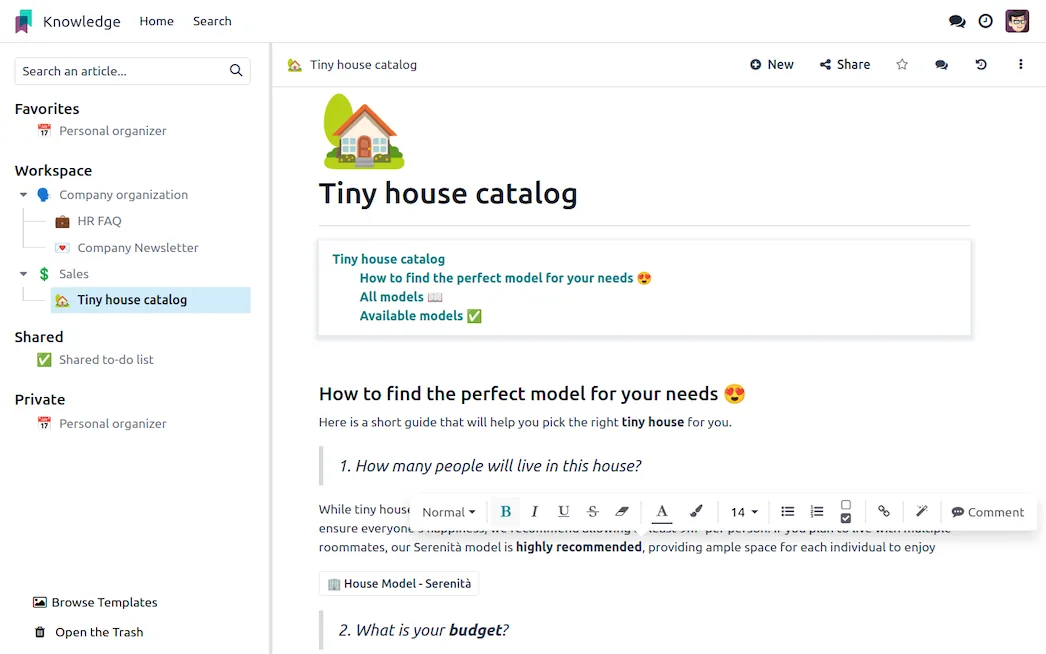
An article in Odoo Knowledge
A shared knowledge base with workspace, shared and private articles in a tree, and an article being edited with a formatting toolbar and embedded links.
- Shipment files with milestones
- HS codes and country of origin
- Import VAT and customs duty
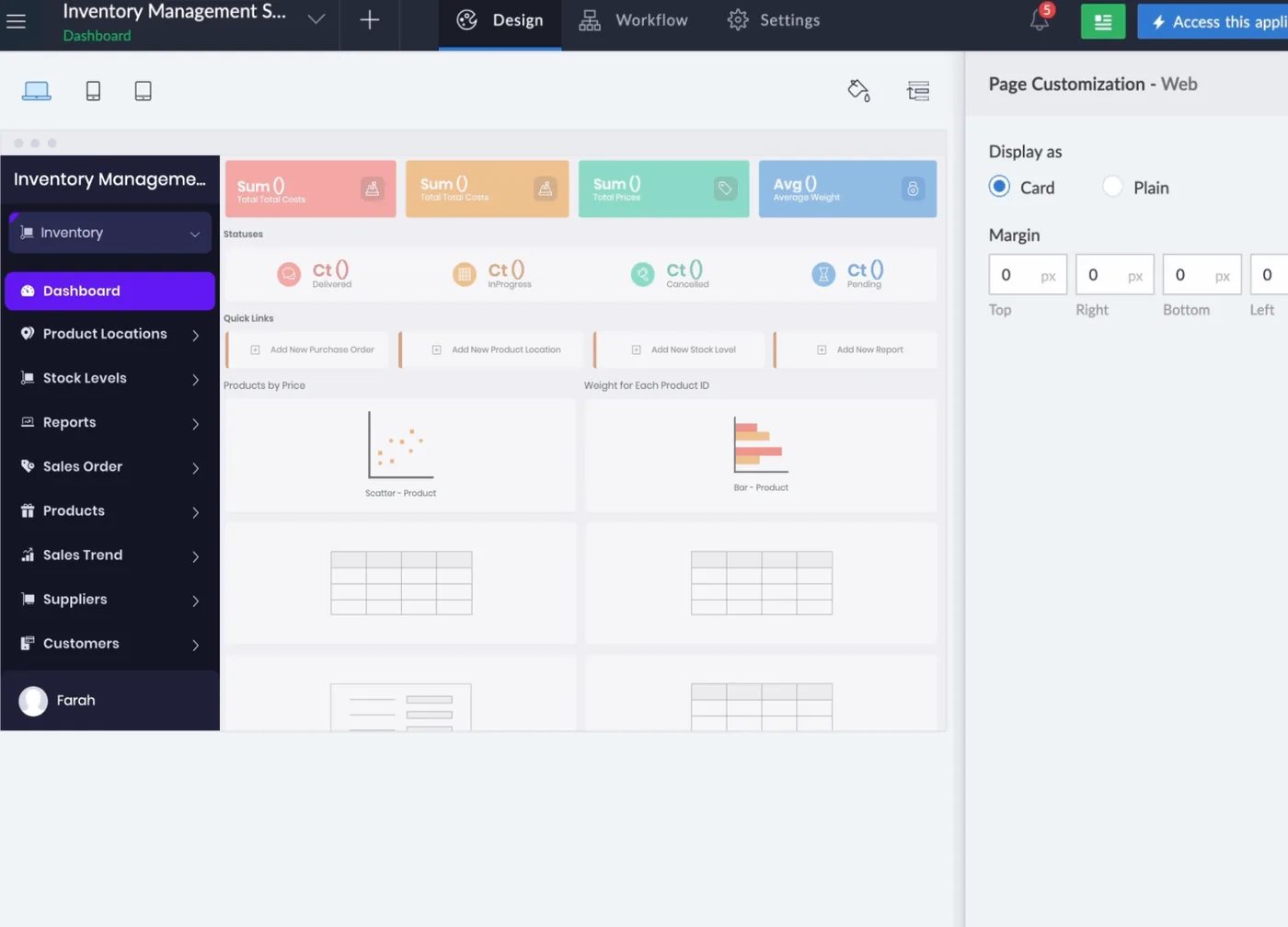
Designing an app page in Zoho Creator
An inventory management app in the Creator designer: dashboard widgets, product, stock level, sales order and supplier menus, and web page layout settings.
- Letters of credit
- Ports across the emirates
- Import VAT and reverse charge
Which platform for import export software in the UAE?
An honest comparison. We implement all of these, so the recommendation follows your processes, team and budget.
| Option | Best when | How it fits this need |
|---|---|---|
| Dynamics 365 Business Central | Importers with letters of credit and strong finance reporting needs | Good for importers where trade finance, landed cost and auditors dominate. Shyphan implements as an independent consultancy, not a Microsoft partner; UAE VAT localisation relies on partner extensions. |
| Odoo | Importers who also run warehouses, showrooms and deliveries | Suits UAE importers who also run warehouses, showrooms and delivery fleets, because landed cost, stock, sales and delivery sit together. Letters of credit need light customisation. |
| Zoho Creator + Zoho Books | Smaller importers with few shipments and simple stock | Practical for smaller importers with modest shipment volumes who want shipment files and documents tracked alongside Books. Detailed landed cost across many items is harder here than in Odoo. |
| Accounting package plus spreadsheets | A handful of shipments a year from one supplier | An importer with very few shipments can manage landed cost on a spreadsheet next to basic accounting. It stops working when containers, suppliers and currencies multiply. |
What changes in the UAE
The local rules and realities we design for before go-live. Rules change, so we re-check the current position at scoping.
Ports across the emirates
UAE shipments move through Jebel Ali, Khalifa Port, Sharjah's ports and Fujairah, plus air cargo. Shipment records hold the port and clearing agent per file, so costs and transit times can be compared by route.
Import VAT and reverse charge
VAT-registered importers usually account for import VAT through the reverse charge on the VAT 201 return. Declaration numbers and values are captured per shipment so the FTA figures reconcile; we confirm edge cases at scoping.
Free zone and mainland moves
Goods moving from a free zone to the mainland are treated as imports for customs and VAT. The system records each move as its own transfer with documents, keeping free zone and mainland stock correct.
What drives the cost, and what it connects to
No price list: we quote a fixed price in AED after discovery. These are the factors that move the effort up or down.
Landed cost complexity
Allocating freight, duty, insurance and clearing charges across many items and currencies needs careful design. Importers with mixed containers of many SKUs require more setup than single-product importers.
Trade finance use
Letters of credit, trust receipts and bank facilities add registers, alerts and accounting entries. Importers paying suppliers by open account avoid most of this scope entirely.
Ports and agents
Using several ports and clearing agents brings different document flows and charge types. Each agent and port added means more templates, mapping and testing.
Item master quality
Items without HS codes, origins, weights and volumes must be cleaned before landed cost works. A messy item master is often the biggest hidden effort in these projects.
What it connects to
Letter of credit details and presentation dates flow into the register; bank charges and settlements post back to accounts.
Milestones, ETAs and freight invoices flow into shipment files, updating landed cost and expected arrival for sales.
Declarations, duty receipts and delivery orders come back per shipment, with duty amounts posted to landed cost.
Supplier payments, duty payments and customer receipts flow in for reconciliation in AED and foreign currencies.
Landed cost trends, margin by product line and shipments at risk combine into dashboards for owners and buyers.
How we deliver import export software
Phases, indicative timing and what is delivered in each. Scope is fixed and priced in AED before we start.
Shipment mapping
We follow an import and an export shipment through every party and document, and list what is tracked where.
Design
Shipment data, milestones, cost allocation and document rules are agreed, and the platform chosen in writing.
Build
Shipment files, HS data, VAT and duty handling, LCs and landed cost are configured and linked to accounting.
Parallel run
Live shipments run in the system alongside your current spreadsheets and email tracking until costs, dates and figures agree.
Handover
Logistics and finance teams are trained, clearing agents get portal access, and support terms start.
When import export software is the wrong answer
If most of your stock arrives as a few shipments a year and your real work is selling locally, import export software adds little; good landed cost in your ERP is enough. Freight forwarders need forwarding software with bookings, consolidation and carrier rates, which is a different category. We will point you the right way.
How we handle it: We implement Zoho, Odoo and Dynamics 365 and build AI and custom software, so our written recommendation can point you to a simpler option, or to doing nothing yet.
Checklist and common mistakes
Buyer's checklist
What to ask for before you choose a provider.
- Ask how landed cost is allocated to items: by value, weight, volume or quantity, and whether you can choose per charge type.
- Require HS codes and country of origin on item and shipment records, used on commercial documents and duty calculations.
- Check how import VAT and the 5% customs duty are recorded, including reverse charge treatment in the VAT return.
- Confirm letters of credit can be tracked with expiry, presentation deadlines and linked shipping documents per supplier.
- Ask how shipments through Jebel Ali, Khalifa Port and Sharjah ports are handled if clearing agents differ by port.
- Require document control with required-document lists per shipment type, so missing certificates are visible before goods arrive.
Common mistakes
What we see go wrong in the UAE, and how to avoid it.
- Estimating landed cost after salesSelling a container before its costs are known leads to margin surprises. Record expected charges when the shipment is created and update them as real invoices arrive.
- Wrong VAT treatment on importsImport VAT recorded like domestic VAT distorts the VAT 201 return. Set up reverse charge and customs VAT correctly and review the first returns with your tax adviser.
- Missing HS codes on itemsWithout HS codes and origins on items, documents and duty checks rely on memory. Add them to the item master before go-live, not shipment by shipment.
- Letters of credit on calendarsTracking LC presentation deadlines in personal calendars risks discrepancies and delays. Keep an LC register linked to shipments with alerts to finance and purchasing.


A UAE team you can meet in person
That is our team at Zoholics Dubai 2026. We deliver Zoho, Odoo, Dynamics 365 and custom projects from our Ras Al Khaimah office with remote delivery across all seven emirates, in English and Arabic, and we run workshops on site in Dubai, Abu Dhabi and Sharjah when a project needs it.
Import Export Software in the UAE: questions we get asked
What does import export software UAE traders use actually track?
How is import export software different from distribution software?
How is it different from a trading ERP?
Does the software submit customs declarations?
Can clearing agents and buyers see shipment status?
How much does import export software cost in the UAE?
Can import export software in the UAE allocate freight and duty to each item?
Can the software handle shipments through different UAE ports?
Is import export software different for exporters from the UAE?
Why choose Shyphan?

Talk to a consultant about import export software
A free 30-minute call, then a written recommendation and a fixed quote in AED, including the honest option that this is not the right fit.
